
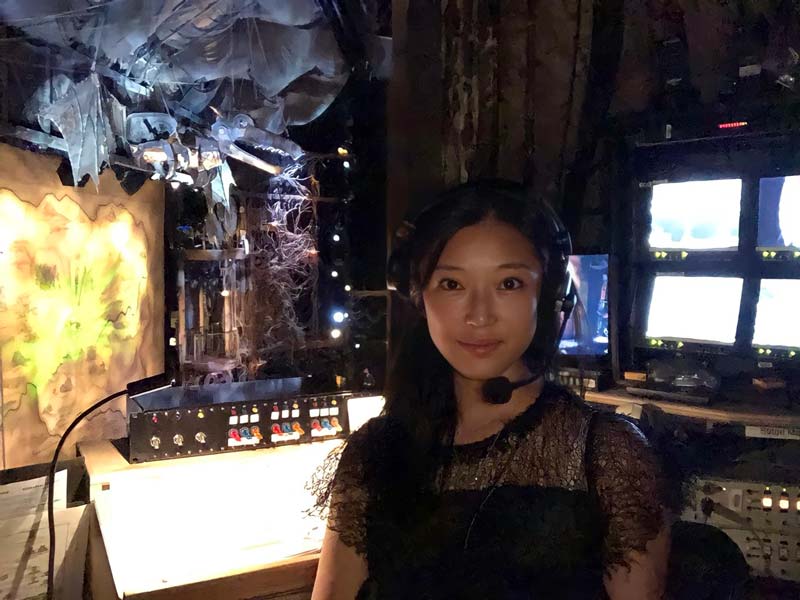
Stage Manager Saori Yokoo from the musical Wicked
The musical Wicked, now enjoying renewed global attention thanks to its blockbuster film adaptation, continues to be one of the most celebrated shows on Broadway. Since its debut in 2003, it has won multiple Tony Awards including Best musical and, as of 2025, still holds the top spot in overall box office revenue on Broadway. Its long-running success makes it a must-see for theater lovers visiting New York City.
Behind the Scenes of Broadway’s Wicked, stage manager Saori Yokoo plays a vital role in keeping the production running flawlessly. A stage manager is responsible for coordinating lighting, sound, set changes, and giving cues to the cast. Much like a conductor leading an orchestra, the stage manager directs the entire stage to ensure that every performance unfolds seamlessly. From handling technical issues to responding to last-minute cast needs, this position is essential for maintaining the high quality of each show.
We had the opportunity to interview Saori about her journey to Broadway, her responsibilities as a stage manager, and her insights on how to experience the magic of Broadway to the fullest. Whether you are curious about working overseas or simply passionate about turning what you love into a career, her story is sure to inspire you. Enjoy this special inside look at the world of Broadway!
A realist who loves planning: choosing a career to stay in theater
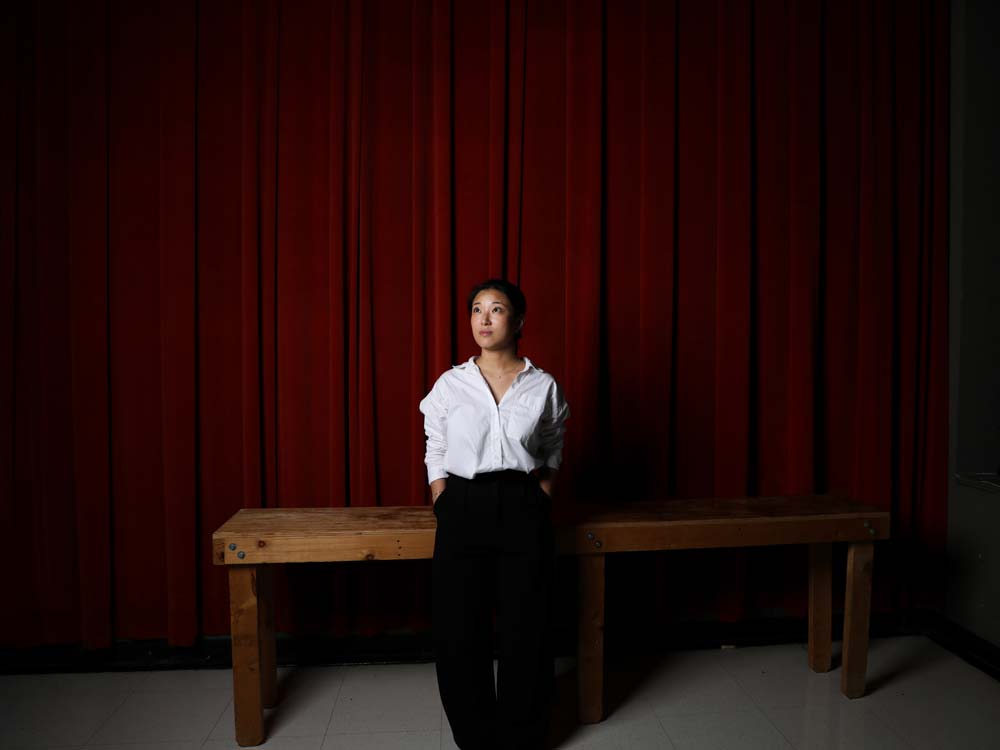
Stage Manager Saori Yokoo from the musical Wicked
──How did you become a Broadway stage manager? What did you study, and how did you earn your place on Broadway?
“Since childhood, my family often took me to the theater, so I naturally grew up loving stage productions and music. Although I now work backstage as a stage manager, I actually spent my entire school years from elementary through high school focused on singing. I never trained in dance, but I loved singing and always imagined myself doing something related to music. Some of my friends pursued classical vocal studies and went on to perform with well-known theater companies.
But around eighth grade, I realized that singing professionally with my own voice would not bring me long-term joy. I wasn’t very interested in a future performing on local stages, and at one point I even thought becoming a music teacher might be my only option. Still, I wanted a career that would allow me to stay connected to the arts for many years. That’s when I started to wonder if there was a role like a theater director who could oversee the entire production. By the time I reached ninth grade, I figured that was the path I wanted to explore.”
──So you started thinking about your career very early on?
“Yes, very early. That’s why I quickly gave up the idea of making a glamorous career as a singer. I’ve always been a realist and have always loved planning things. What was just a personality trait back then has now become my profession. But even in those days, I focused on finding ways to stay involved in theater for the long run and discovered the path of working at the backstage.”
──It’s clear that your passion for planning made you naturally well-suited for your profession!
“For college, I didn’t choose New York. Instead, I attended a smaller university in Ohio with a strong theater program. It wasn’t about following a specific professor, but rather because someone I trusted lived in Ohio and I felt a smaller school would be a better fit for me. I always believed I would eventually live in New York for work, so I deliberately chose somewhere else for my studies.
During college, I was constantly busy with internships and part-time jobs. I worked on productions like Sleep No More in New York, gaining hands-on experience wherever possible. An internship like Sleep No More often came through personal connections with guest directors invited by the theater Department of the college. For anyone hoping to enter this industry, studying at a university can be extremely valuable, not just for the education but also for building connections.
I also gained experience working in theater while spending summers back home. I assisted with international productions touring in Asia and even worked behind the scenes at the opening of Tokyu Theatre Orb in Shibuya, Tokyo. When American casts performed abroad, I was often asked to give advice such as suggesting extra trash bins or to manage schedules for interpreters. It was all about adapting to the needs of the performers, and those experiences directly connect to the skills I use in my job today. I learned a lot through it.”
Student years spent gaining experience without taking a break
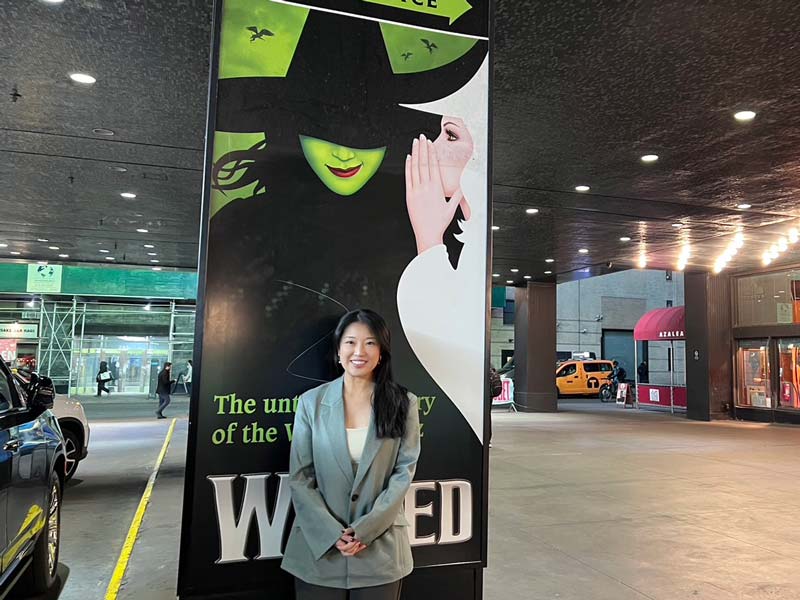
In front of the Gershwin Theatre
──What did you study in college, and what challenges did you face?
“I chose a small university on purpose. At a large school, I worried I might get lost in the crowd. At a smaller one, I could communicate more closely with professors and build stronger connections with people.
Because it was a small university, the theater program was always short-staffed. During my studies, I gained hands-on experience in every area—costumes, props, set construction, lighting. I often worked on lighting, where I also learned programming. College life was extremely busy with rehearsals and preparation, but the ‘do everything’ environment helped me develop a broad understanding of how each department works. That knowledge has been incredibly valuable in my career as a stage manager.
The hardest part was definitely the language. I hadn’t gone to an international school before coming to the U.S., so keeping up with classes and assignments in English was a real challenge. Looking back now, I can hardly believe I managed it.”
──What was important for you when learning English?
“That would vary depending on who you ask, but for me, training my ear was more important than merely learning grammar. I practiced by listening to movies, podcasts, and music in English, then repeating or singing along. Once your listening skill improves, pronunciation doesn’t feel as difficult. In fact, many musicians tend to be multilingualists because of their strong listening skills.”
──And what did you do about your visa after graduation?
“After graduation, I first worked under OPT (Optional Practical Training), which allows international students to work in their field for one year after completing their degree. Then I transitioned to the O-1 visa, also known as the artist visa. I knew I would eventually need the O-1, so while in school I focused on internships and production work to build my résumé. Even during OPT, I kept myself busy working on as many productions as possible with almost no time off.”
──So you had been preparing steadily since your student years, hadn’t you?
“Yes, absolutely. Throughout college, I concentrated on internships and part-time jobs, always adding experiences that I could list on my résumé. Productions were happy to accept interns eager to work hard and gain experience, so I just kept saying yes and giving it my all.”
The joy of working on her favorite show Wicked: overjoyed when getting the job
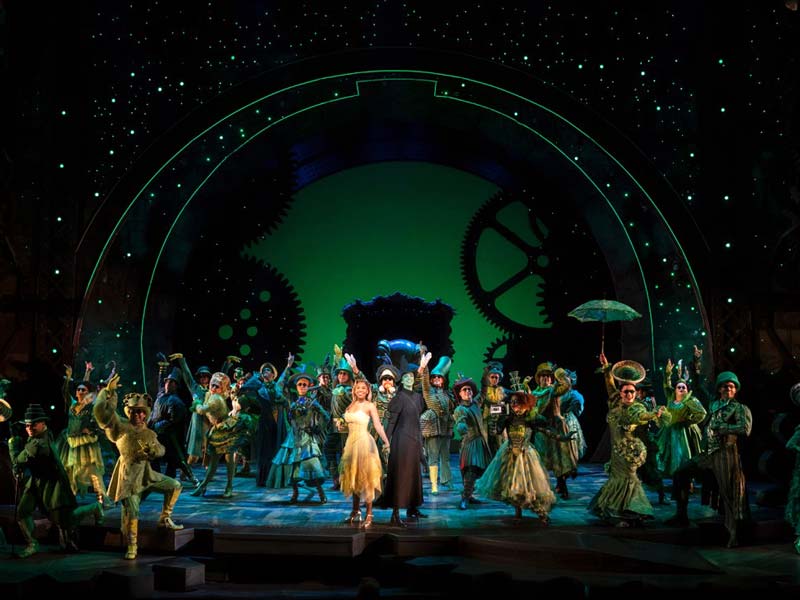
A scene from Wicked (Photo credit Playbill)
──You’ve been a fan of Wicked for a long time. How did the opportunity to step into the role of stage manager come about?
“Right after graduating from college, I interned with Wicked on Broadway, actually. The person I met during that time later remembered my work and reached out when a stage manager position opened. After going through several rounds of review, I was officially hired.”
──How did you feel when you got the job?
“I was absolutely thrilled! I’ve always loved Wicked. Back in high school, when Broadway still felt like just a dream, I performed in a school production of the show, so being part of it now feels almost like destiny. It was a dream come true, and even today, I truly enjoy going to work every single day.”
The privilege of working on Broadway: the every day immersion in world-class art
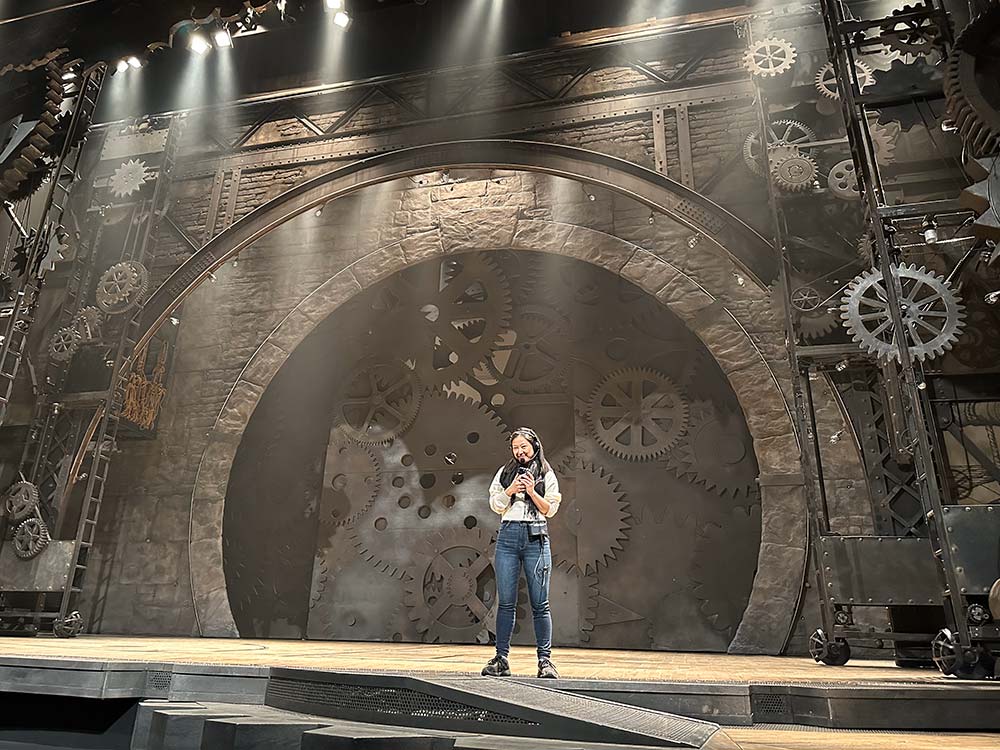
On stage at Wicked
──What do you enjoy most about working on Broadway?
“Being surrounded by the best staff and performers in the theater world and experiencing top-level art every single day. Wicked has such extraordinary music, and hearing it live with a full orchestra daily is a privilege. From my position, I watch every performance from beginning to end, so I’m constantly immersed in one of the finest productions on Broadway. My eyes and ears have become very well-trained thanks to this experience.
Since Wicked is such a large-scale production with a high-capacity theater, many staff are involved, including front-of-house employees like ushers and ticket staff. It takes great effort to keep track of everyone and care about their well-being, but I’ve come to the phase where I enjoy the responsibilities.”
──What are the challenges of working on Broadway?
“The late nights. With an 8:00 pm curtain, the show finishes around 11:00 pm, and I usually get home even later. Since this happens six nights a week, it can be physically demanding, though I’ve gotten used to it.”
──Do you face difficulties as an Asian working on Broadway?
“Not particularly. It’s common to be the only Asian in a production, but I’ve gotten used to it and don’t find it difficult. Even when I’ve had negative experiences, I’ve always dealt with them as they came. Dwelling on such things only makes you unhappy. During my twenties, I joined a nationwide tour across the U.S. and learned so much from people I met along the way. I’ve worked in many places across America, and I actually find New York the safest. Even if I’m the only Asian in the room, I always approach my work with confidence.”
Two core values: honesty and fairness
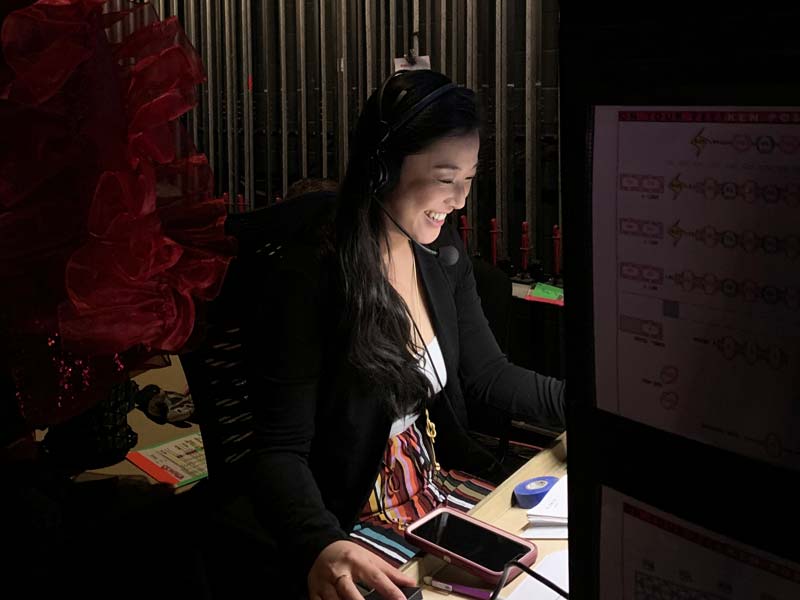
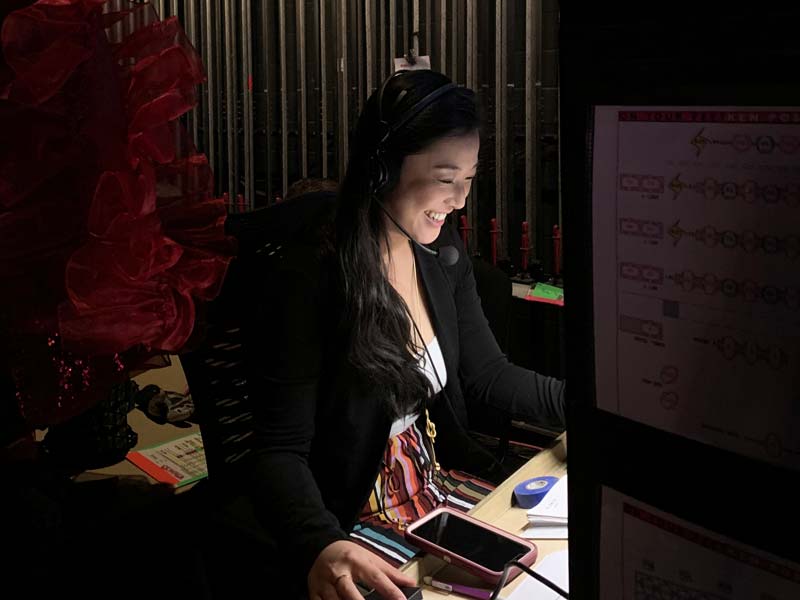
Behind the scenes as a stage manager
──What qualities do you think people value most in your work?
“I think it’s my personality. A stage manager acts as the hub of the company, communicating with everyone, and I would say people do value my work for it. I also pay close attention to details and make sure tasks like scheduling are handled precisely so everyone can do their best work together.
Usually, musicals have three stage managers and plays have two, but Wicked has four stage managers. Processes and ways of hiring vary: sometimes directors or colleagues reach out directly, and other times it involves applying and interviewing.”
──What principles guide your work?
“Never lying. It sounds simple, but it’s harder than people think. If I don’t understand something, I admit it honestly. I try to stick to this principle to the utmost, though few people manage to do this consistently.
And fairness is another key value. I don’t treat famous people differently from anyone else—I try to approach everyone equally. Again, it’s easy to say but harder to put into practice.
I also value treating each performance with sincerity. Wicked is a long-running production, and for us, it can feel routine. But I remind myself that some audience members travel from far away just to see this show. Thinking of them motivates me to deliver every performance with full dedication.”
──I’m sure fans would be glad to hear so! What advice would you give to someone who dreams of becoming a stage manager on Broadway?
“it is critical to have a dependable command on English. Communication is at the heart of stage management, so whether you’re a native speaker or not, you need to be able to interact smoothly in English. I still study the language every day.”
──Is communicating with actors difficult?
“Not really, since we see and talk to each other every day. But when injuries or personal issues arise, I need to handle them with care. That’s why I try to build trust in advance by checking in often and being approachable.
Anyone aspiring to be a stage manager should be interested not only in performance but also in technical aspects. The job is about 90% backstage work, less about glamour and more about precision and organization. Loving musicals alone may not be enough and you really need to be passionate about supporting the production from behind the scenes.”
──When do you feel the greatest sense of accomplishment?
“When I see the excitement in the audience. Watching people’s faces light up with joy or excitement reminds me why I love this job.”
──What are your future goals?
“I’d like to contribute to the theater community back home someday. I’m not yet sure how, but I hope that the skills I’ve gained on Broadway can be useful. Many of us who have built our careers here feel the same way—we want to pass something on to the next generation. Since Broadway and theaters elsewhere operate very differently, I don’t yet know what form that contribution might take, but I’d love the opportunity.”
What makes seeing Broadway so worth it: the world’s finest artists at work
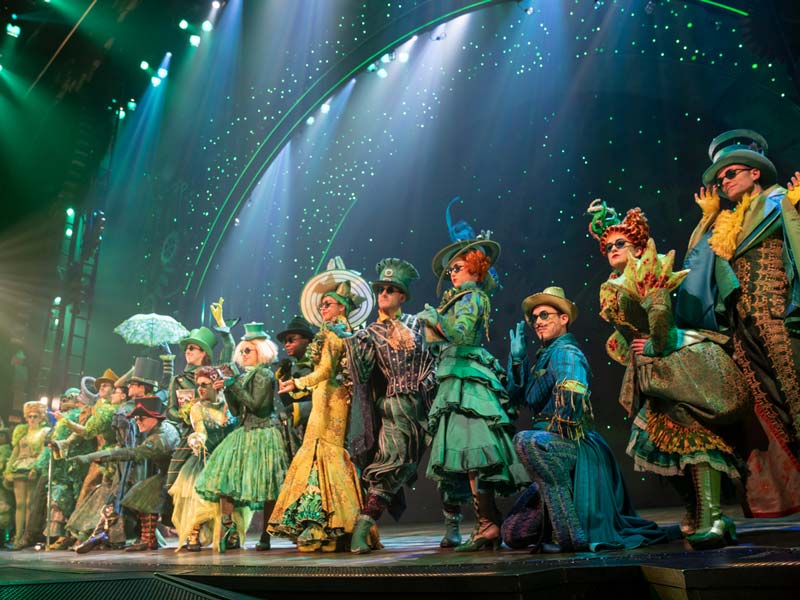
A scene from Wicked (Photo credit Playbill)
──How do you personally enjoy watching Broadway shows?
“I always pay attention to design elements like sets, lighting, costumes, and wigs. Broadway productions have generous budgets and showcase world-class artistry. They are complete works of art where every detail matters. Looking beyond the story and noticing these elements makes watching a Broadway show even more rewarding.
With lighting, the best designs are those that blend seamlessly into the story and stage without drawing attention to themselves.”
──What do you like most about New York?
“New York reminds me of Tokyo, which is one reason I enjoy living here. They have this convenient subway system, and there are countless shops and places to explore. I also love taking ferries around Manhattan. I’ve lived here since 2013, yet I still enjoy sightseeing and never get tired of it.”
──And what do you like most about Broadway itself?
“It’s the place where the very best work. From performers and technical staff to prop masters and crew, Broadway gathers the most talented professionals in the industry. That makes for a supportive and inspiring work environment.
These are productions created by top artists who have beaten extraordinary competition to make it here. Even as audience, feeling that level of dedication alone is worth the experience.
Another unique aspect is the concentration of theaters in such a small area, with multiple shows running at the same time. It’s unlike anywhere else in the world.”
──Given that you worked in theaters elsewhere, is there anything you think Broadway could improve?
“If I had to pick something, maybe the schedule. Evening shows usually finish around 11:00 pm, which makes for long nights for those of us working. In other cities, shows start earlier to match public transit schedules, which can be nice. But on Broadway, the later curtain time is considerate for tourists who like to enjoy dinner first, so it probably doesn’t need changing.”
──What are some of your favorite Broadway musicals?
“Of course, Wicked will always be my favorite. Among more recent productions, I was impressed by the set design in Maybe Happy Ending and moved by the music in Suffs. Stereophonic was also excellent (both Suffs and Stereophonic closed in January 2025). I naturally gravitate toward shows with great music.
I also really enjoyed Hell’s Kitchen. It felt very modern, with striking visuals and a clear, relatable story. It’s a show that reminds you of how amazing New York is.”
──Do you have a favorite Broadway theater?
“I love the Gershwin Theatre, where Wicked plays every day. It’s beautiful, spacious, and has great sightlines. I’m also fond of the Winter Garden Theatre, which is equally comfortable and visually appealing. Each Broadway theater has its own personality, which makes them fascinating.”
──Even outside of Broadway, audiences can enjoy great musicals. What makes seeing a show in New York unique?
“The live orchestra is a huge part of it. The combination of powerful live music and cutting-edge sound design is unforgettable. Also, Broadway productions are built with no fixed end date, designed to run long-term. That allows casts to bond deeply and sets to be built with impressive scale and durability. Keeping these differences in mind makes the Broadway experience even more special.”
Wicked delivers top-tier quality and endless appeal: hesitation means you should come and enjoy it
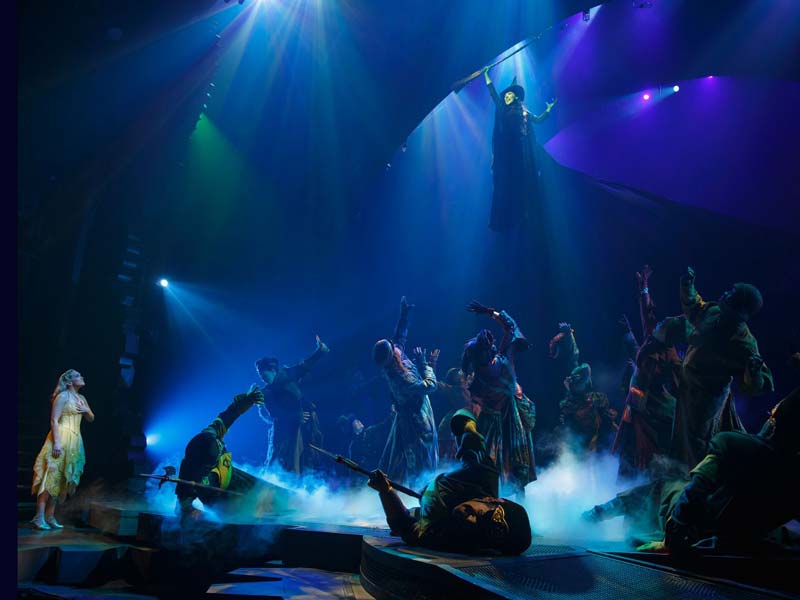
A scene from Wicked (Photo credit Playbill)
──What should audiences look out for in Wicked?
“First, the music is extraordinary. Both the orchestra and the singers perform at a very high level, delivering every note with real intention, so the score truly resonates with audiences.
The set design is also breathtaking. Honestly, the set alone is worth the price of admission. The lighting is intricately programmed and beautiful, the projections are stunning, and the costumes are award-winning down to the smallest detail. Every element is meticulously crafted, which is why the show rewards repeat visits. Experiencing this kind of total theater is moving and unforgettable.
Every department takes pride in the work, so be sure to notice the finer details like costumes and wigs.”
──Many people are curious about the story after seeing the visuals. What is it about?
“Wicked is a reimagined backstory to the world of The Wizard of Oz. Even if you are not familiar with that classic, there is no need to worry. The narrative stands on its own, so you can enjoy the show without any prior knowledge. My advice is simply to come with an open mind and let the story surprise you.”
──Which seats do you recommend, by the way?
“Orchestra seating is popular, but the Gershwin Theatre has excellent sightlines throughout. Because the house is large and the stage is expansive, you can still have a great experience from the mezzanine or side sections. If premium tickets are out of budget, choose a more affordable seat and come enjoy the show.”
The tips for a journey on Broadway: take it easy, determine it is okay to take time, and have fun at it.
──Lastly, what message would you like to share with people who want to build careers in New York or on Broadway?
“Above all, enjoy the process. You will need both study and experience to thrive here, but try not to push so hard that you lose the fun. For example, with English, do not just memorize vocabulary. Try speaking even if you are not fluent yet. If you keep finding ways to enjoy learning, you will naturally move forward.
Do not fear mistakes. Stay relaxed and play the long game. New York is not going anywhere. I would love to see more people join this industry, so keep going at your own pace.”
──And as a musical fan yourself, what message would you like to share with international musical fans who are interested in Broadway?
“If you are visiting New York, try seeing shows that are not currently running in your home city. Broadway stages are built by top-tier artists, and even titles you may not recognize can be remarkable. The more you see, the more you appreciate it, so if you have time, explore straight plays and Off-Broadway as well. I am a Broadway fan too, so it makes me happy to see the community grow.
As for Wicked, it is a show that delights all ages, from young children and teens to lifelong theatergoers. The story is universally engaging, and the production offers striking visual spectacle through sets and costumes. On a technical note, the sound is not aggressively loud. Some newer productions lean into very modern sound design, but Wicked keeps a more classic balance, which many audiences find comfortable. We look forward to welcoming you at the theater.”
Editor’s note
We spoke with Saori just before a performance of Wicked. Hearing about Broadway work from someone about to head onstage carried a welcome sense of focus and urgency, and we are grateful for the time.
What stood out was how early she began planning her path and how consistently she turned goals into action. The way she has kept honing her craft gives her words real weight, especially when she talks about how much she genuinely enjoys the job and hopes people will come experience it. Watching someone do something demanding with joy is inspiring in itself.
Her final advice to “take your time and enjoy the journey” matters precisely because it comes from someone who has done the work. Real-world pressures exist for anyone chasing a dream abroad, from visas to timing. In those moments, pausing and resetting your focus can make all the difference. Our thanks for a conversation that motivates and encourages in equal measure.
Written by Sayaka Imada
See all Journeys to Broadway articles
 Broadway Musical Discount Tickets – On Sale Now!
Find the best Broadway ticket deals right here – faster, cheaper, and backed by local expertise. Get ready to experience the magic of Broadway!

- Get discount tickets easily with instant booking
- The most detailed musical guides and reviews
- Dedicated support throughout your Broadway experience