

In Times Square, New York
This series brings readers the real voices of people who work in the theater industry and has received a lot of positive feedback. In this installment, we interviewed Nana Kōno, who spent a year developing her skills in New York in 2022 as a trainee in the musical theater category of the Agency for Cultural Affairs’ Program of Program of Overseas Study for Upcoming Artists.
Born and raised in Hiroshima, she made her acting debut at the age of 19 as a member of the musical theater company Ongakuza Musical. Since then, she has performed steadily on stage ever since. What led her to New York? What does it take to work in theater in New York? And what message does she have for aspiring actors of the future? This interview focuses on these questions, with the hope that her words will reach and inspire the next generation of stage stars.
A Glittering Debut and a Slump Caused by Inexperience
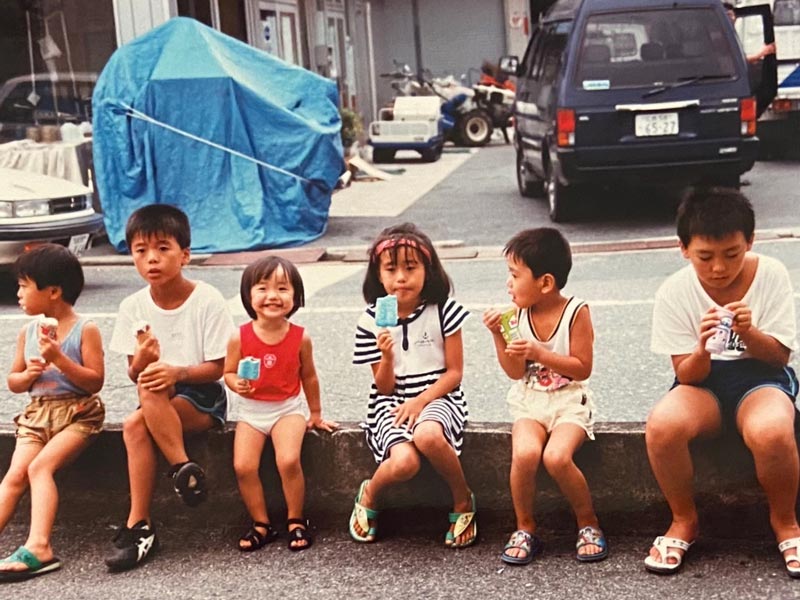
With her cousins (third from the left)
──Where did your journey as a musical theater actress begin?
“I was born in Hiroshima. My mother loves musicals, and she took me to see many musicals there, including Annie. But, at that time, I was just a chubby girl that people couldn’t have imagined I’d become a stage actress. I couldn’t bring myself to say that I wanted to become one.
Meanwhile, my uncle performed in a community musical. He was an ordinary person who was not into musicals nor eager to be an actor. I was shocked seeing him on stage and thought “Well, even my uncle can perform on stage, then why can’t I?” From that point, I started to join the community theater, which was when I was in the fifth grade in the elementary school, and was the very beginning of my career.”
──We never know what a cause will lead to.
“It’s interesting, isn’t it? I had been doing musicals with more of a hobbyist mindset for a long time, but when I was in my second year of junior high school, I saw the musical Cats when it toured Hiroshima, and I thought, this is what I want to do. From that moment, I shifted my mindset from regarding it as a ‘hobby’ to seeking to make it my ‘profession.’
I started taking classical ballet and vocal lessons and went on to attend Hiroshima Music High School. Around the time I was deciding where to apply for high school, a musical theater course was newly established at Hiroshima Music High School, and I immediately felt, this is it, so I chose to enroll. Later on, I heard that the vice principal at the time had happened to see one of my lessons and thought, ‘She should be in.’ That was such an honor to hear.
Thanks to those connections, I entered the musical theater course as part of its very first cohort, full of excitement. There were about ten of us in my class, and we had a great time learning together – but then, in the latter half of my first year of high school, I went to see a performance by the Takarazuka Revue, an iconic all-female Japanese musical theater company…”
──Wait, so you auditioned for Takarazuka?
“Exactly…… — I felt so strongly that I wanted to be a member. With the Takarazuka Revue, you only have a four-year window to apply, from your third year of junior high through your third year of high school. I’m the kind of person who really gets fired up by challenges with a deadline, so I decided almost immediately, ‘I’m going to audition.’
I auditioned for the first time in my second year of high school and didn’t pass. Determined to give everything I had to my final chance in my third year, I left school and transferred to a correspondence-based program. Even so, when I auditioned again in my third year, I advanced all the way to the final interview but was ultimately unsuccessful. I had staked my entire life on that challenge, so I found myself crying almost every day, wondering, ‘What am I going to do now…? ’
Around that time, the vice principal of the high school, I mentioned earlier, reached out to me and said, ‘Musical theater actors Seiko Niizuma and Kiyotaka Imai are coming to Hiroshima to perform together with the students at the music high school—would you like to take part?’
Although I had already graduated from high school, I was encouraged by the vice principal’s words, ‘If you’re going through a tough time, why don’t you join us?’ With that support, I ended up performing alongside around 50 students from the music high school.
And then, after rehearsal, something happened that I still can’t forget. Seiko Niizuma actually came up to me and said, ‘You were absolutely radiant.’ It truly felt like a miraculous moment to me. ”
──Imagining the scene, I’m almost crying…
“At that time, I had failed the Takarazuka audition and hadn’t applied to any universities. I was at a point where I could no longer see my dreams or any sense of hope for the future. In the midst of that, I found myself deeply inspired by Ms. Niizuma, who has the power to encourage people through her words, and I thought, ‘I want to become someone who can move people’s hearts like that.’ That was when I was able to discover a new dream.
I looked into Seiko Niizuma’s background at once and learned that she had won the Kazuo Kikuta Theater Award for her performance in a production by Ongakuza Musical. Ongakuza Musical is a company that specializes in producing original musicals. At the time, I happened to find out that they were holding an audition in the Kansai area, and I thought, if it’s Kansai, I can go. So, I decided to take on the challenge.
Right after the audition, the producer told me, ‘You’ve passed. We would really like you to join us.’ I had applied almost on impulse, so I did have my anxieties, but it felt like fate, and I decided to join the company. All of this happened just one month after I met Ms. Niizuma—pretty incredible timing, if you ask me. That December, I was given the opportunity to make my stage debut, and remarkably, it was in the very same role that Seiko Niizuma herself had once played.”
──You got the leading role on your debut stage!
“Yes – I played the lead in my very first stage appearance. At the time, I didn’t fully grasp the weight of that responsibility and just jumped in thinking ‘Yay!’ But in the end, it became an incredibly significant project for me, and a true turning point in my life.
After joining the company at 19, I continued performing on stage in Japan for many years. Around 2010, I went to New York for about a week as a tourist and saw several musicals, including Billy Elliot, Mary Poppins, and Jersey Boys.
To be honest, though, my initial impression of New York wasn’t very positive. I found myself thinking things like, ‘The city is dirty,’ ‘The food isn’t very good,’ and ‘People are less considerate.’ I felt confused more than anything. It was also extremely cold at the time, and I struggled to communicate in English, so I returned to Japan without having formed a particularly good impression of the city.”
──Finally New York showed up in your story!
“After that, I also traveled to London, and I loved it. The city was clean and had a wonderful atmosphere. While taking in those experiences through travel, I continued performing steadily on stage in Japan, often as part of the main cast.
This might be a familiar story, but I had the opportunity to make my stage debut—and even play a leading role—at 19, and I continued to be cast consistently after that. However, once that fresh, almost ‘beginner’s luck’ phase had passed, I began to feel that ‘perhaps I was giving out more than I was taking in.’ I increasingly found myself thinking ‘I’m not good enough yet’ and becoming more aware of the gaps in my own abilities.
I jumped into this world driven purely by my love for musicals, so in a sense, I started out with a mindset that felt like an extension of a hobby. I don’t think that was a bad thing, but as I accumulated more experience, I began to acutely feel how limited my life experience was. For example, when I was entrusted with roles that formed the core of a production, I had to understand and express the subtle emotional shifts of the character. Yet there were times when I simply didn’t have enough to draw from within myself, and I couldn’t bring out the necessary depth. Naturally, that affected the reaction from the audience, leaving me with the frustration of feeling that ‘I hadn’t fully embodied the role.’ Little by little, I started to lose my confidence.”
──So life experience really feeds into your expressiveness as an actor.
“At that time, I was struggling mentally as well and had fallen into a kind of slump. What supported me through that period, however, was the the woman who founded Ongakuza Musical. I deeply resonated with the way she lived and thought, and the desire to work alongside her became my driving force. The works of Ongakuza Musical felt, to me, like a direct expression of her own philosophy of life.
So, when she passed away in 2016, it felt as though the fire inside my heart was suddenly blown out. I lost all the emotional strength and motivation I had managed to hold on to until then. As a result, I decided to step away from theater work entirely for the whole of 2017. Even though I continued feeling ‘I have to do something,’ my heart just couldn’t keep up with that thought.
During that time, I spoke to the current head of Ongakuza Musical and told them I was thinking about studying abroad in London. They responded very warmly, saying, ‘You should definitely go. Seeing the world outside, and properly taking a break, are both important.’ They encouraged me without hesitation.”
──What do you think was going through their mind when they supported you like that?
“I think they understood everything. They knew that I still wanted to remain connected to Ongakuza Musical, but also that the fire in my heart was on the verge of going out. Knowing that, they still said, ‘Go.’
At first, I was considering London. However, because people from the educational division of Ongakuza Musical’s group companies had been traveling frequently to New York for years, I was advised that New York would be a place where I’d have people I could rely on if things became difficult. In the end, I decided to go to New York. That decision – to move there in 2018 – became a major turning point in my life.”
“If You’re Not Here to Compete, Go Home.” – Finding Myself in New York
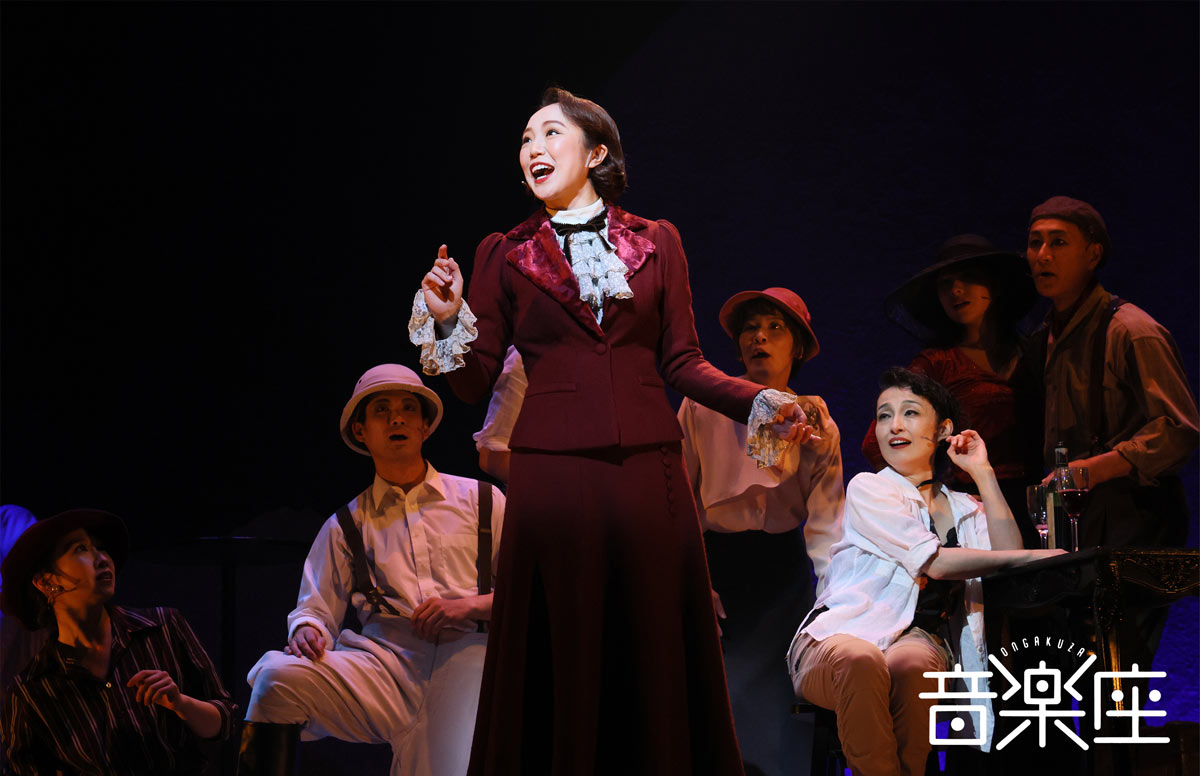
As Joan in SUNDAY (Ongakuza Musical) ©Human Design, Photo: Ken Nikaido
──How did you spend your time in New York during that period of rest?
“I stayed in New York for two months on a tourist visa. At the time, the United States was still relatively relaxed about admitting foreign visitors, so I think it was easier to stay longer than it is now. Life in New York felt fresh and exciting every single day. Because I was taking a break from work, I had time, and everything that happened around me felt stimulating. At the same time, as I talked with the many people I met there, I began to realise that a sense of inferiority was growing inside me.”
──What do you mean by that sense of inferiority?
“The artists working in New York were all able to talk about their work and their creative activities in their own words, with a clear sense of originality. Listening to them, I realised that even though I was in an environment like Ongakuza Musical, which continually creates original productions, I myself hadn’t created anything. I felt that I had simply been walking along a path laid out for me, and that I had nothing I could point to and say, ‘This work, this role, represents me.’ That realisation came as a shock.”
──Where did you meet these artists?
“Some of them were classmates or senior students from my music high school who were already active in New York. Others were introduced to me by interpreters who worked with our organization. I also searched on Facebook and participated in Japanese community events. To be honest, I made a conscious effort to go even to places where I felt I didn’t really want to go. I didn’t know what kind of people would be there, but I was certain that if I went, I would meet someone. I was trying to create a place for myself.
As I continued meeting artists and gaining various insights, toward the end of my two-month stay in New York, I had the chance to share a meal with a Japanese artist. During that, she asked me, ‘What did you come to New York to do?’
I answered by explaining the background and said, ‘I guess it’s about finding myself.’ Then she said, ‘We’re competing here in New York. If you’re not here to compete and you’re only here to find yourself, then you should go home.'”
──Those words are harsh.
“Truly they were. At the time, I was honestly a little irritated. But even so, I felt she was right. In Japan, I had been fortunate to work in the wonderful environment of Ongakuza Musical and to go on stage in very privileged positions, such as playing leading roles. But was I really competing? Had I truly taken on the greatest challenge of my life? Those questions forced me to think deeply.
In a way, those words became a gift for me. Holding on to those words, I returned to Japan. Soon after coming back, I appeared in a production titled SUNDAY, based on Agatha Christie’s novel Absent in the Spring. It was a world premiere, and I played the protagonist as part of the original cast. The production received an award from the Agency for Cultural Affairs.
I wanted to take those words to heart. I decided that the next time I went to New York, it wouldn’t be for self-discovery, but to compete. That’s why, when I returned to New York in 2022 as a trainee of the Agency for Cultural Affairs, I went with a firm resolve that this time, I would truly compete.”
“What do I truly want to accomplish in my life?” – I set my resolve and headed to New York.
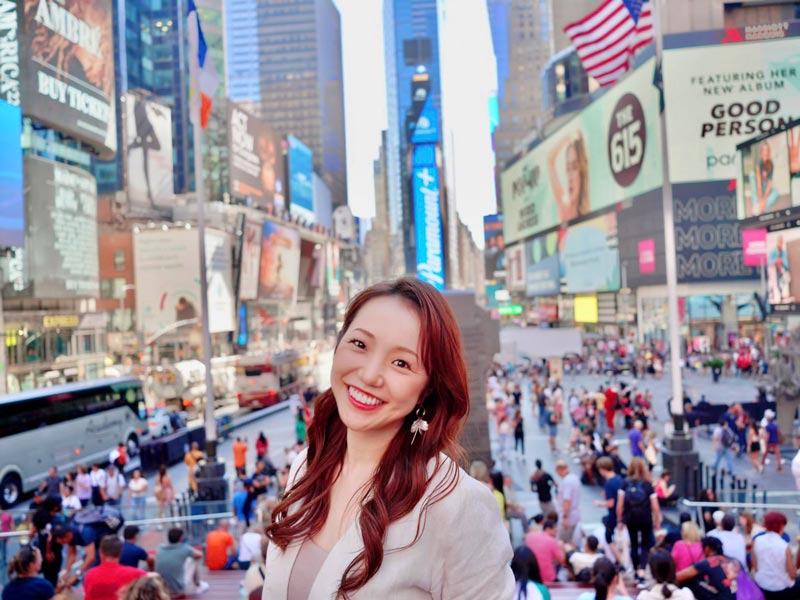
In Times Square, New York
──It is known that the Agency for Cultural Affairs’ overseas training program is extremely competitive. How did you come to be selected?
“I actually applied twice to the program. The first time, I was unsuccessful. After that, the chief producer of Ongakuza Musical and some senior colleagues kindly reviewed my application materials and said to me, ‘Aren’t you trying too hard to be liked?’ Looking back, I think they were right. My motivation at the time felt shallow even to myself, and it lacked real persuasiveness.
So I went back to the fundamental question of why I wanted to go to New York in the first place, and I tried to listen carefully to my own inner voice. What came back to me was an encounter I had during my two-month stay in New York in 2018, when I met a former musical theater actress. She had once been nominated for a Tony Award for Best Featured Actress in a Musical, and at the time I met her, she was working as a teacher of ‘Acting the Song.’ I vividly remember being deeply moved when she sang ‘I’d Give My Life for You’ from Miss Saigon. Although she was nearly eighty years old, she sang with eyes shining like those of a seventeen-year-old girl. Watching her, I thought, ‘She is the kind of actress I want to become.’ For my second application, I wrote honestly about that encounter and those feelings as my motivation.”
──So you clarified what you wanted to become.
“Yes. At the same time, I also felt that I needed to confront more seriously the field of original musicals, which I have been involved in throughout my career. Rather than acting or singing in a way that resembles someone else, I wanted to find what my own originality was and to express something from which the audience can sense my life experiences, just like the artists in New York. With those ideas, I put together my statement of purpose.
As a result, I was selected as a trainee in the musical theater category. For those who are hoping to apply for the same program in the future, I think the key is not to focus on reasons that seem likely to be accepted, but to thoroughly examine what you truly want to accomplish over the course of your life.”
Anyone can focus on input. I decided to shift gears and pursue what only I can do.
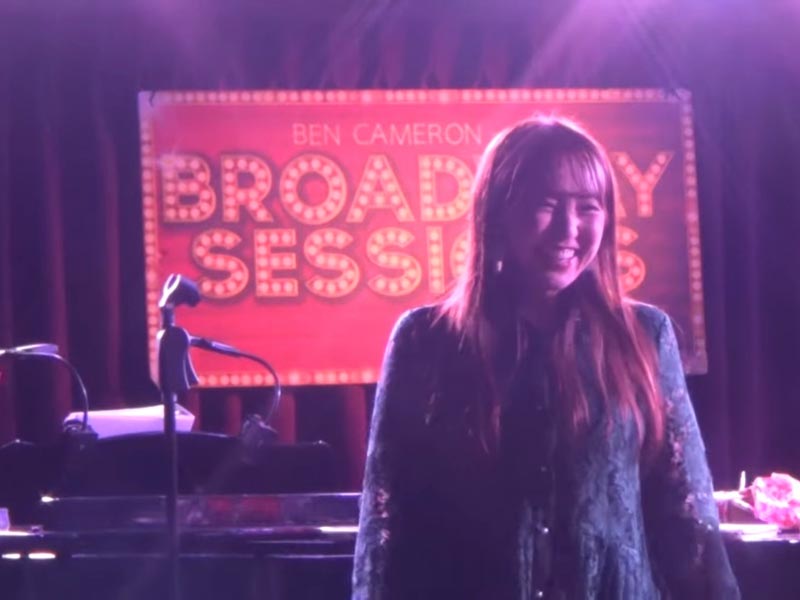
After auditioning successfully for BROADWAY SESSIONS – a full standing ovation (Venue: The Green Room 42)
──Once your overseas training was decided, why did you choose to obtain an artist visa rather than a student visa?
“What I wanted to learn in New York was not so much singing or acting techniques themselves, but rather the process of creating original musicals and the search for my own originality. Considering those goals, I felt that an artist visa, which allows you to learn while working in the field, was more suitable than a student visa.
It is often said that the screening criteria for an artist visa are stricter than those for a student visa. In my case, however, there was a relatively long period of time between receiving the selection result and traveling to the United States, so I decided to use that time to take on the challenge.
Which visa is suitable really depends on what and how each person wants to learn. With a student visa, you can study within a structured curriculum at a school. With an artist visa, you can absorb a great deal by actually working and learning on site.”
──Once you actually began your studies in New York, how did you spend your time there?
“Unless I actually started moving, I wouldn’t know what was necessary or how I should proceed. So apart from the minimum preparation of enrolling in some lessons, I went to New York without making detailed plans.
The first thing I focused on was building relationships—making friends and acquaintances I could rely on when I needed help. During the first month, I made a point of meeting as many people as possible and expanding my network. Through introductions, new connections were formed, and I was able to talk with people from a wide range of fields. In Japan, I had spent my days rehearsing from morning until night since I was nineteen, so to be honest, I had very few friends in my private life. In New York, I had more time, so I decided to actively meet people, and whenever I was invited, I tried to go if at all possible. The connections I made in that way have since become precious assets to me.
At the beginning, though, I did get homesick. Surrounded by English every day, and constantly feeling nervous linguistically, I suddenly realised one day that I hadn’t really been laughing much lately. At times like that, I would watch Japanese comedy shows to relax. I remember how much the comedians helped me through those moments.”
──Even without a detailed plan, your actions seem very consistent.
“For the first six months, I decided that I would focus entirely on input, and I kept moving without taking breaks. I saw a lot of Broadway musicals and took lessons in many different genres, absorbing as much stimulation as possible.
I studied with many teachers, taking classes in classical music, pop, jazz, classical ballet, jazz dance, theater dance, and more. I was also fortunate to receive permission from the Agency for Cultural Affairs to travel to Los Angeles, where I took lessons for two months with an acting coach I had been interested in for a while.
However, after about six months, I began to feel that simply taking in input was something anyone could do, not just me. So I decided that was enough, and for the next six months, I made up my mind to perform in front of audiences. Whenever there was an audition or a performance opportunity, I applied as much as possible.
In the end, even in Japan, it is performing in front of people with responsibility—being paid to do so—that helps you grow the most. It is only through output that you can truly feel your own growth and change. That’s why I strongly felt that I didn’t want to go home without having done any output.
I auditioned for several musicals, but there were many moments when I found difficulties of not being a native English speaker. So when I asked myself what I could be most confident in, I decided to focus first on singing. I searched online for live stages where people could enjoy music while dining, and I also received introductions from friends. I sent out my résumé and gradually gained opportunities to perform.”
──Weren’t you afraid of performing on stage overseas?
“Honestly, nobody knows who I am (laughs). I thought, ‘I have nothing to lose!’ and that’s how I did it.”
──How did you come to know the music designer Hiro Iida, who you’ve said played an important role in your on-site learning?
“In fact, we didn’t have a prior connection at all. I reached out to him directly first. In 2019, I had the opportunity to go to New York as a member of Ongakuza Musical, and at that time I wanted to meet Japanese people who were active on the front lines there. I contacted Hiro, whom I had known for some time, sending a message on social media like, ‘Nice to meet you…’. Then he replied almost immediately and was incredibly generous—showing me backstage at the Broadway musical Mean Girls, which he was involved in at the time, and introducing me to Riza Takahashi, who was performing as an original cast member. I was treated with such kindness.
Even before the Agency for Cultural Affairs training was decided, and also after it was confirmed, I consulted Hiro about many things. What I’ve felt in talking with people who are active in the United States is how warmly they treat someone still inexperienced like me. I felt that Hiro, too, perhaps would support me as a fellow Japanese artist, and I was deeply grateful for that.
During the training, he also took me to the tryout performances of The Karate Kid, directed by Amon Miyamoto staged in St. Louis. After returning to New York, I was able to observe rehearsals for Kimberly Akimbo. He provided me with a lot of opportunities to learn directly from the field. Whenever Hiro invited me somewhere, I said, ‘I’ll go!’ and head there right away. I decided I’d figure out the money later. It truly was an invaluable experience.”
On Broadway, I’m drawn more to new original productions that feel “alive” than to long-running shows.
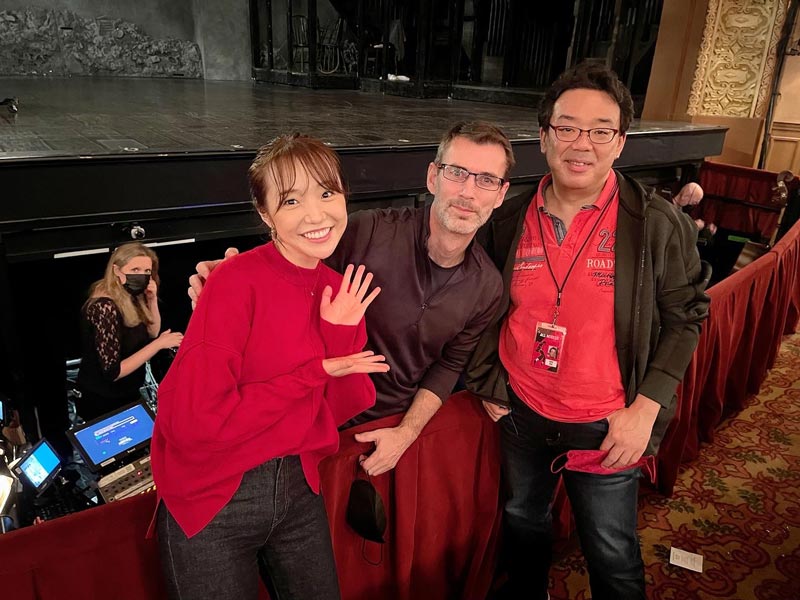
With Jason Howland and Hiro Iida at a Broadway theater
──From here, please tell us about New York and Broadway. What do you like most about New York?
“What I love about New Yorkers is their straightforward, unpretentious nature. There’s very little façade, and it feels more intimate. Even when I’m on stage in New York, I receive loud cheers from the audience, and I could really feel that they’re welcoming me. People come to the theater because they genuinely want to enjoy the performance, and there’s none of that rigid atmosphere of ‘we’re here to judge you.’ I hardly ever feel the pressure of ‘we paid for this, so it had better be good.’ Instead, the space is filled with an attitude of ‘whatever happens, we’re going to enjoy it!’ Because of that warmth, I think actors are able to stand on stage in a very natural, relaxed way.”
──What do you like about Broadway musicals in particular?
“One of the biggest attractions is the sheer number of original works. It really feels like these shows are being born here and now. Of course, my attention naturally goes to the actors, but especially in original productions right after opening night, there are so many moments when it feels less like they’re ‘acting’ on stage and more like they’re truly ‘living’ there.
That’s because the original cast carries the heavy responsibility of knowing that how the show will be received depends on them. They face a script that no one has ever performed before and convey it to the stage with their whole being. Their emotion overflowing from every single cell is irresistibly compelling. Broadway is a luxurious place where you can witness that kind of expression.
Perhaps because I’m so drawn to the power of original works, I actually prefer seeing newly opened shows rather than long-running ones. In long-running productions, a role is often passed down through several actors, and sometimes it can feel as though the current performer has an ease that comes from knowing the show will go on with or without them. Of course, long-running shows have their own strengths, but if possible, I’d really like visitors coming from overseas to see brand-new musicals just after opening, and to feel the actors’ hearts and even their breathing.”
──Is there a Broadway musical that left a particularly strong impression on you?
“That’s a difficult question, but the one that truly shocked me was MJ: The Musical. I saw it when Myles Frost was starring as part of the original cast, and I was amazed by how complete it was.
Up until then, I had always felt that what was beautiful about theater was its sense of space—its margins. If performers fill everything in too perfectly, it leaves no room for the audience’s imagination, so I tended to prefer more restrained expressions. But MJ was meticulously constructed in every detail; it was a flawless work with no gaps at all. That sense of perfection really shook me and made me think that that kind of art exists.
The best time to see Broadway shows would be before the Tony Awards winners are announced in June. Ideally, you’d go just before the ceremony in June, when no one yet knows which shows will win. That intense, energetic period is the perfect time to see theater.”
──Saying that people should see new musicals before the Tony Awards really shows how much you love Broadway.
“Theater is a living thing, so the timing of when you see it makes an even bigger difference. Actually, I’m planning to see The Great Gatsby tomorrow, a production that Hiro Iida is also involved in (this interview was given in October 2024). I worked with the composer Jason Howland on the musical Ikiru, which was staged in Japan, so I let him know that I was going to see the show. He was supposed to be in another state, but it just so happens he’ll be conducting tomorrow (Later, I learned it was a surprise arranged just for me!). Being able to have those kinds of warm exchanges is something I really love about New York.
Up until now, I’ve been the kind of actor who overthinks things. I’ve always confronted the script seriously and tried to perform perfectly, without any falsehood. But watching actors here chat calmly right up until just before curtain and then naturally switch gears as they step on stage taught me a great deal.
Of course, it’s important to ponder a role, but if you pack things in too tightly, you can actually lose a sense of reality when you’re performing. I used to believe that, on stage, I should never be thinking about something like what to have for dinner. But maybe the character themselves, even while delivering that line, is also thinking they still need to do the laundry. In other words, having that type of inner space can actually make a performance feel more real. That’s something I truly realised in New York. To me, that embodies the idea of playfulness—of ‘play’ as in theater.”
──From an actor’s perspective, what do you think makes an ideal theater?
“Broadway’s sound technology is exceptional. For example, in the rain scene of Sunset Boulevard, the sound of rain comes from speakers at the back of the auditorium as well, creating an immersive experience where you’re surrounded by sound from all directions. Being able to build dedicated technical setups for each production is a luxury unique to Broadway.”
The Greatest Challenge in New York: Creating a Solo Concert from Scratch
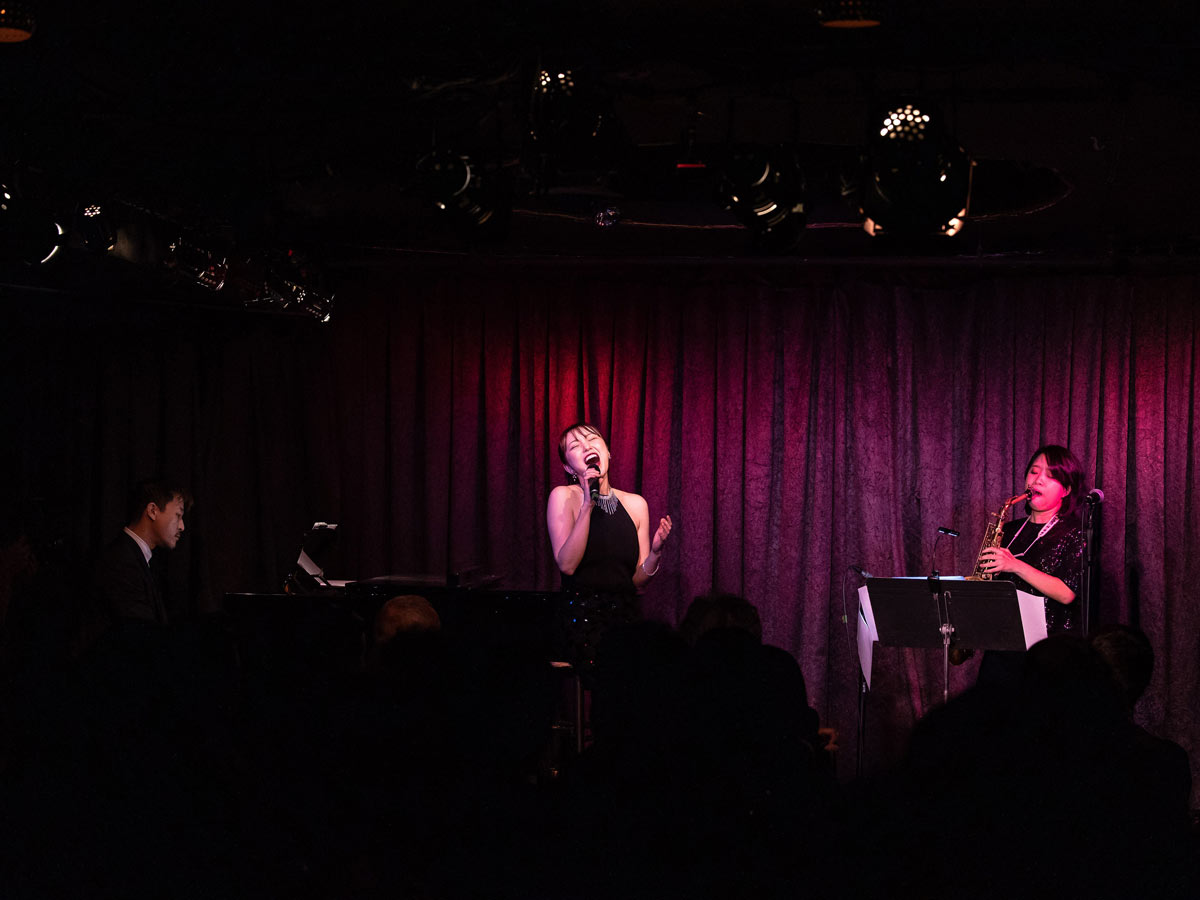
Nana Kono Concert in New York “Brilliant” ©Human Design, Photo: Rebecca J Michelson
──Let’s return to your training experience. During your time in New York, what felt like the greatest challenge you took on?
About two weeks before returning to Japan, I held my own solo concert. After spending a year in New York, I wanted to create something that would embody how much I had grown. So I planned the concert entirely from scratch. It was a concert performed entirely in English. At first, I didn’t even have a venue secured, and I had no clear prospect of how I would attract an audience. But I decided that I would simply try and see what happened, and I began moving forward.
I went in person to negotiate with venues. There was a space where musical theater performers often held live shows, and I passionately explained to the person in charge what I wanted to do. They showed me the venue, and I chose it on the spot. As for attracting an audience, I was unsure what to do until the owner of the house I was staying in suggested that I seek corporate sponsorship. The owner was from Central South America and had once gone through a similar experience. I decided to try as well and visited various companies to ask for support. I was able to gather several sponsors, including Otafuku Sauce, a company based in my hometown of Hiroshima.
Members of Ongakuza Musical also supported me, suggesting that I stream the concert for the fan club since it was such a special occasion. Gradually, I felt the project growing larger than I had imagined. I thought it might be good to make it part of my portfolio, so I reached out to television stations and media outlets for coverage. In the end, a special feature program was even produced by a television station in Hiroshima.
When it came to the content of the concert, I cared deeply about what I wanted to communicate through that stage. My friends helped me craft all of the English talk segments between songs, and they carefully corrected my pronunciation word by word. I prepared with everything I had.”
──You truly built it yourself from the ground up.
“Not only as an actor, but also from the perspective of a producer, I believe I was able to take on this challenge. At Ongakuza Musical, we don’t simply follow the director’s instructions; we create works communicating with everyone involved. I was also given the title of producer. In Japan, I had experience pitching productions and promoting them as part of my activities. All of those past experiences came together in this project.
Ever since I learned about Lin-Manuel Miranda, who wrote, composed, and played the lead in Hamilton himself, I have admired the idea of being both a creator and an artist—someone who embodies their own worldview and message. This challenge felt like a small step toward that goal, and that made me very grateful.
In the end, many of the people I had connected with came to the concert. The owner of my house even brought dozens of guests. The tickets sold out. It became a truly heartfelt performance, and I was filled with gratitude. To see all the experiences I had accumulated and all the connections I had built over the year come together in what felt like the culmination of my time in New York—that was a major challenge for me.”
A Year of Diving In with the Mindset of “Being Reborn” — It Would Be a Waste to Live Without Confidence
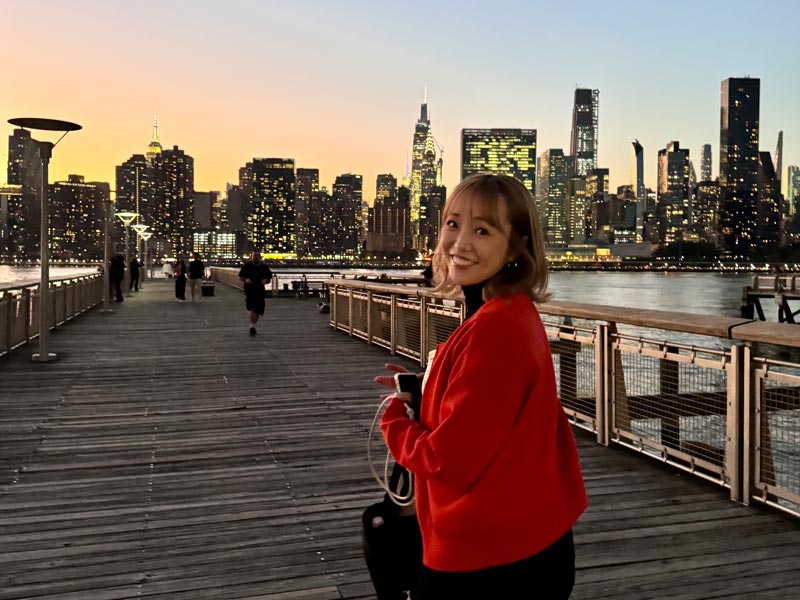
Manhattan at night
──After coming to New York, is there anything you’re especially glad you did?
“This is more about mindset, but I think it was very good that I acted with the intention of ‘being reborn.’ When you’re in Japan, it’s easy to think that you must always be humble, or that it’s not good to put yourself forward. But since I had come all the way to New York, I felt there was no point unless I took bold risks—as if I had become American.
When I first arrived, it was just after the pandemic had ended, and discrimination and hate toward Asians still lingered. I was afraid at the beginning. Rather than feeling like I lived in New York, I felt as though I was being allowed to come here or merely visiting. In fact, a stranger once yelled at me, ‘This is not where you belong—get out!’
As I went through those experiences, I began to think that perhaps I was attracting that energy myself. I realized that I couldn’t appear timid or unsure. So I shifted my mindset to, ‘I live here, and I’m here to compete.’ Once I did that, I stopped being targeted with discriminatory remarks.
In the end, I truly felt that everything depends on the state of your own heart. If you’re going to challenge yourself in the U.S., you have to stop starting from a place of insecurity like losing confidence in your English. Instead of being tied to the past, I began choosing actions that would connect to my future.”
──That’s a wonderful mindset.
“Also, there were truly so many people who helped me. No matter how strong you try to be mentally, it’s still difficult to take action, and there are more painful moments than easy ones. When someone shouted discriminatory abuse at me, there was a person next to me who strongly spoke back on my behalf. There were many times when I was rescued by New Yorkers who refused to abandon me and stepped in to help. Those kinds of moments saved me. ”
Faced with an Unexpected Wall After an Exhilarating Stay in New York — The Mindset to Keep Studying Abroad from Becoming Just an “Event”
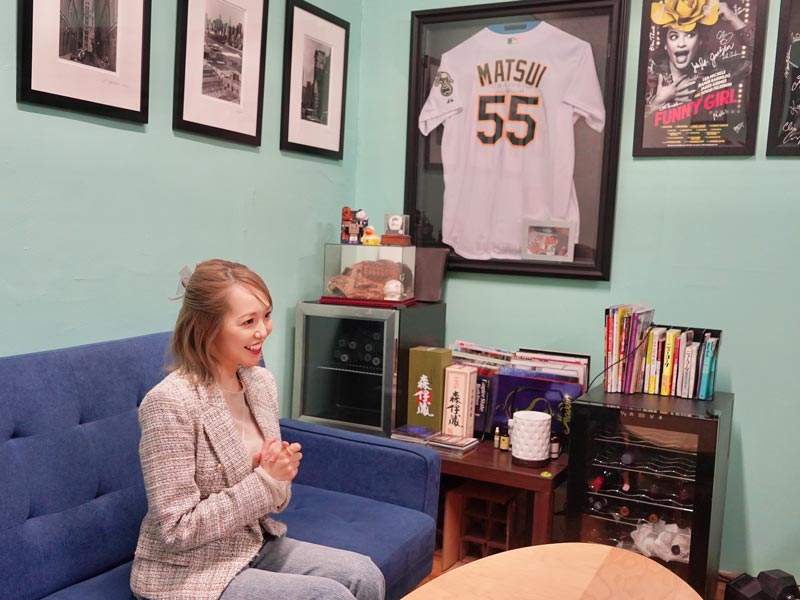
At the At Broadway office
──After completing your training and returning to Japan, was there anything you realized?
“The year I spent in New York was incredibly intense and full of stimulation every single day. That’s precisely why I felt that the real question was how I would continue to keep evolving after returning to Japan. I studied in New York, came back to Japan, shared what I had learned—and then what? I kept asking myself, ‘What do I want to do beyond this?’ and ‘What would it take to go back to New York again?’ I felt that I needed to live my life constantly thinking about what the next step should be.
To be honest, after returning to Japan and completing the stage projects I had set as goals for myself, there was a part of me that felt burned out. That’s why I decided to face myself again and ask what I truly want to aim for—so I came back to New York once more.
I was fortunate to appear in works I love and to do many of the things I had dreamed of. But perhaps because of that, I felt as though I had already climbed what seemed like the ultimate mountain—something that could have been ‘the goal.’ After reaching that peak, I found myself unable to clearly see the path ahead. That’s exactly why I returned here to New York: to rediscover what I want to strive for from this point forward.”
──I see. What’s important is how you move forward after gaining experiences in New York.
“Life in New York is exciting and joyful. There’s a sense of achievement like a newborn child learning their first words, and the days pass in a flash, like fireworks. That’s why you must never lose sight of what you want to use that experience for. Otherwise, it simply becomes an event—something that happened, and nothing more.”
──How do you think your experience in New York changed you?
“It made me decide that I no longer pursue things just because someone else has highly valued it. I don’t want to chase someone else’s definition of success or the right answer for an actress. Until now, perhaps unconsciously, I had made ‘being evaluated by someone’ my goal. But I realized that even if you chase someone else’s idea of success, it won’t truly fulfill you.
This may sound a bit presumptuous, but I don’t feel drawn to achieving something that someone else has already succeeded at. Instead, I want to walk a path that no one has walked before. That path might be difficult and full of thorns. But I’ve come to realize that living that way is what makes me happiest.”
Life After Returning to Japan — Choosing Independence and Launching a Company to Further Pursue “Sharing Emotion”
Here, we share an update on what has happened since—an interview conducted in July 2025, approximately eight months after the conversation featured above.

Nana Kono Speaking About Her New Aspirations in an Interview (Summer 2025) ©nana lab. Inc.
──It’s already been eight months since we last spoke in depth about your training days in New York. What changes have taken place since you returned to Japan?
“After returning from New York where I struggled with many doubts, I began turning a variety of ideas into action. First, as of March 31 this year, I left Ongakuza Musical, where I had been a member for about seventeen years, and became self-employed. And this August, I plan to establish my own company and launch my personal agency, ‘nana lab.’”
──You’re starting your own agency? That’s a major decision.
“To be honest, part of me wonders if it might be a bit ambitious for me. But even so, I decided to do it because I’m overflowing with things I want to create, and the thought of giving them shape genuinely excites me.
This may sound a bit philosophical, but there’s a poem by Mado Michio that the founder of Ongakuza Musical used to frequently share:
“Here is an apple.
Ah, on this spot
Being here, and not being here
Perfectly, dazzlingly, fit together”
At the time, I honestly didn’t understand it at all. But recently, it suddenly began to make sense to me. What I want to create does not yet exist in this world. And yet, within my heart, it certainly does exist. I’ve come to feel that this very state is what ‘perfectly fits.’ In other words, perhaps it already exists—it simply hasn’t taken shape yet. Now I can believe that this is precisely the moment to move forward.”
──Those feelings led you to decide to leave Ongakuza Musical.
“Ongakuza Musical is a company I truly love, and there are people I deeply care about, so I struggled with the decision immensely. The founder always showed me such warmth, and the current artistic director, who has served in that role since 2016, has encouraged me all the way through. So, I had never once imagined that I would leave the company.
But about a year ago, when we were able to stage SUNDAY in my hometown of Hiroshima, I suddenly had a quiet premonition in my heart that I would probably move on to the next stage. After that, I spent a great deal of time in conversation with the company, and in the end, they gave me a strong and generous push forward. Rather than feeling that I quit, it feels more accurate to say that I stepped into the next stage.
I don’t believe anything in this world lasts forever. But human connections are mysterious. The people we have met in the past may show up again somewhere in the future. I look forward to the day when I can reunite with the people I cherish, having grown more mature and stronger than before.”
──Is there anything you would like to challenge yourself with next?
“As I have continued to face myself honestly, I’ve come to realize that, for me, being moved is the most precious thing of all. And I’ve come to define my life’s theme as sharing that emotion. That realization was enormous. While I was in New York, I constantly asked myself what I really want to do. Now, little by little, the answer is beginning to take shape.
I want to create moments of deep emotion. I want to bring into existence feelings that have never existed in this world before and then share them with as many people as possible. To do that, I intend to continue standing on stage and singing for the rest of my life. At the same time, I’ve begun a new challenge: running a company. Thinking for myself, working hands-on with my team, and moving toward a better direction together—that process is incredibly exciting to me right now.”
──It has been about two years since your time studying in New York. You today seem to radiate an inner strength and brilliance.
“Lately, I feel like I’m bursting with energy. The actors I respect all share this quality, which means they are overflowing with vitality. I believe that in order to truly shine on stage, your own internal energy has to exceed that of the role you are playing. The people who possess that kind of power seem to shine light simply by standing there. Now that I’m running toward my dreams from zero again, I feel that I may finally be touching a bit of that same energy.
Of course, I still have plenty of worries and anxieties. There are nights when I wake up from nightmares. Even so, my heart dances at the work of turning something that ‘doesn’t exist’ into something that ‘does.’ An official announcement is coming soon, but I’m scheduled to hold solo concerts in Tokyo and Hiroshima, and I will also appear in the Japanese production of the Broadway musical Dear Evan Hansen.
My hometown of Hiroshima is something I want to treasure deeply. Tokyo, Hiroshima, and overseas—I hope to become someone who connects these three places with a single line. While basing myself in these three hubs, I would eventually like to create original works and also engage in activities that bring culture and the arts to the next generation. The exact form, such as workshops, is still something I’m exploring, but I hope to create opportunities to connect with future artists.”
──That sounds wonderful. It seems your projects toward a new and expanding future are already beginning to move.
“Right now, it’s like an amoeba without a clear form. I’ve only just begun building a team and environment. Because it doesn’t yet have a visible shape, if someone asks me what I am doing now, I could easily say nothing at all.
But if you look at it another way, in this very moment when I’m working to give form to what exists inside my heart, I believe that even though it looks like I’m doing nothing, I’m actually doing everything. First, I want to make sure that our team can truly make a living together. Then I want to cultivate the soil, to build a strong foundation, and accumulate enough force that we can send our work out not only in Japan, but also overseas, in places like New York and London.”
Going Abroad Is Only the Beginning — Once You Define Your Core Purpose, the Path Forward Becomes Clear
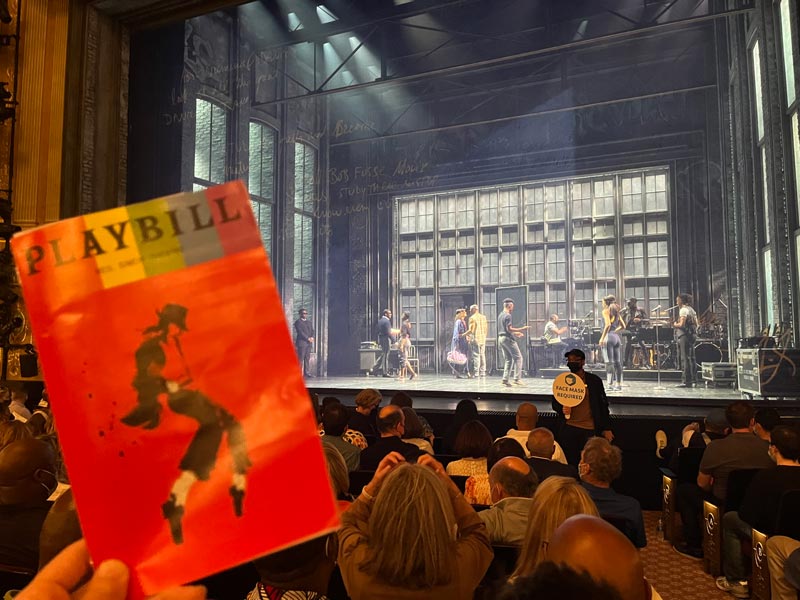
Watching the Broadway Musical MJ
──Lastly, what message would you like to share with performers who aspire to work overseas?
“First, I think it’s important to determine whether you are someone who simply wants to go abroad, or someone who wants to study overseas and then accomplish something based on that experience. If ‘going abroad’ itself becomes the goal, you may find it difficult when reality doesn’t match your expectations. There was a time when I vaguely thought that there may be more opportunities overseas. But once I actually came, I realized that the people who truly seize opportunities are those who have a clear vision of what they want to do and who they want to become.
Asking specific questions can be helpful. Do you want to compete as a dancer overseas, refine your acting skills, or pursue a path as a director? If your dream is to stand on a Broadway stage, you might choose to master dance as a way to overcome the language barrier. If you want to work in a technical field behind the scenes, studying at a local university may become necessary.
The path you should take differs greatly depending on who you want to become. So I sincerely hope you will face that question and carry your own answer with you before you take on the challenge. And even if you don’t yet have a clear answer, I recommend going abroad while holding that question in your heart.”
──And as a musical fan yourself, what message would you like to share with international musical fans who are interested in Broadway?
“One of Broadway’s greatest attractions is its diversity — performers from a wide range of racial and cultural backgrounds share the stage. And above all, you can experience original works in their original form.
If anyone hesitates to see a show on Broadway because of the language barrier, I would say: please just go and see one! Through watching Broadway productions, I realized that our hearts are moved by more than just words. The vibes and the sheer quality of a production transcend language and hit you directly in the heart.
The experience moves you in a different way than theater in your country. I truly believe that Broadway offers experiences powerful enough to change your life. So please, take that first step.”
Editor’s note
Among the many people Nana met during her training in New York, it so happened that she crossed paths with our company’s CEO. That connection eventually led her, during this recent stay, to kindly visit our office in person to say hello. One passionate conversation followed another — and that is how this interview came to life. Hearing the unfiltered experiences of someone who has actually taken on the dreamlike project of “studying theater in New York” offers invaluable insight for those who are considering taking that leap themselves. As a result, this interview turned into a rather in-depth and candid discussion.
With a radiant, sun-like smile and a crisp, engaging way of speaking, Nana has an energy that brightens everyone around her. Yet she shared that there were times when the flame in her heart nearly went out. Each time, she chose to confront her own inner voice. That is precisely why, during her limited one-year stay in New York, she was able to keep asking herself the essential question of what she wanted to become — and act upon it. Hearing how she built her solo concert from absolutely nothing was deeply moving.
“It’s important not to let your time in New York end as just another event,” she said. True to those words, Nana continues to move forward, fueled by passion. She will no doubt make many more bold decisions, take on new challenges, and bring hope and vitality to those around her. With the launch of her new agency now underway, we are excited to see what new horizons she will open next.
May her words become the spark that inspires someone else to take their first step. We are truly grateful for the opportunity to hear her story.
Written by Sayaka Imada
Translated by Haruka Aoki
See all Journeys to Broadway articles
For Broadway tickets, leave it to At Broadway
 At Broadway is a Broadway-musical specialty site operated by the local New York travel company At New York. We sell discount tickets and share Broadway information.