
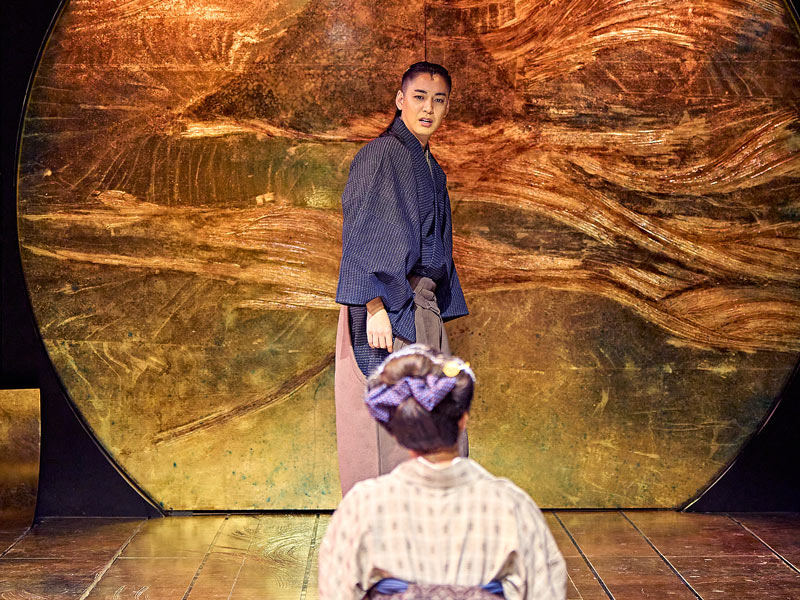
A scene from the West End production of “Pacific Overtures” (Photo credit Manuel Harlan)
Actor Takuro Ohno has appeared in television dramas, films, and on stage in productions such as The Producers and Attack on Titan the Musical. After spending a year between 2019 and 2020 studying English abroad in New York, he found himself returning on several occasions to relive the magic of Broadway in person. As of February 2024, he stars in Pacific Overtures in London. Talking about his experienced and various success in across Japan, New York, and London’s West End, he spoke with us about the differences he feels between stages at home and abroad, as well as the routes available to performers seeking opportunities overseas.
From a desire to make a difference to falling in love with musicals
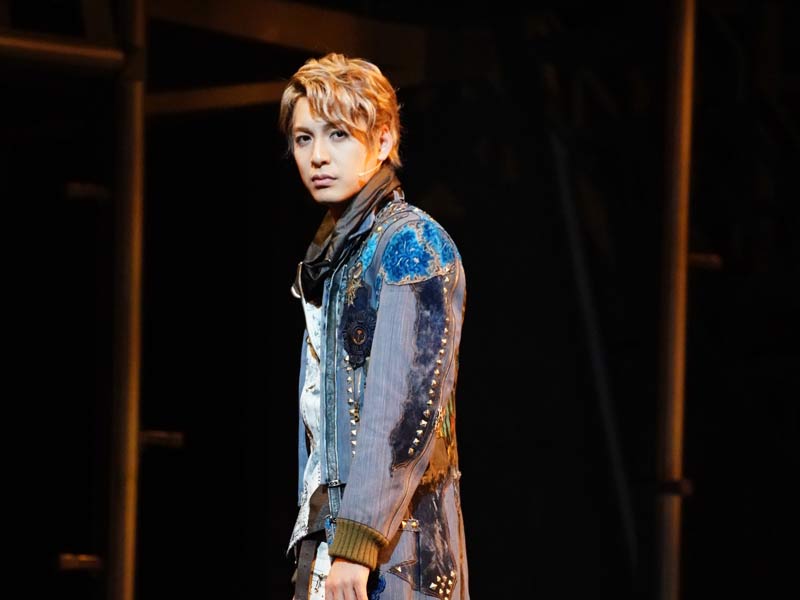
From the 2019 production of “Romeo & Juliet” (c 2019 Production Office / Photo by Aki Tanaka)
──How did your journey into musicals begin?
I entered the entertainment industry while studying at Rikkyo University to become a medical trainer for professional athletes. On a whim, I entered the university’s “Mr. Contest” and won the grand prize. That led to an invitation to audition for a talent agency, where I was selected and eventually made my debut as an actor. Those audition workshops were my first real exposure to acting since appearing in a school play as a child, and I vividly remember how much I enjoyed the experience.
I have long dreamed of helping animals in need around the world, and I believed that working alongside influential people was an effective way to make a meaningful impact. I admired athletes for their ability to inspire others, and felt that collaborating with people who have a strong public presence could broaden the reach of important projects. I chose acting when I realized it could bring together the causes I care about and allow me to use my platform to create positive changes.
My interest in musicals began when I went to see a show featuring a senior colleague from my agency as part of my acting studies. It was my first time seeing a musical and I was moved to tears by this larger-than-life and joyful world where people suddenly break into song and dance, which felt far removed from everyday life. Overwhelmed by the power of entertainment. I began attending performances regularly.
Before long I came to want to stand on that stage as a performer myself, and though at the time I didn’t have a skill I could proudly call my strength, I started vocal training to develop one. I continued gaining experience in musical theater and before I knew it, I was stepping into productions overseas.”
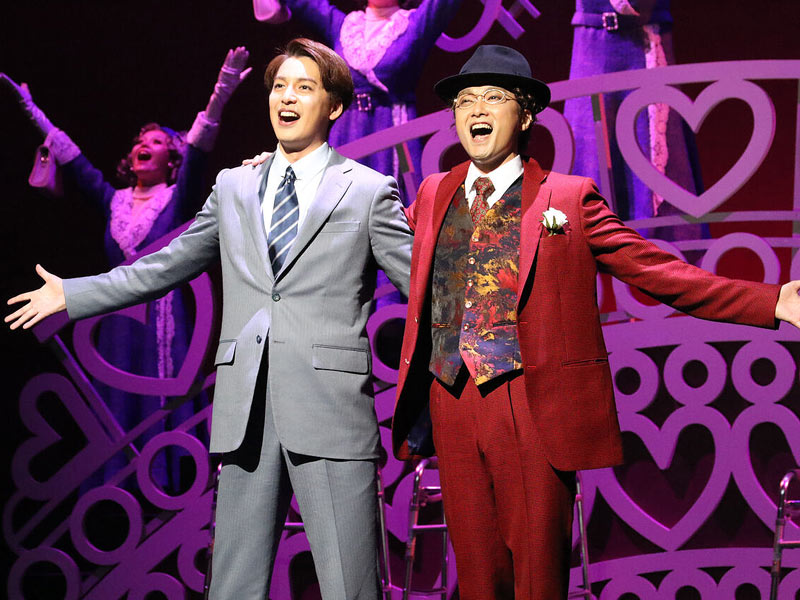
From the 2020 production of “The Producers” with Yoshio Inoue and Takuro Ohno (c) Toho Co., Ltd.
──What prompted you to aim for stages overseas?
“I grew up watching foreign films and always longed for the landscapes I saw on screen. I dreamed of a career that would take me around the world. When I turned 30, I realized that if I wanted that future, I needed to be able to speak English. I decided it was now or never. I didn’t want to live with regrets and wanted to step beyond my home country.
My chance to perform on a stage abroad came sooner than expected. I had planned to move overseas, study the language, and prepare for acting work. Then, I was invited to audition for the West End production of Pacific Overtures. Honestly, I felt underprepared and hesitated, but those around me encouraged me to take the opportunity and reminded me that I had nothing to lose even if it didn’t work out. I auditioned and was fortunately cast, and now I am performing on stage in London.
It was unexpected, but being thrown straight into the production forced me to rise to the occasion. Including rehearsals, the past four months have been a period of intense growth. I am truly glad I made that choice.
Working abroad has helped me appreciate what is special about both life overseas and life at home, and it continues to be an eye-opening experience.”
New York rewards entertainers; Once even tearing in frustration of rivalry with other performers

In New York
──How would you describe the differences between stages at home and overseas?
“There are many differences, but one of the most striking is how strongly each performer’s individuality comes through. Take the ensemble, for example. On Broadway and in the West End, performers often hone their craft in the ensemble before winning principal roles through auditions. As a result, even ensemble members perform with a strong determination to showcase their own strengths. You can feel that drive in each individual.
Japanese companies, on the other hand, also tend to work with a kind of samurai spirit. Once they decide, ‘This is what we’re going to do,’ they will see it through to the end, even if rehearsals run long. That perseverance is, I believe, one of Japan’s great strengths.
In contrast, in the UK—and likely in the US as well—rehearsal times are strictly defined. Even if a task isn’t fully completed, rehearsals end when the scheduled time is up.
──We hear major-league practice blocks are short too, so you have to focus hard.
“That approach may actually be better in its own way. There’s a kind of decisiveness in committing to absolute focus within a fixed time frame. Again, it’s not a question of which is better.
Experiencing the London stage also made me aware of differences in how finished a production is when the curtain first rises. In this case, Pacific Overtures had a particularly short rehearsal period—just one month. In Japan, you would typically have at least a month and a half. As a result, I had the impression that the show opened before everything was fully prepared.
Of course, adjustments and improvements are made as the run continues. But it made me realize that this differs from the way Japanese companies tend to think: that if audiences are paying to see a performance, the production should reach a high level of completion before opening night.”
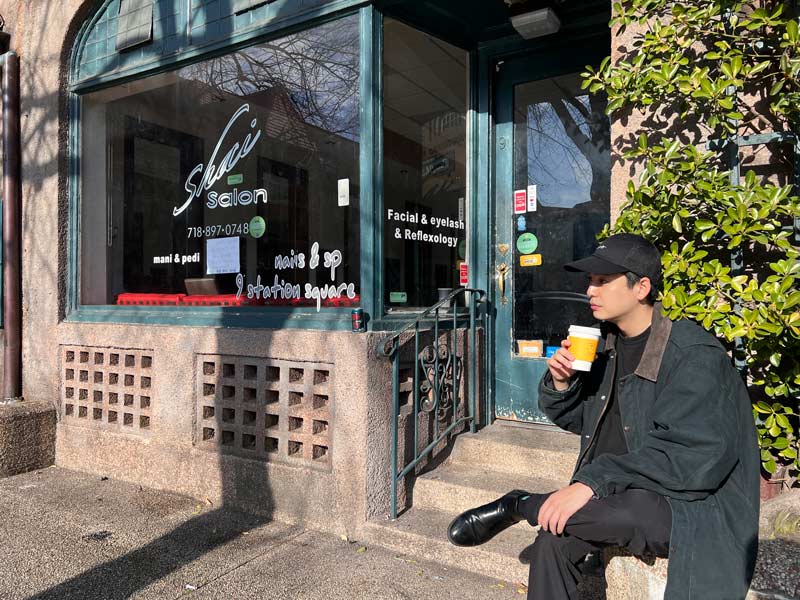
In New York
──Tell us about your time in New York City. How long were you there and why did you choose this city?
“My stay in New York City coincided with the COVID-19 pandemic and strict lockdowns, from December 2019 to July 2020, during which I spent my time studying the language. At first, I was choosing between the UK, Los Angeles, and New York. I wanted to learn American English for a future in film, and since living in Los Angeles would likely require owning a car, I chose New York. Being closer to Broadway was another factor, so it naturally felt like killing two birds with one stone. The lockdown meant I was only able to see two performances during that time, but that was enough to keep bringing me back on planes several times after 2020. I love the city.”
──So Hollywood was on your mind too.
“Yes. I love both watching and performing in musicals, but in some respects that interest was more rooted in my personal passion. I wasn’t sure I had the ability to stand on Broadway or in the West End, so working in film and television overseas felt more realistic. Before coming to the US, I actually had my sights set on Hollywood.”
──We assumed you went abroad determined to conquer the stage.
“I didn’t have that level of confidence and often felt overwhelmed. I even cried while watching MJ the Musical on Broadway out of frustration, thinking that I couldn’t compete at that level. On Broadway, performance power is paramount. Beyond acting, the stage belongs to true entertainers whose singing and dancing are on another level. It takes tremendous skill. London, meanwhile, seems to put relatively more weight on acting, so at the moment I feel I may have more possibilities there.”
New York’s charm: honoring the old while welcoming the new
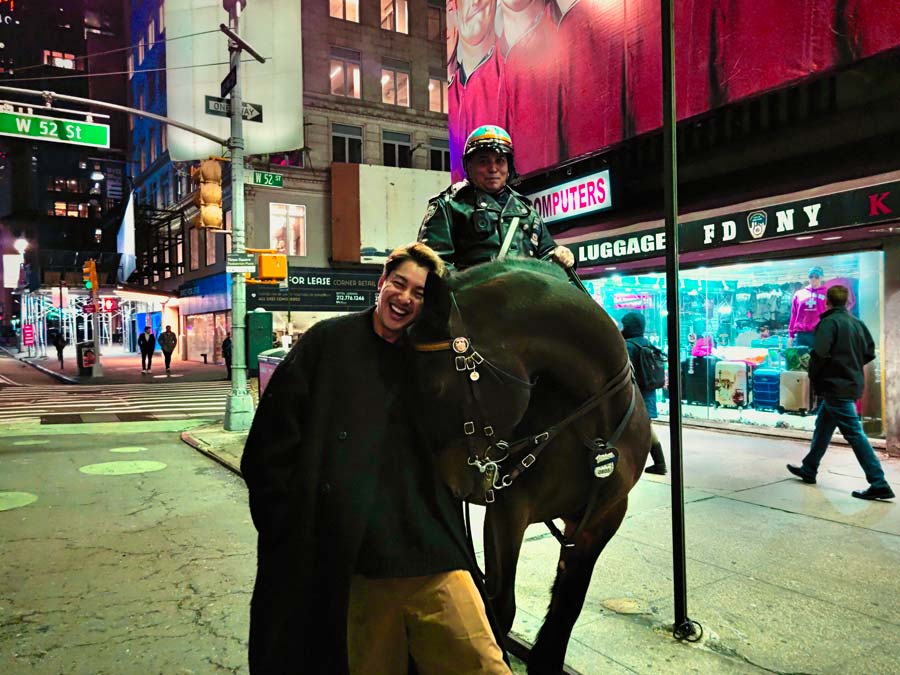
In New York (Photo by Keishi)
──What do you love most about New York?
“Its vitality. The economy moves at full speed, entertainment is world-class, and you can feel the pride of people who truly believe their city is number one. After experiencing life in the US and then coming to London, I realized how large-scale the US is in so many ways.”
──And what do you love most about Broadway?
“Its sheer entertainment value. Broadway shows are truly shows. Titles like MJ and Moulin Rouge! are easy to enjoy without overthinking. New York blends old and new beautifully, both in entertainment and in the cityscape. Historic theaters stand beside gleaming towers, and classic staging meets cutting-edge technology. That dynamic contrast is part of its appeal.”
Leaving the theater with the fun still lingering in my mind: that’s the kind of Broadway I favor
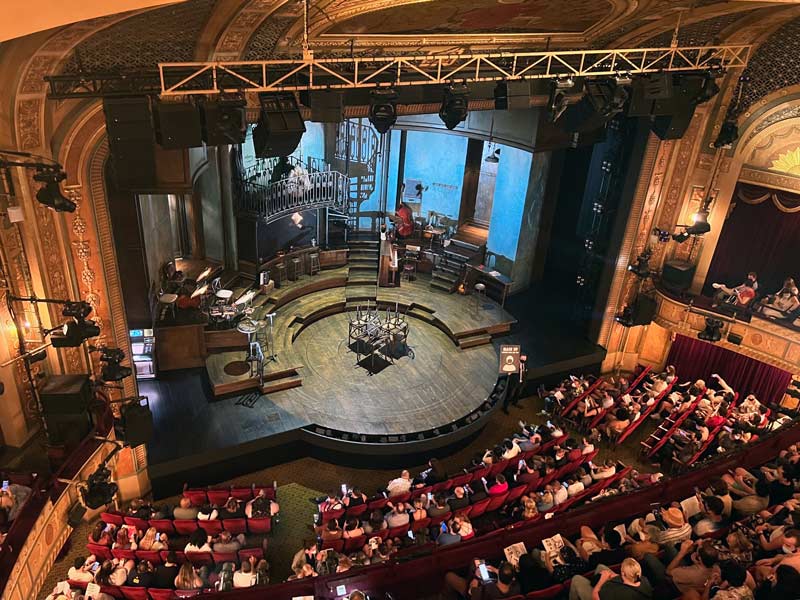
Walter Kerr Theatre on Broadway
──What are your favorite Broadway shows?
“Although I couldn’t see the original Broadway run from 2001 to 2007, I especially love The Producers, which I performed in my home country. It is Broadway distilled. Two men who dream of becoming producers claw their way to success through satire and jokes galore. It’s laugh-out-loud funny, ends happily, and is pure entertainment. You leave the theater thinking, ‘That was fun,’ with nothing heavy weighing you down. That’s the charm of many Broadway titles.
I also loved MJ the Musical. The atmosphere buzzes with reactions like ‘What a performance’ and ‘Michael Jackson was amazing,’ as the audience rises to its feet, clapping and dancing. That energy felt wonderfully Broadway to me.
I particularly love Rent. The songs struck me deeply.”
──From a performer’s perspective, what makes a good theater?
“Interesting question. First, acoustics: how easy it is to sing and how well the sound carries to the audience. Some venues are praised for clarity, while others are known to be less forgiving for dialogue. On Broadway, I’ve heard that sound systems aren’t fixed and that productions can bring in their own. Being able to tune the equipment to the show helps raise quality.
Flexibility of the venue itself matters too. In London, for example, the Menier Chocolate Factory where we are staging Pacific Overtures allows the interior to be extensively reconfigured. Our stage sits at the center with seating looking down from both sides. The West End production of Back to the Future even decorated the lobby and interior with era-appropriate signs like vintage TOYOTA boards. Walking through that world before the curtain rises lifts my excitement. Being able to customize the venue to suit the production is fantastic.
Naturally, the historic theatres of Broadway and London quicken the pulse the moment you step onto the red carpet or catch a glimpse of the private boxes. Each space left a lasting impression, and I found myself wanting to photograph every one of them. ”
Standing on stages in a foreign country, wondering why not everyone tries
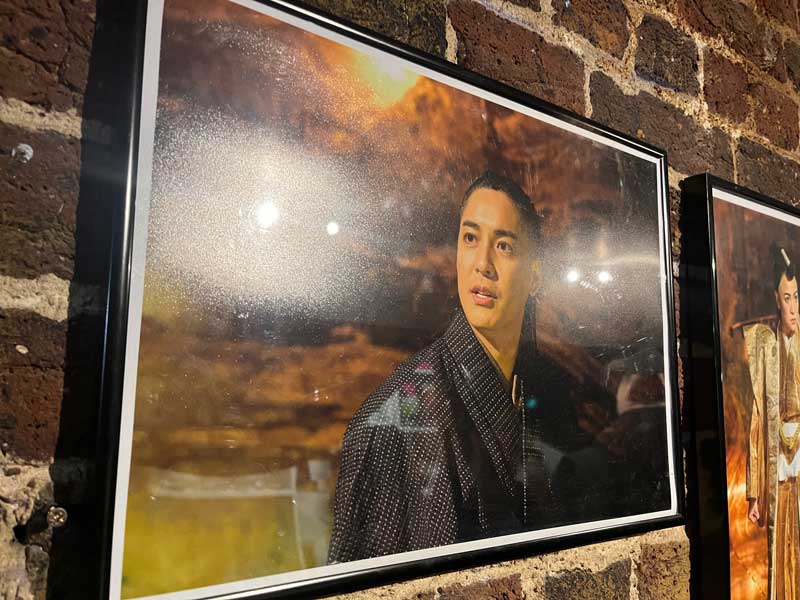
The West End production of “Pacific Overtures” (Photo by Seigo)
──Lastly, what message would you like to share with performers who aspire to work overseas?
“Whether you can succeed abroad depends on your will. It is never too late to try, and you don’t always need native-level English. Some roles require it, but others, like my current role as a samurai, actually benefit from an authentic accent. Beyond language, cultural knowledge and embodied behavior can be real strengths. There are roles only certain performers can convincingly play. So don’t assume you can’t compete internationally: sometimes your background is exactly what a production needs.
That said, there are fewer nationality-specific roles and it is hard to be cast as a lead, so it’s important to be realistic about ensemble work. I think the general ensemble skill level is very high where I’m from. Watching productions in London, I was struck by how strong the fundamentals of singing and dance are back home. With a growing emphasis on diversity, more productions are casting ensembles from varied backgrounds, which means opportunities exist. Many hesitate because of language, and so did I until I was 30. But now I stand on these stages with the conviction that anyone can make it if they truly try.”
──And as a musical fan yourself, what message would you like to share with international musical fans who are interested in Broadway?
“Take in the energy of the audience – the cheers, the boos, the standing ovations. The atmosphere created by the performance, by both the performers and the audience is especially electric and exciting. Go and experience world-class entertainment up close for yourself.”
Editor’s note
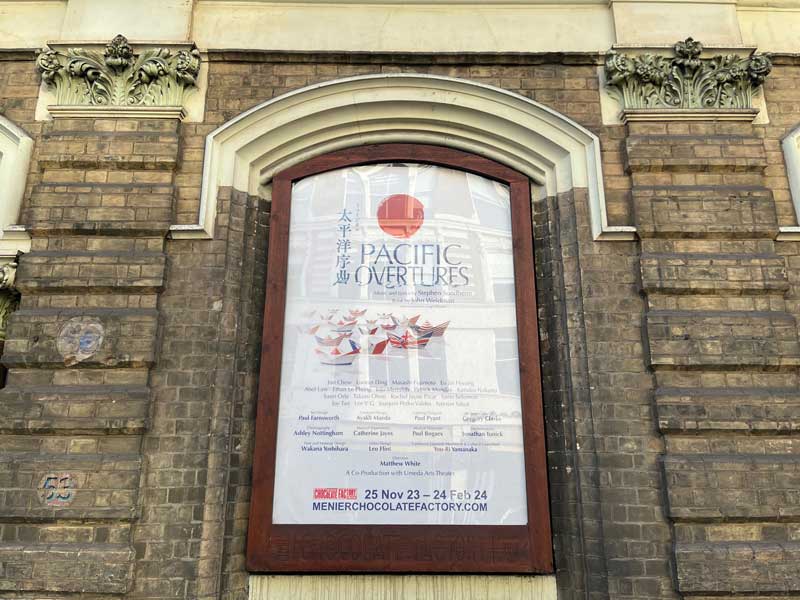
At the Menier Chocolate Factory, home of “Pacific Overtures” (Photo by Seigo)
Under the title “Journeys to Broadway,” this series sets out to interview individuals who have devoted their lives to mastering the musical theatre craft. By exploring the worlds behind the curtain and tracing the paths these artists have taken, the aim is to shed light on who they are—and how they ultimately reached the pinnacle of their profession.
I first met Takuro Ohno in New York in 2019. Standing 185 centimeters tall with striking features, he is a star whose presence commands attention on stage. In Japan, he had already built a solid career not only in theatre but also in film and television. Yet driven by the desire for a greater stage, he traveled alone to New York to test himself—to train, to struggle, and to grow.
Even so, standing before the world of Broadway, Ohno was confronted with performances of overwhelming intensity. At times, he admitted quietly that he felt outmatched—that the gap in ability felt insurmountable. That, perhaps, is what people mean when they speak of the “wall” that is Broadway.
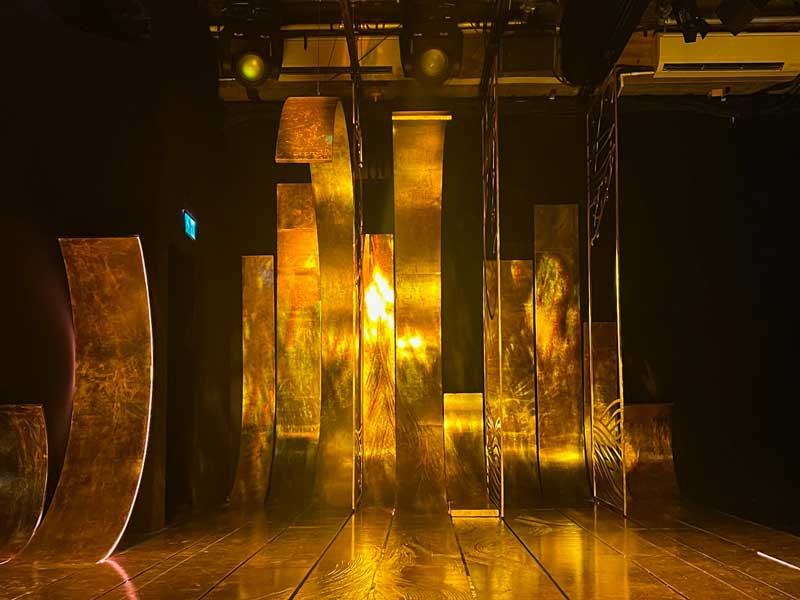
“Pacific Overtures” on stage (Photo by Seigo)
After returning to Japan, he continued to visit New York regularly, attending musicals whenever he could. It was a way to ensure he never forgot that wall-to continually reassess where he stood. Whenever he breathed in the air of New York, his face would light up and he would say, almost reflexively, “I feel alive again.” Watching him, there were moments when it felt inevitable-almost like deja vu-that one day he would truly stand on that stage.
That is why I had long hoped that when Ohno finally grasped his dream, I would have the chance to interview him and introduce him more fully to readers. This time, that hope became reality.
Pacific Overtures is set in Japan at the end of the Edo period, portraying the conflict between the conservative Tokugawa shogunate and the revolutionary sonnō jōi movement. Premiering on Broadway in 1966, the production received ten Tony Award nominations and has since been revived three times across Broadway and the West End. It is, without question, a classic among classics. Notably, it was also the first musical ever broadcast on television in Japan.
The music was composed by Stephen Sondheim, renowned for his lyrics for works such as West Side Story. Sondheim’s talents extended far beyond musical theatre, encompassing film scores and even songwriting for pop artists like Madonna. Over the course of his career, he received numerous honors, including the Tony, Pulitzer, Academy, and Grammy Awards. In the realm of musical theatre, he remains unmatched, holding one of the records for the most Tony Award wins in history.
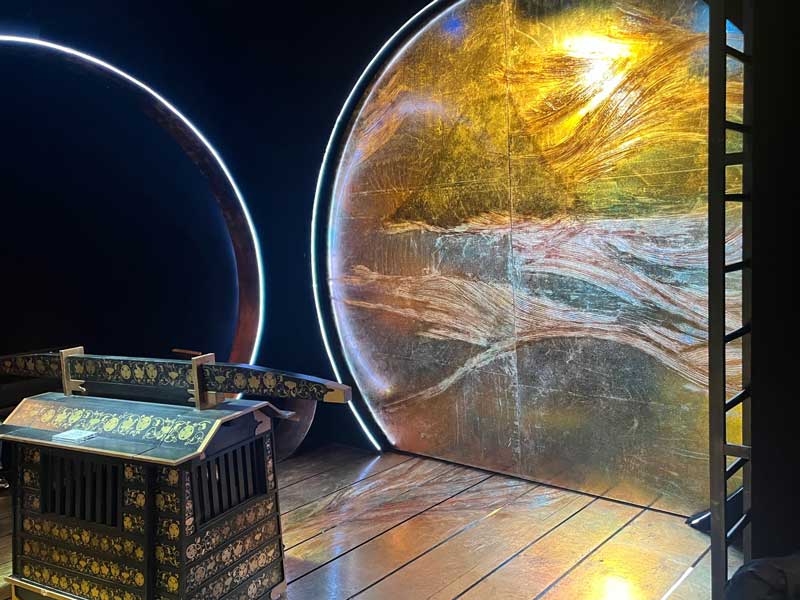
“Pacific Overtures” on stage (Photo by Seigo)
Takuro won his role through an audition. Among a cast of British and Britain-based performers of Japanese heritage, he was the only actor traveling from abroad, and he was the lead. Only a few performers from his country have led productions on West End or Broadway stages: Naoko Mori in Miss Saigon, Ryoko Yonekura in Chicago, and Ken Watanabe in The King and I. Leading at this level demands presence, performance, vocal power, and, above all, individuality, as well as the responsibility to anchor the company. I just had to see it in London for myself.
The house was full, as one would expect for a Sondheim production. The audience was skewed toward fans of classic musicals. Takuro plays a samurai on the shogunate side who is, in the end, cut down by loyalists. You feel the audience growing attached to him as the story unfolds. The fall of the samurai during the transition to the Meiji era is drawn with care, making it easy to understand even for London audiences. The night ended in a standing ovation; the elderly woman in front of me turned to her husband and said, “I’ve never seen such a good show.” The impact on the audience was clear.
I cannot wait to see where Takuro goes next-on Broadway, in the West End, and beyond.
Written by Sayaka Imada
See all Journeys to Broadway articles
 Broadway Musical Discount Tickets – On Sale Now!
Find the best Broadway ticket deals right here – faster, cheaper, and backed by local expertise. Get ready to experience the magic of Broadway!

- Get discount tickets easily with instant booking
- The most detailed musical guides and reviews
- Dedicated support throughout your Broadway experience