Address, opening, capacity of Broadway Theatre
Basic Information about the Broadway Theatre in NYC
|
Address: |
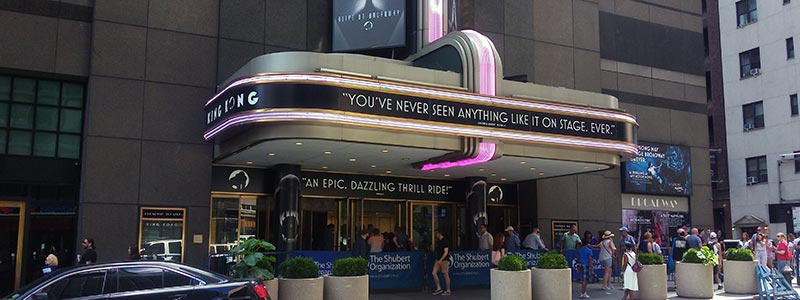
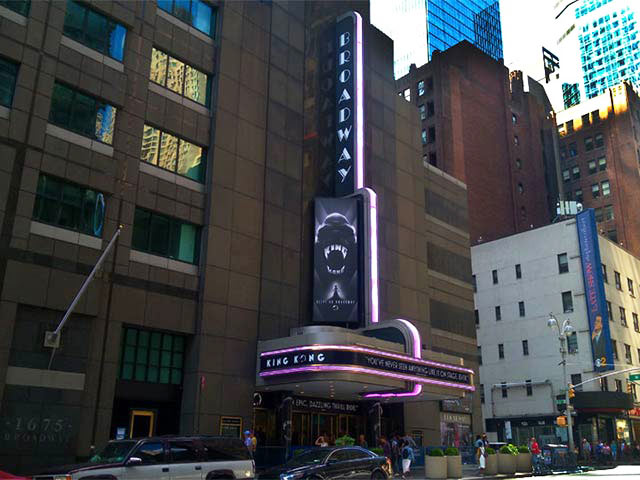
1681 Broadway, New York, NY 10019(
Map )
Located on Broadway, between 52nd street and 53rd Avenue
|
|
Opened: |
1924 |
|
Capacity: |
1,761 seats |
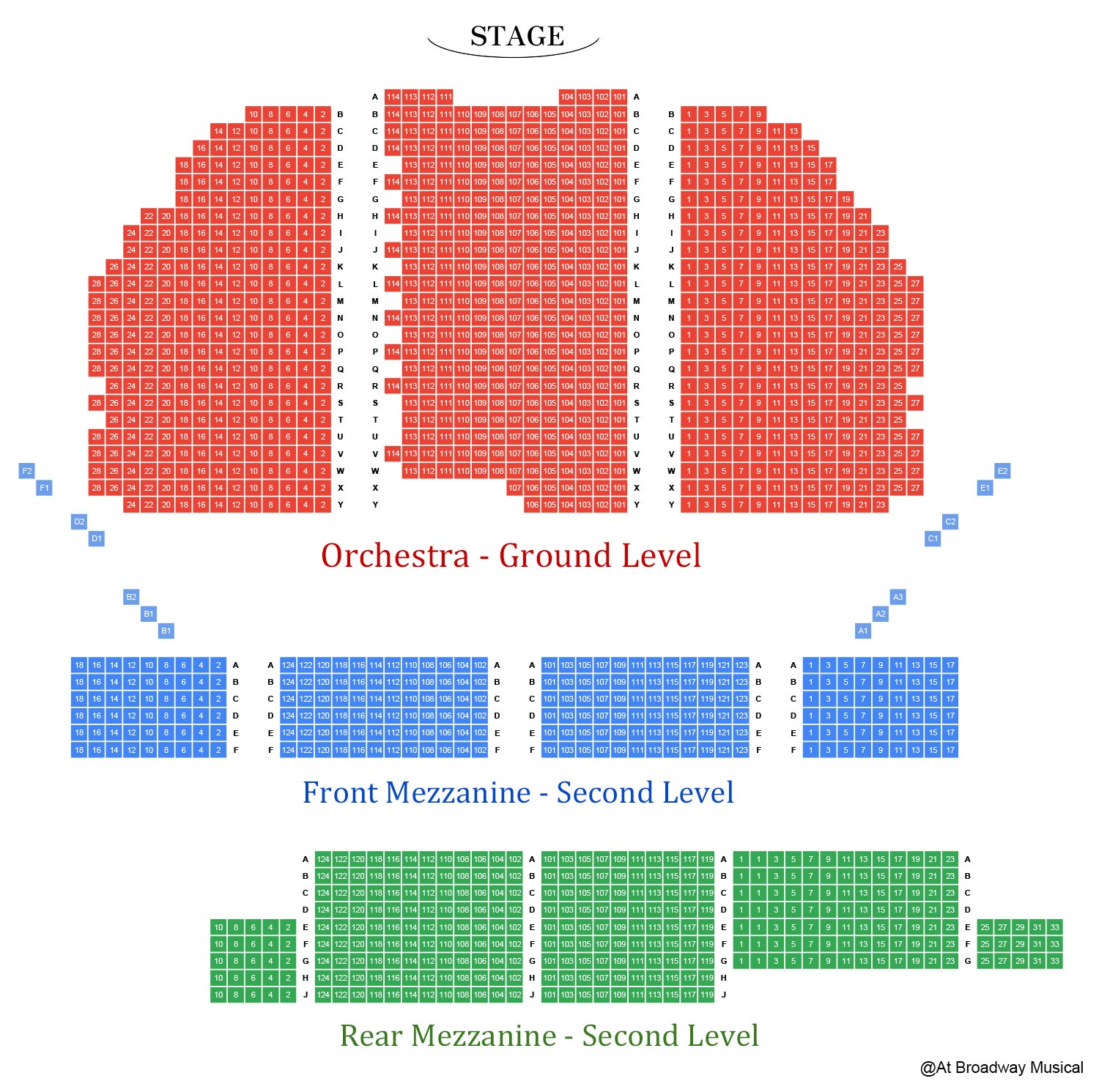
Seating Chart of Broadway Theatre
The Broadway Theatre has a seating capacity of 1,761 seats, divided into three main sections: Orchestra (1st level), Front Mezzanine (2nd level), and Rear Mezzanine (2nd level).
*Click to view larger image
View from the seat of Broadway Theatre
You can view real seat photos from inside the the Broadway Theatre to see the stage from sections. These images help you choose the seating option that best suits your Broadway experience.
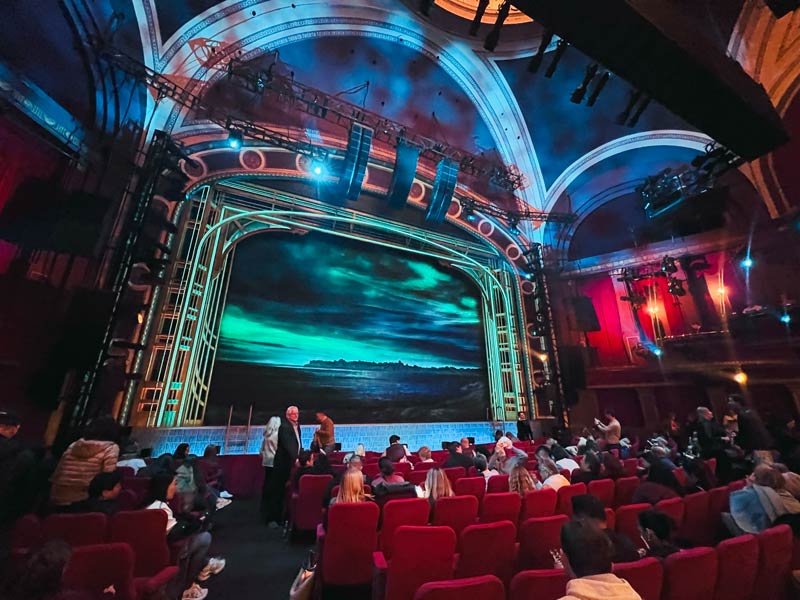
Orchestra Side Row N
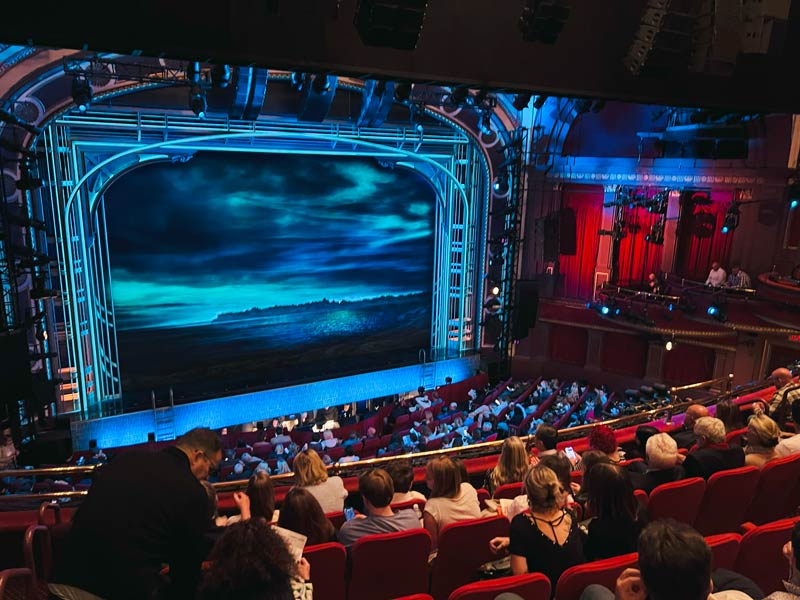
Front Mezzanine Side Row F
Directions to Broadway Theatre
Access to Broadway Theatre are most commonly by taking the New York City Subway (MTA).
The area around the theatre becomes very crowded close to showtime, so whether you are arriving by subway or taxi, please allow extra time to reach the venue.
Nearest Subway Station:


 Lines,
7 Avestation (About a 2-minute walk)
Lines,
7 Avestation (About a 2-minute walk)
 Lines,
50 ststation (About a 5-minute walk)
Lines,
50 ststation (About a 5-minute walk)
 Lines,
50 ststation (About a 5-minute walk)
Lines,
50 ststation (About a 5-minute walk)
Map, location of Broadway Theatre
Here is the map of the Broadway Theatre.
Best hotels near the Broadway Theatre
Discover the best hotels near the Broadway Theatre. Stay within walking distance of Broadway and enjoy easy access to shows, restaurants, and attractions.
The list of recommended hotels near the theater:
History of the Broadway Theatre
Opened first as a movie theater
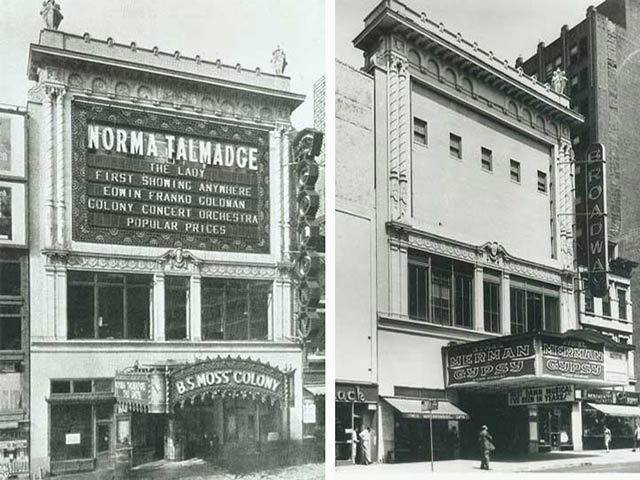
The Broadway Theatre first opened on December 25, 1924, Christmas Day, under the name
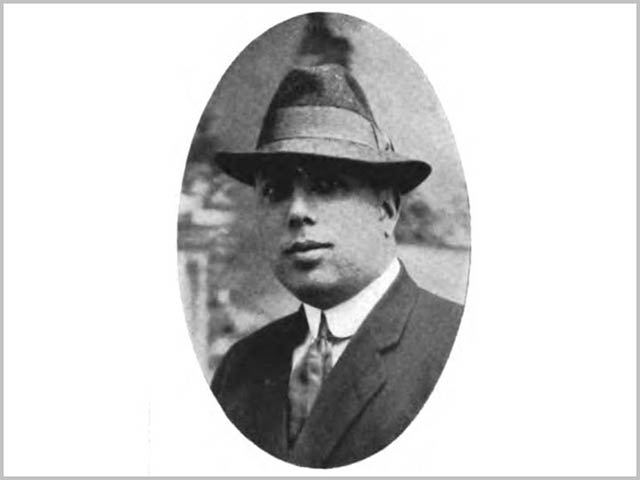
B. S. Moss’s Colony as both a movie house and a vaudeville theater featuring song, dance, magic, and comedy acts. The “B.S.” came from the initials of the owner, Benjamin S. Moss.
The building was designed by Eugene De Rosa, an Italian-born architect who also created Studio 54 and the Times Square Theatre. He gave the theater an Italian Renaissance style, and with
1,761 seats, it became one of the largest theaters on Broadway (currently the 4th largest in capacity).
A theater that changed its name many times
In its first 15 years, the theater went through multiple name changes:
1924 B. S. Moss’s Colony
1926 Universal’s Colony Theatre
1930 B. S. Moss’s Broadway Theatre
1932 Earl Carroll’s Broadway Theatre
1933 Broadway Theatre (2nd time)
1935 B. S. Moss’s Broadway Theatre (2nd time)
1939 Broadway Theatre (3rd time)
Benjamin Moss and his successors
Benjamin S. Moss was an immigrant from Austria who ran several small theaters but devoted much of his career to the movie business. In 1900, he founded
B.S. Moss Enterprises, which operated nickelodeons (small theaters for films and vaudeville). He expanded by acquiring popular venues, and by 1908 he had purchased a different Broadway Theatre (not the current one) for vaudeville and film screenings.
Stars who performed in productions organized by B.S. Moss Enterprises included George Burns, Gracie Allen, Harry Houdini, and Milton Berle, all of whom were celebrated entertainers of the time.
In 1910, Benjamin Moss built the
$100,000 Washington Theatre on Amsterdam Avenue and 149th Street. Unlike his earlier smaller cinemas, this was a grand “movie palace,” a term first coined at its opening to describe large, lavishly decorated theaters.
By the 1910s, as feature films became popular, many theaters, including Moss’s, hired live orchestras to accompany screenings. In the 1920s, facing competition from newly built large movie houses, Moss opened
B. S. Moss’s Colony (the present Broadway Theatre) with a much larger seating capacity.
In the 1930s, Moss handed control to his son Charles B. Moss and grandson Charles B. Moss, Jr., who expanded into a chain of movie theaters. In 1936 they built the Criterion Theatre in Times Square, which showed 70mm films like South Pacific, My Fair Lady, and Funny Girl. The Criterion operated until spring 2000 before being replaced by the Toys“R”Us Times Square store (now closed).
The first theater to screen Mickey Mouse
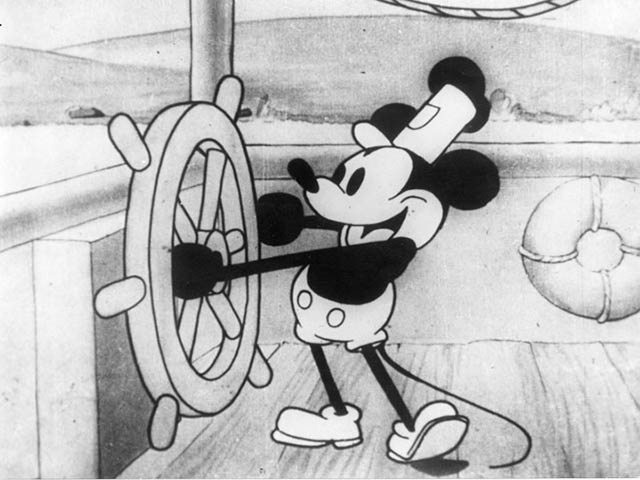
Not long after opening in 1924, the Broadway Theatre was also used as a cinema. In 1928, it became
the first theater in the world to screen Walt Disney’s Steamboat Willie, the short black-and-white film that introduced Mickey Mouse and Minnie Mouse. Running just 7 minutes and 42 seconds, it was the first Disney cartoon with synchronized sound, marking the birth of a global superstar.
A home for hit productions
On December 8, 1930, the venue officially became known as the Broadway Theatre and presented the musical The New Yorkers, firmly establishing its role as a musical theater. The Shubert family purchased the theater in 1939 and carried out renovations in 1956 and 1986.
With its large seating capacity and big stage, the theater has long been a favorite for major musical productions. It often serves as the new home for shows that outgrow smaller venues after becoming hits.
Notable productions include Funny Girl, Cabaret, The King and I, Les Miserables, La Boheme, Sister Act, Cinderella, Miss Saigon, and King Kong.
Iconic theater “on” the avenue, Broadway
Located right on Broadway, as the name suggests
The word “Broadway theater” can sometimes be confusing. Broadway itself is a major avenue that runs diagonally north-south through Manhattan. While avenues run north-south and streets run east-west, Broadway keeps its historic name.
Not all Broadway theaters are actually located on Broadway. Many are found in the surrounding Theater District, and the term “Broadway theater” often refers to this larger area.
The Broadway Theatre, however, is one of the few that truly sits on Broadway. Its main entrance faces directly onto the avenue, making it a genuine “Broadway” landmark theater.
Broadway’s theater history began in 1842 when impresario Oscar Hammerstein built the 1,000-seat Victoria Theatre at 42nd Street and 7th Avenue. Over the years many theaters were constructed, but many also disappeared. The 40 that survive today, including the Broadway Theatre, are those that successfully endured the changing times.
Among the 40 theaters in the Theater District, only five are actually located on Broadway itself: ① the Broadway Theatre, ② the Winter Garden Theatre, ③ the Marquis Theatre, ④ the Ed Sullivan Theatre, and ⑤ the All For One Theatre.
The Broadway Theatre truly lives up to its title as the avenue’s landmark venue with its name, location, and entrance all directly on Broadway.
 Broadway Musical Discount Tickets – On Sale Now!
Find the best Broadway ticket deals right here –
faster, cheaper, and backed by local expertise. Get ready to experience the magic of Broadway!

- Get discount tickets easily with instant booking
- The most detailed musical guides and reviews
- Dedicated support throughout your Broadway experience