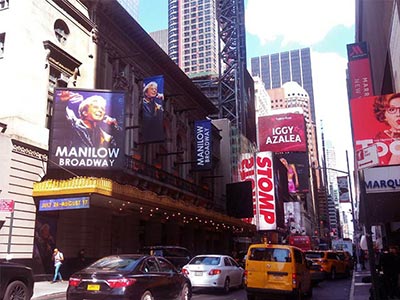
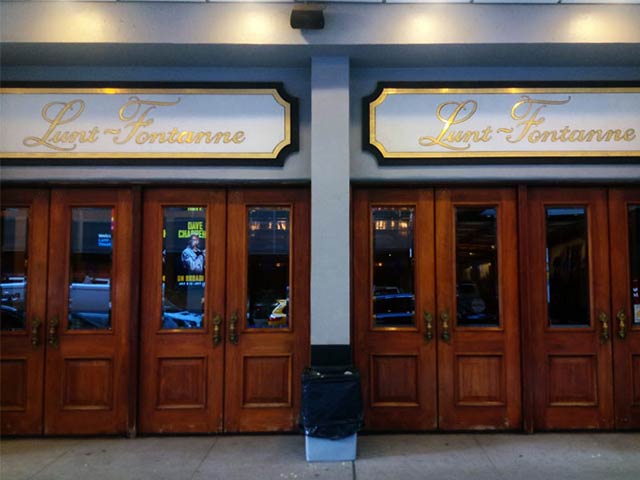
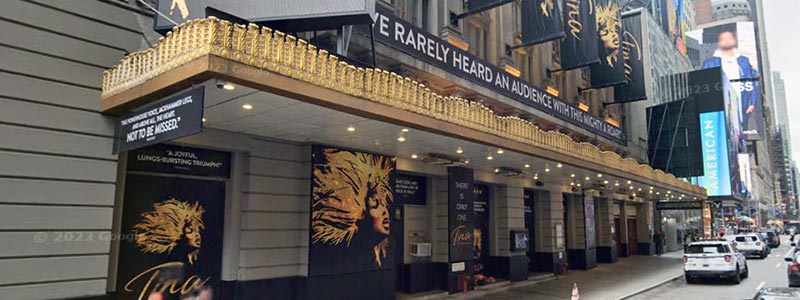
Address, opening, capacity of Lunt-Fontanne Theatre
Basic Information about the Lunt-Fontanne Theatre in NYC
|
Address: |
205 W 46th St, New York, NY 10036(
Map )
Located on 46 Street, between Broadway and 8th Avenue
|
|
Opened: |
1910 |
|
Capacity: |
1,509 seats |
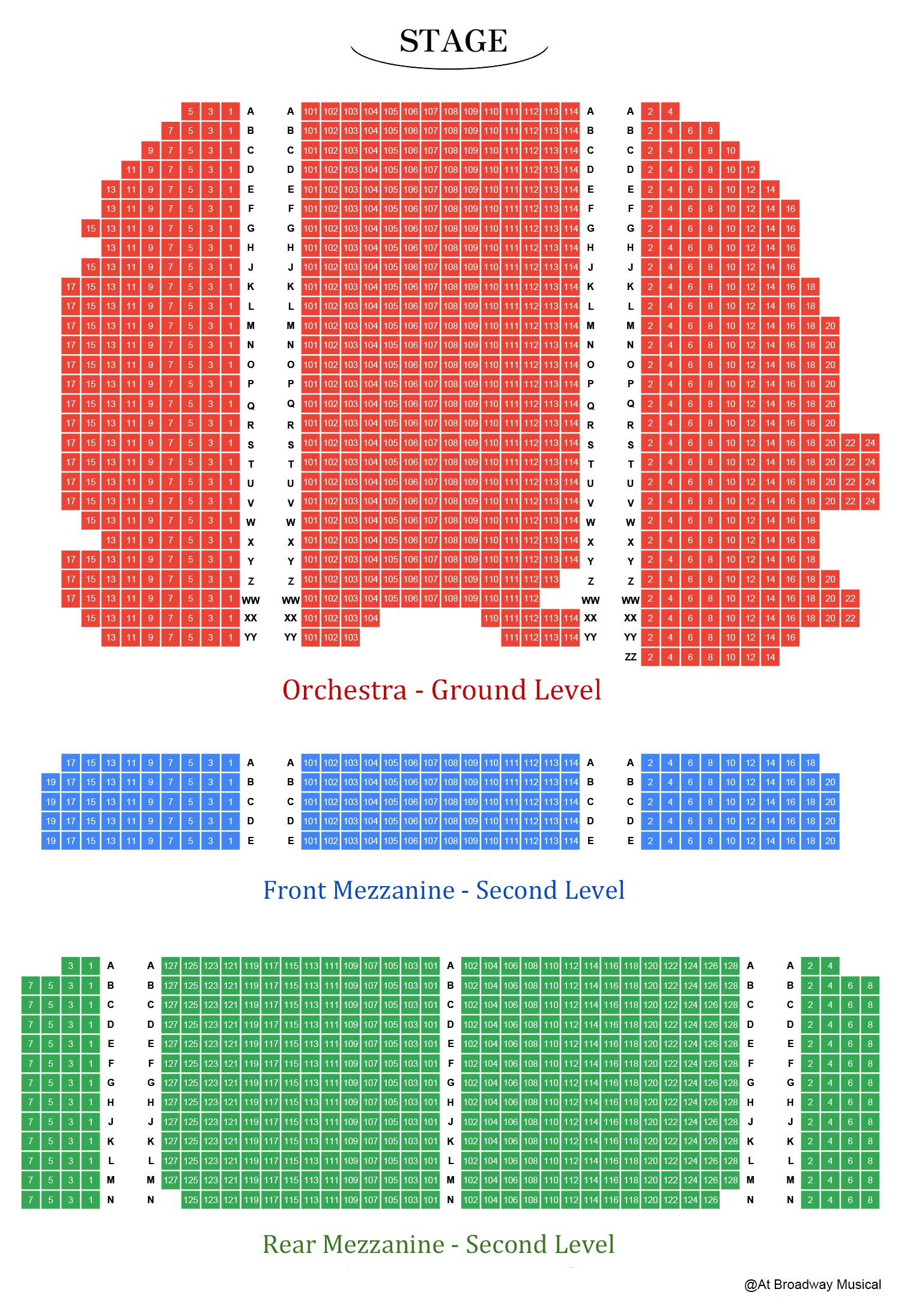
Seating Chart of Lunt-Fontanne Theatre
The Lunt-Fontanne Theatre has a seating capacity of 1,509 seats, divided into three main sections: Orchestra (1st level), Front Mezzanine (2nd level), and Rear Mezzanine (2nd level).
*Click to view larger image
Directions to Lunt-Fontanne Theatre
Access to Lunt-Fontanne Theatre are most commonly by taking the New York City Subway (MTA).
The area around the theatre becomes very crowded close to showtime, so whether you are arriving by subway or taxi, please allow extra time to reach the venue.
Map, location of Lunt-Fontanne Theatre
Here is the map of the Lunt-Fontanne Theatre.
Best hotels near the Lunt-Fontanne Theatre
Discover the best hotels near the Lunt-Fontanne Theatre. Stay within walking distance of Broadway and enjoy easy access to shows, restaurants, and attractions.
The list of recommended hotels near the theater:
History of the Lunt-Fontanne Theatre
Opened in 1910 as the Globe Theatre
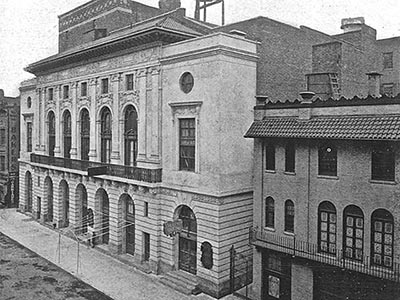
The Lunt-Fontanne Theatre was originally opened in 1910 as the Globe Theatre by producer Charles Dillingham together with architects John Mervin Carrere and Thomas Hastings. The name was chosen in tribute to Shakespeare’s Globe Theatre in London, built in 1599.
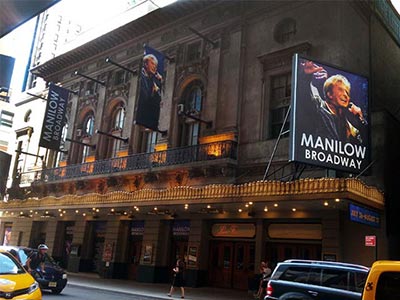
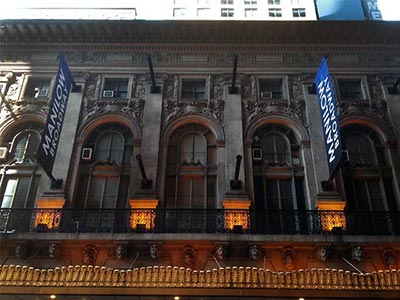
Carrere and Hastings designed the Globe Theatre in their signature Beaux-Arts style, with its main entrance on 46th Street and an additional small entrance on Broadway between 46th and 47th Streets.
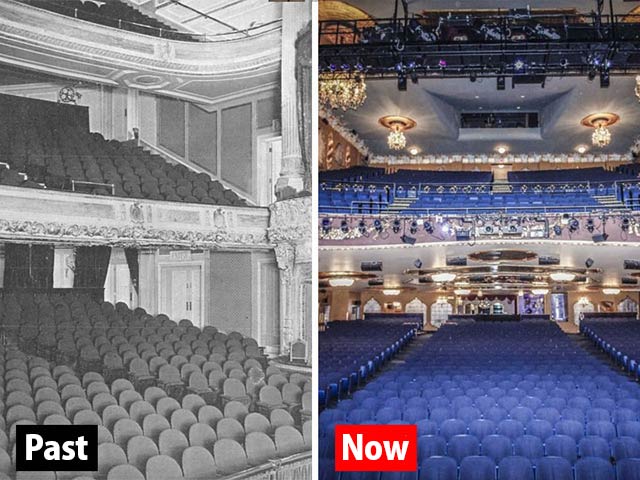
At the request of Charles Dillingham, the interior was given a luxurious design unlike other theatres, including a retractable roof panel to keep the theatre cool in summer, a unique feature on Broadway. The house was fan-shaped, with the stage at the center of the arc for improved sightlines and acoustics. Seating was fitted with both heating and cooling systems, considered cutting-edge at the time.
What is Beaux-Arts style?
The Beaux-Arts style was a popular architectural trend in America from the late 19th to early 20th century. Inspired by European classical forms, it is sometimes referred to as American Renaissance. On Broadway, it can be seen at the Lunt-Fontanne, the New Amsterdam Theatre, the Lyceum Theatre, and the St. James Theatre.
This classical style was brought to the United States by graduates of the Ecole des Beaux-Arts in Paris, and it became a hallmark of many New York landmarks. Notable examples include the New York Public Library, Grand Central Terminal, and the American Museum of Natural History, all designed by Carrere and Hastings.
Renamed the Lunt-Fontanne Theatre
After opening in 1910 with the musical The Old Town, the Globe Theatre presented plays and musicals until the Great Depression forced it to operate as a movie house from 1932 to 1957.
In 1957, City Playhouses Inc purchased the theatre, removed the third balcony, closed the small Broadway entrance, and renamed it the Lunt-Fontanne Theatre. The new name honored married stage stars Alfred Lunt and Lynn Fontanne, who headlined the reopening production The Visit in 1958.
Acquired by the Nederlander Organization
In 1960, City Playhouses sold the theatre to producers Cy Feuer and Ernest H. Martin. Just five years later, in 1965, it was acquired by the Nederlander Organization together with Stahl Real Estate.
The Nederlander Organization is the second-largest theatre operator on Broadway, after the Shubert Organization. It owns nine Broadway theatres and about twenty more venues across the United States. Inside the Lunt-Fontanne lobby, photos of founder James M. Nederlander are on display.
Tony Award winners and Disney musicals
Since its reopening, the Lunt-Fontanne Theatre has hosted many notable productions. The Sound of Music opened here in 1960, winning four Tony Awards including Best Musical.
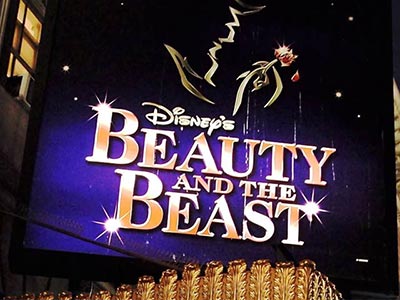
The 1997 musical Titanic also played here, winning five Tony Awards including Best Musical. Disney productions have also been part of the theatre’s history: Peter Pan in 1980, Beauty and the Beast in 1994, and The Little Mermaid in 2007, which was nominated for Best Original Score. These shows have kept the Lunt-Fontanne at the heart of Broadway.
Who were Alfred Lunt and Lynn Fontanne?
The couple behind the theatre’s name
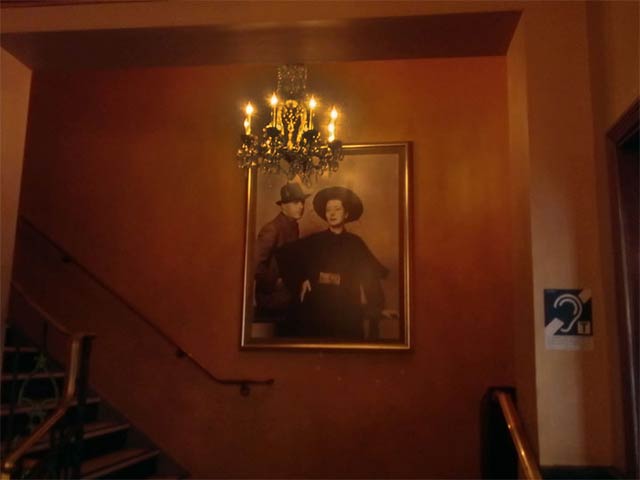
Alfred Lunt and Lynn Fontanne were one of Broadway’s most celebrated acting couples. After marrying in 1922, they began performing together the following year in Sweet Nell of Old Drury and went on to star in more than twenty productions as a pair.
Their final stage appearance was in The Visit, which premiered at the newly renamed Lunt-Fontanne Theatre in 1958. In recognition of their careers, the theatre was named in their honor, and portraits of the couple still hang inside the theatre today.
Alfred Lunt was one of America’s greatest stage actors of the 20th century, winning two Tony Awards for Best Director and Best Actor, and also receiving an Academy Award nomination and an Emmy Award.
Lynn Fontanne was a leading actress for more than forty years. She was nominated for a Tony Award for The Visit, won an Emmy Award, and together with Lunt received a special Tony Award in 1970 honoring their lifetime achievements.
 Broadway Musical Discount Tickets – On Sale Now!
Find the best Broadway ticket deals right here –
faster, cheaper, and backed by local expertise. Get ready to experience the magic of Broadway!

- Get discount tickets easily with instant booking
- The most detailed musical guides and reviews
- Dedicated support throughout your Broadway experience



 Lines,
49 Ststation (About a 5-minute walk)
Lines,
49 Ststation (About a 5-minute walk)