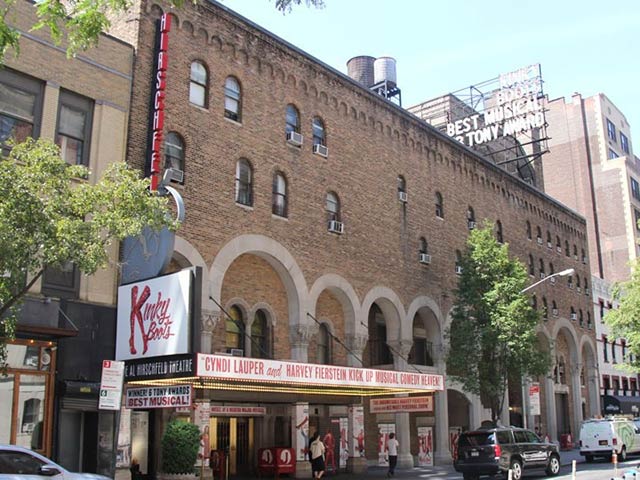
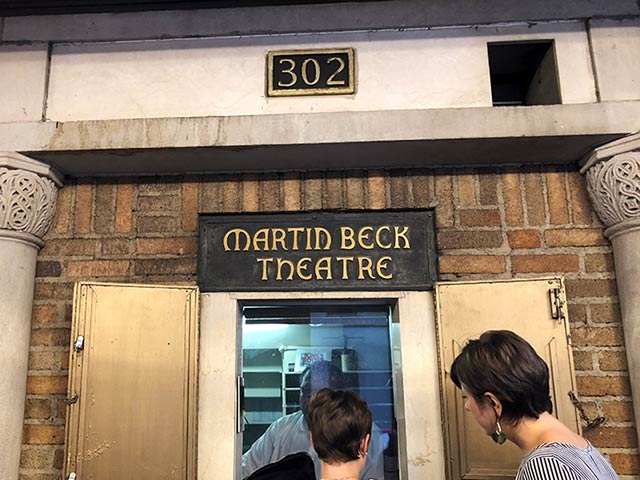
Address, opening, capacity of Al Hirschfeld Theatre
Basic Information about the Al Hirschfeld Theatre in NYC
|
Address: |
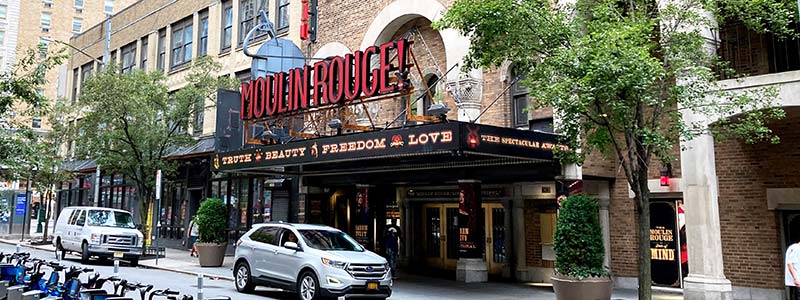
302 W 45th St, New York, NY 10036(
Map )
Located on 45 Street, between 8th Avenue and 9th Avenue
|
|
Opened: |
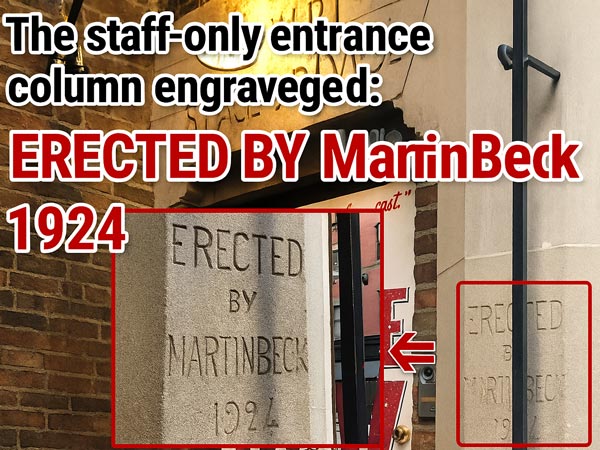
November 11, 1924 |
|
Capacity: |
1,437 seats |
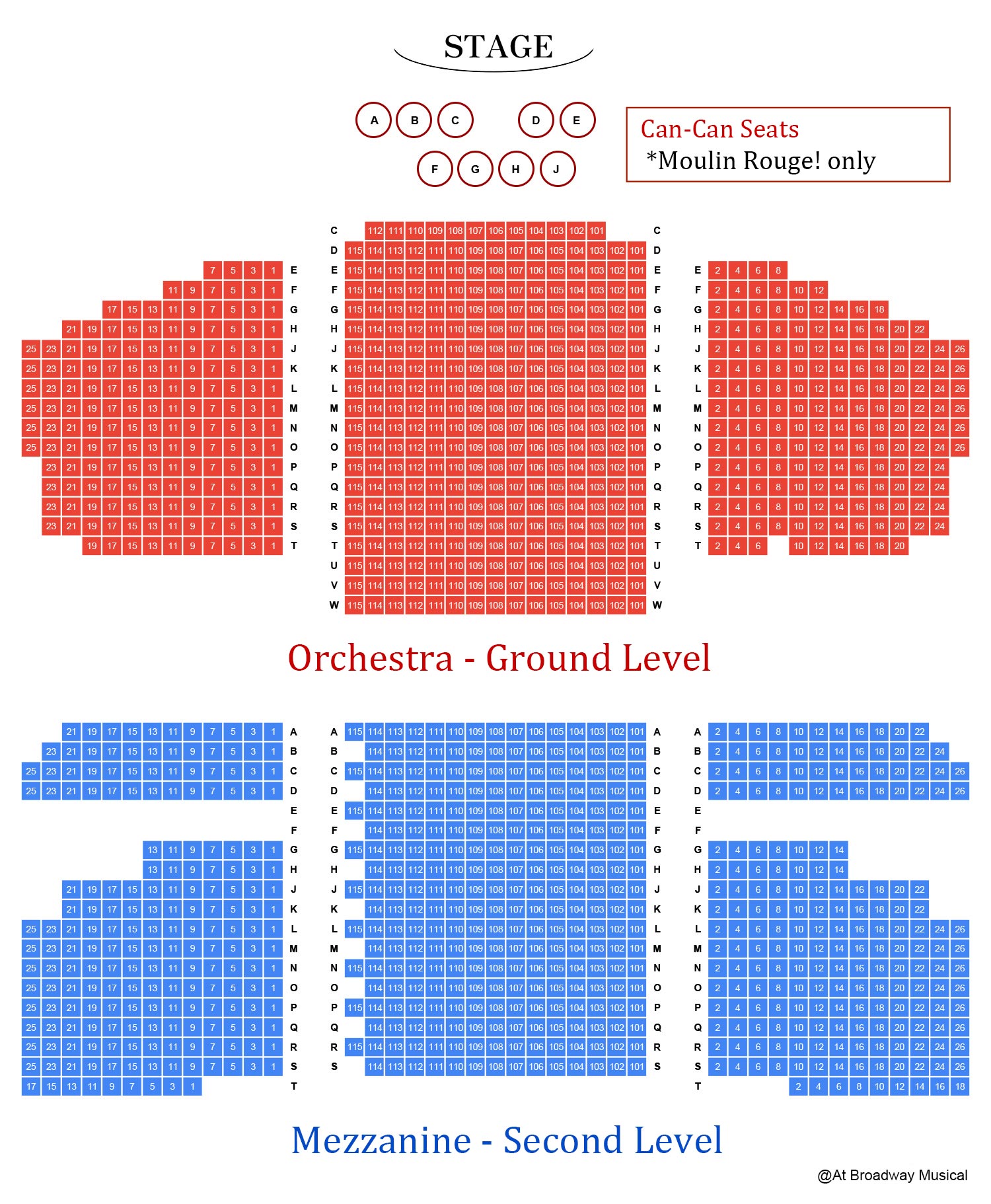
Seating Chart of Al Hirschfeld Theatre
The Al Hirschfeld Theatre has a seating capacity of 1,437 seats, divided into two main sections: Orchestra and Mezzanine.
*Click to view larger image
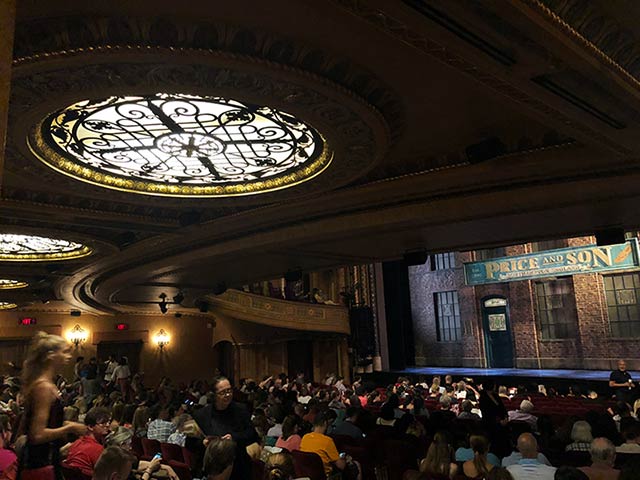
View from the seat of Al Hirschfeld Theatre
You can view real seat photos from inside the the Al Hirschfeld Theatre to see the stage from sections. These images help you choose the seating option that best suits your Broadway experience.
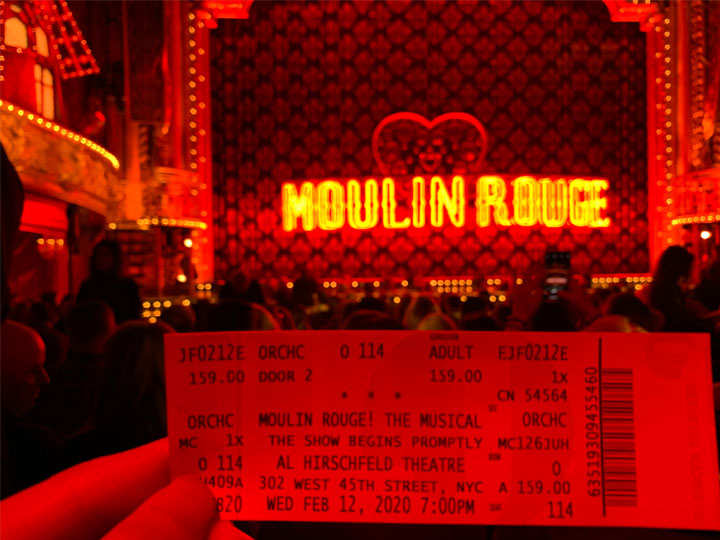
Orchestra Center Row O
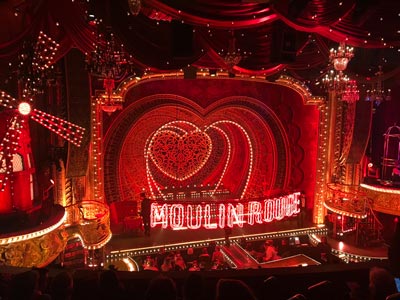
Mezzanine Left Row N
Directions to Al Hirschfeld Theatre
Access to Al Hirschfeld Theatre are most commonly by taking theNew York City Subway (MTA).
The area around the theatre becomes very crowded close to showtime, so whether you are arriving by subway or taxi, please allow extra time to reach the venue.
The 42st – Times Square / Port Authority station is a large station complex, so plan to arrive early to avoid rushing.
Map, location of Al Hirschfeld Theatre
Here is the map of the Al Hirschfeld Theatre.
Best hotels near the Al Hirschfeld Theatre
Discover the best hotels near the Al Hirschfeld Theatre. Stay within walking distance of Broadway and enjoy easy access to shows, restaurants, and attractions.
The list of recommended hotels near the theater:
History of the Al Hirschfeld Theatre
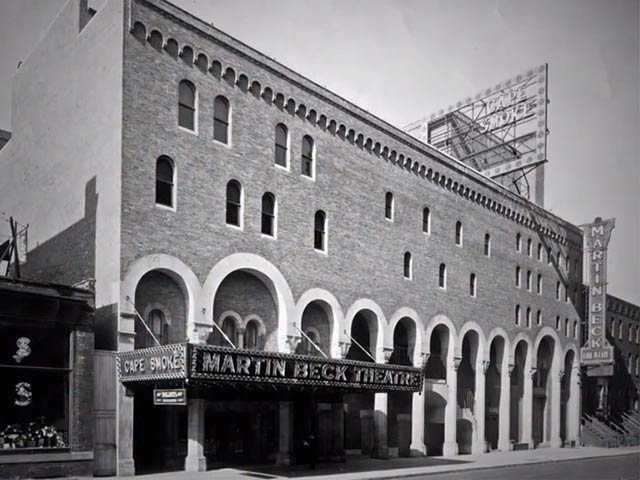
Formerly Known as the Martin Beck Theatre
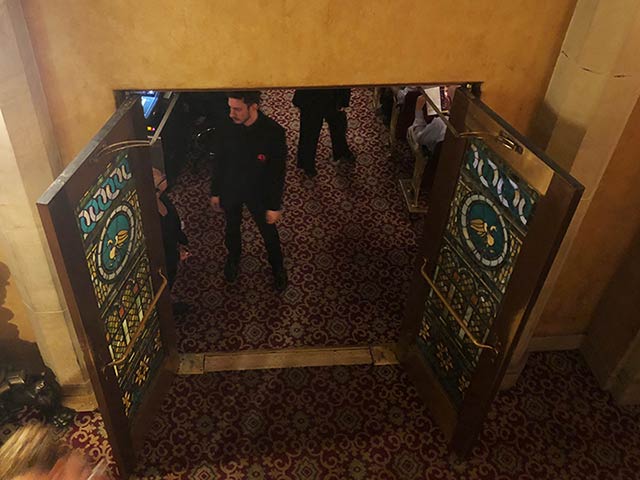
Martin Beck’s Attention to Detail
Staging Works by Renowned Playwrights
In 1940, ownership of the theatre shifted from Martin Beck’s personal possession to The Martin Beck Estate, the theatre management company he founded. From the start, Beck had a personal dream of staging works by famous playwrights in this theatre. He realized this vision by hosting productions such as Eugene O’Neill’s
The Iceman Cometh (1946); O’Neill being the namesake of the Eugene O’Neill Theatre, Tennessee Williams’
Sweet Bird of Youth (1959), and Edward Albee’s
A Delicate Balance (1966).
Renamed as the Al Hirschfeld Theatre
In 1965, the Martin Beck Theatre was acquired by Jujamcyn Theaters, a major theatre management company, and it remains one of their venues today. On June 21, 2003, in honor of the achievements of artist Al Hirschfeld, the theatre was renamed the
Al Hirschfeld Theatre. The interior has retained much of its original design since its opening, allowing visitors to still experience the beauty of a theatre built over 90 years ago.
Origin of the Theatre’s Name – About Al Hirschfeld
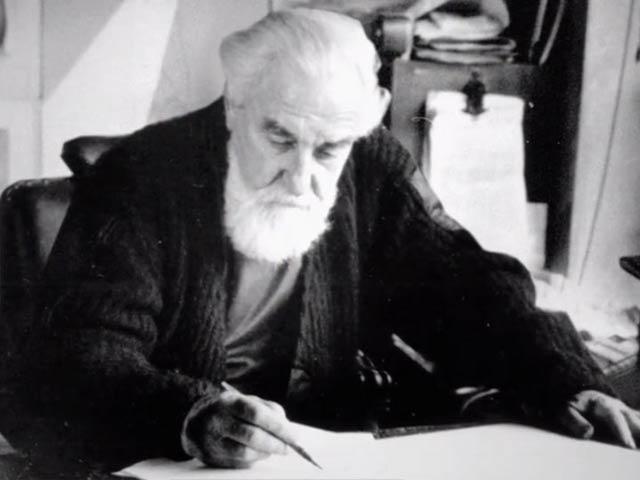
Al Hirschfeld, born Albert Hirschfeld on June 21, 1903, in St. Louis, Missouri, was a celebrated caricaturist.
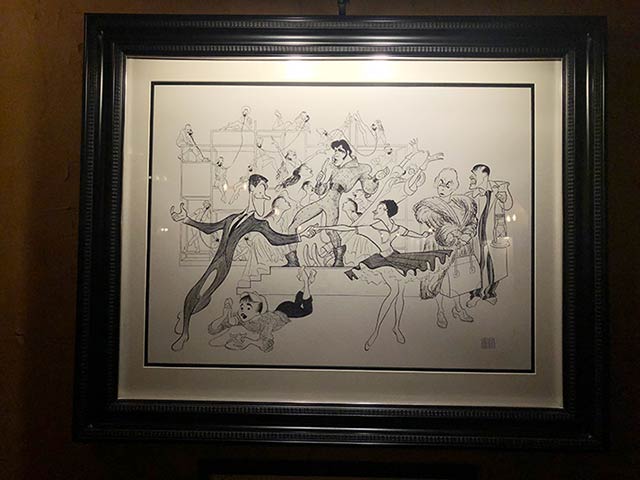
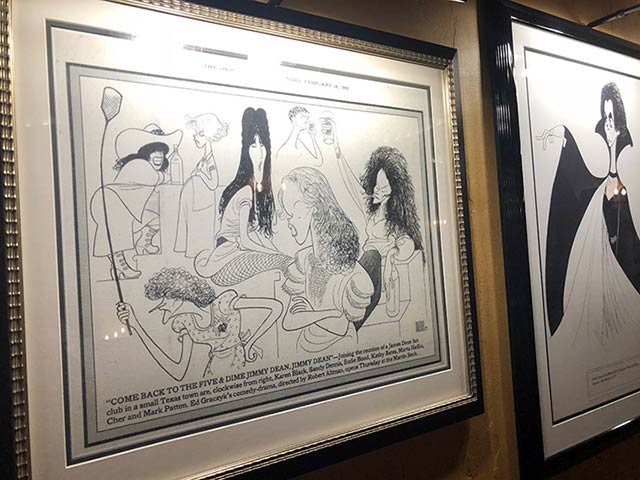
For nearly 80 years, he was renowned for his portraits of prominent figures in the entertainment industry; including singers, dancers, and Broadway stars, not as simple likenesses, but as expressive caricatures that captured their inner spirit. In New York, he became so well-known that it was often said there was no one in the city who didn’t know his work.
In 1924, Hirschfeld traveled to Paris and London to study art. Upon his return to the United States, a long-time friend and well-known Broadway publicist, Richard Maney, showed one of Hirschfeld’s works to an editor at the
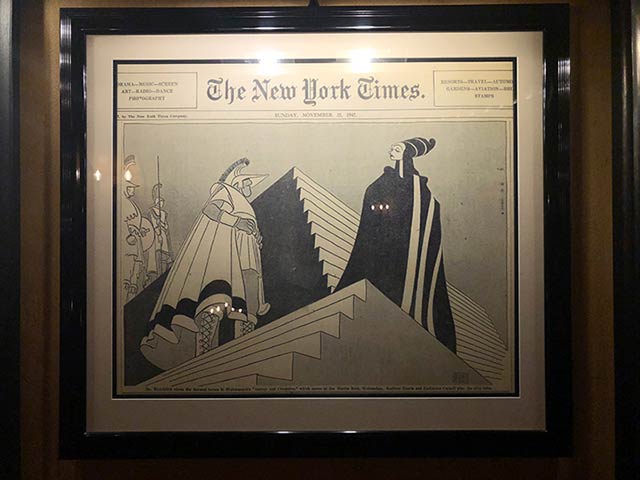
New York Herald Tribune. This led to a collaboration with the newspaper, and soon Hirschfeld’s illustrations of Broadway musicals began appearing regularly in the feature pages of
The New York Times.
In 1951, he authored the insider book
Show Business is No Business, which humorously and satirically detailed the inner workings of the Broadway theatre scene in 12 chapters. The book was later translated and published in Japan.
In the fall of 2002, Jujamcyn Theaters announced that the venue would be renamed the Al Hirschfeld Theatre in honor of Hirschfeld’s upcoming 100th birthday. The official renaming took place on June 21, 2003. Sadly, Hirschfeld never reached his centennial milestone, passing away at the age of 99.
Don’t Miss the Al Hirschfeld Artwork Gallery
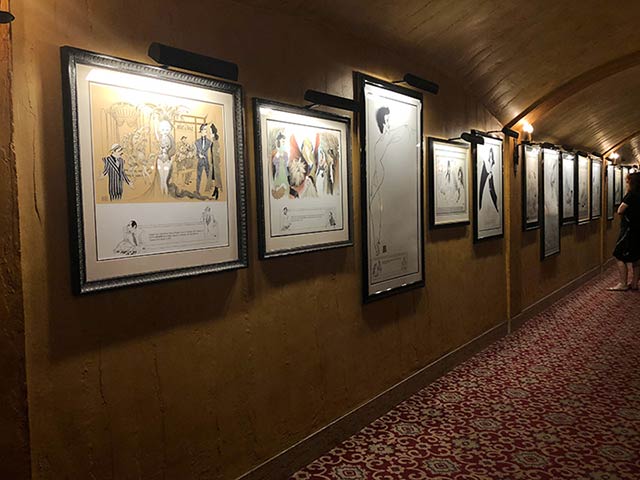
Unlike any other Broadway theatre, this venue feels like a historic atelier corridor or even a gallery at the Metropolitan Museum of Art. Many of Al Hirschfeld’s works are displayed here. We recommend arriving at least 30 minutes before the show to take your time and enjoy the artwork.
The Architecture of the Al Hirschfeld Theatre Showcases the Byzantine Style
The Only Byzantine-Style Theatre in the United States
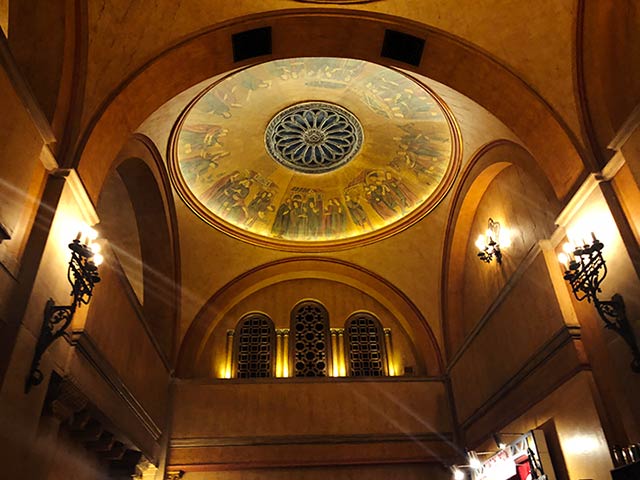
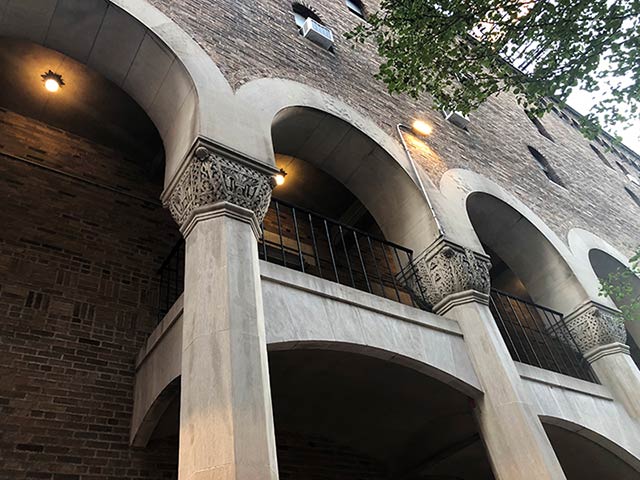
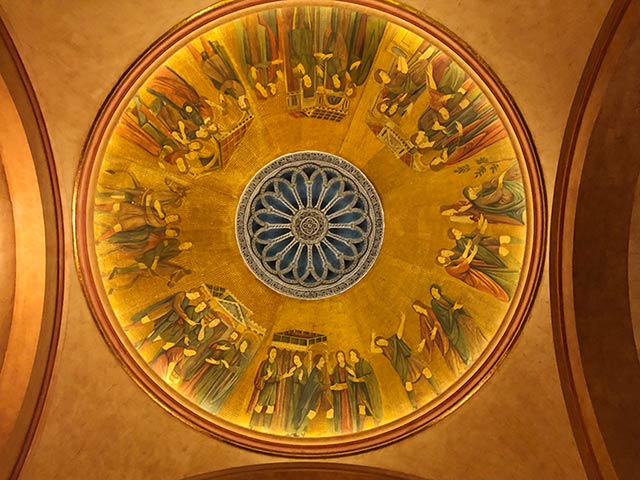
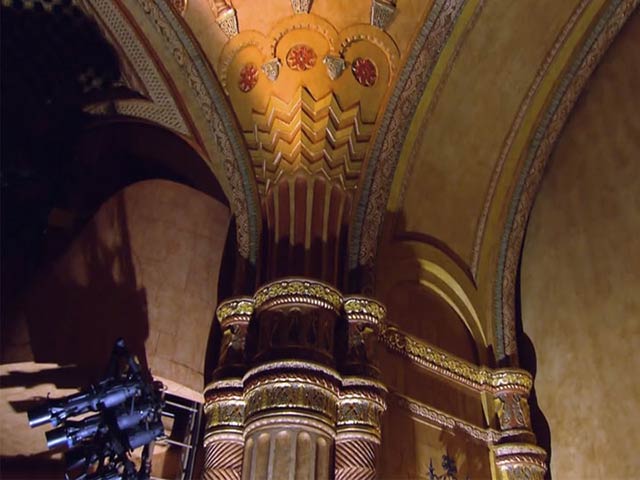
Known for its distinctive exterior, the Al Hirschfeld Theatre is recognized as the only Byzantine-style theatre in the United States. The Byzantine style emerged under the Eastern Roman Empire between the 4th and 6th centuries, characterized by domed ceilings, mosaic artworks made from small, embedded pieces forming images and patterns, and arched columns. A famous example of this style is St. Mark’s Basilica in Venice.
The Al Hirschfeld Theatre’s unique facade, with its series of graceful arches, stands out in contrast to the simpler brick-style theatres. At the theatre’s main entrance, arched columns create wide openings between each pillar, forming a spacious promenade across the front.
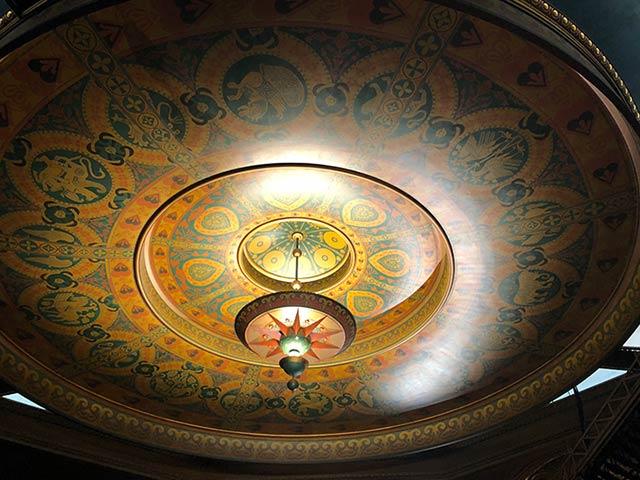
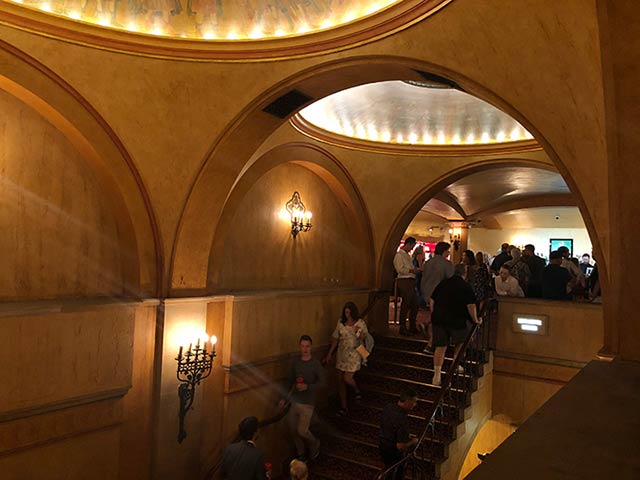
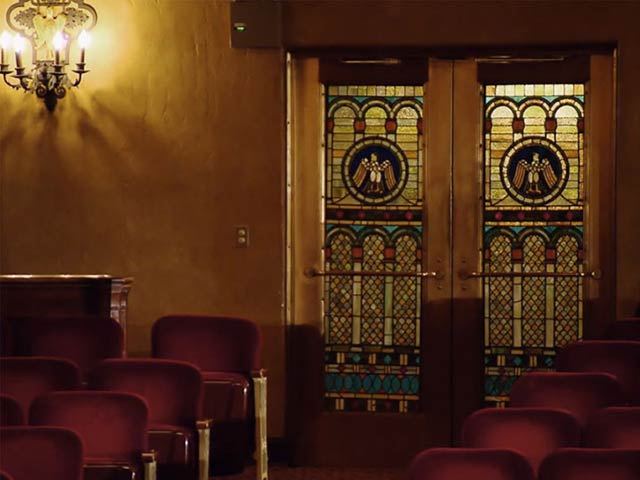
The theatre’s lobby is notably more spacious than those of other Broadway venues. Distinctive interior features include a stunning golden dome above the auditorium, wrought iron details, stained glass, and mosaic artwork. When it was originally built, the theatre had 1,200 seats, but today it accommodates 1,437, reflecting both the passage of time and the growing scale of audience demand.
 Broadway Musical Discount Tickets – On Sale Now!
Find the best Broadway ticket deals right here –
faster, cheaper, and backed by local expertise. Get ready to experience the magic of Broadway!

- Get discount tickets easily with instant booking
- The most detailed musical guides and reviews
- Dedicated support throughout your Broadway experience










 Lines,
42 St – Times Square / Port Authority Stationstation (About a 5-minute walk)
Lines,
42 St – Times Square / Port Authority Stationstation (About a 5-minute walk)