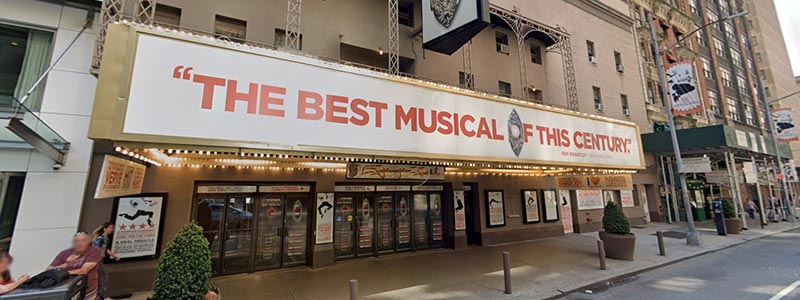
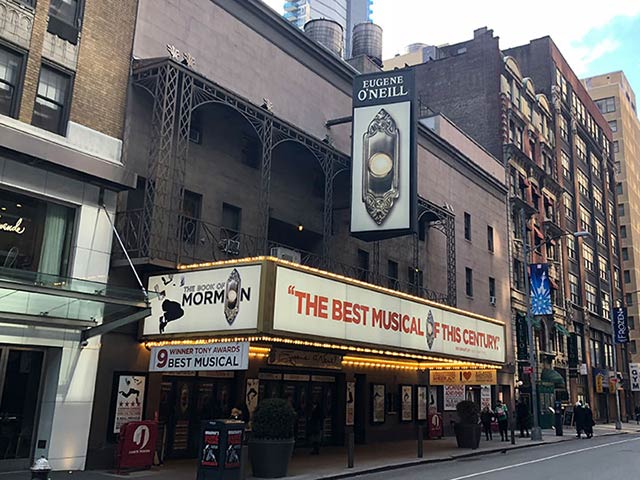
Address, opening, capacity of Eugene O’Neill Theatre
Basic Information about the Eugene O’Neill Theatre in NYC
|
Address: |
230 W 49th St, New York, NY 10019(
Map )
Located on 49 Street, between Broadway and 8th Avenue
|
|
Opened: |
1925 |
|
Capacity: |
1,108 seats |
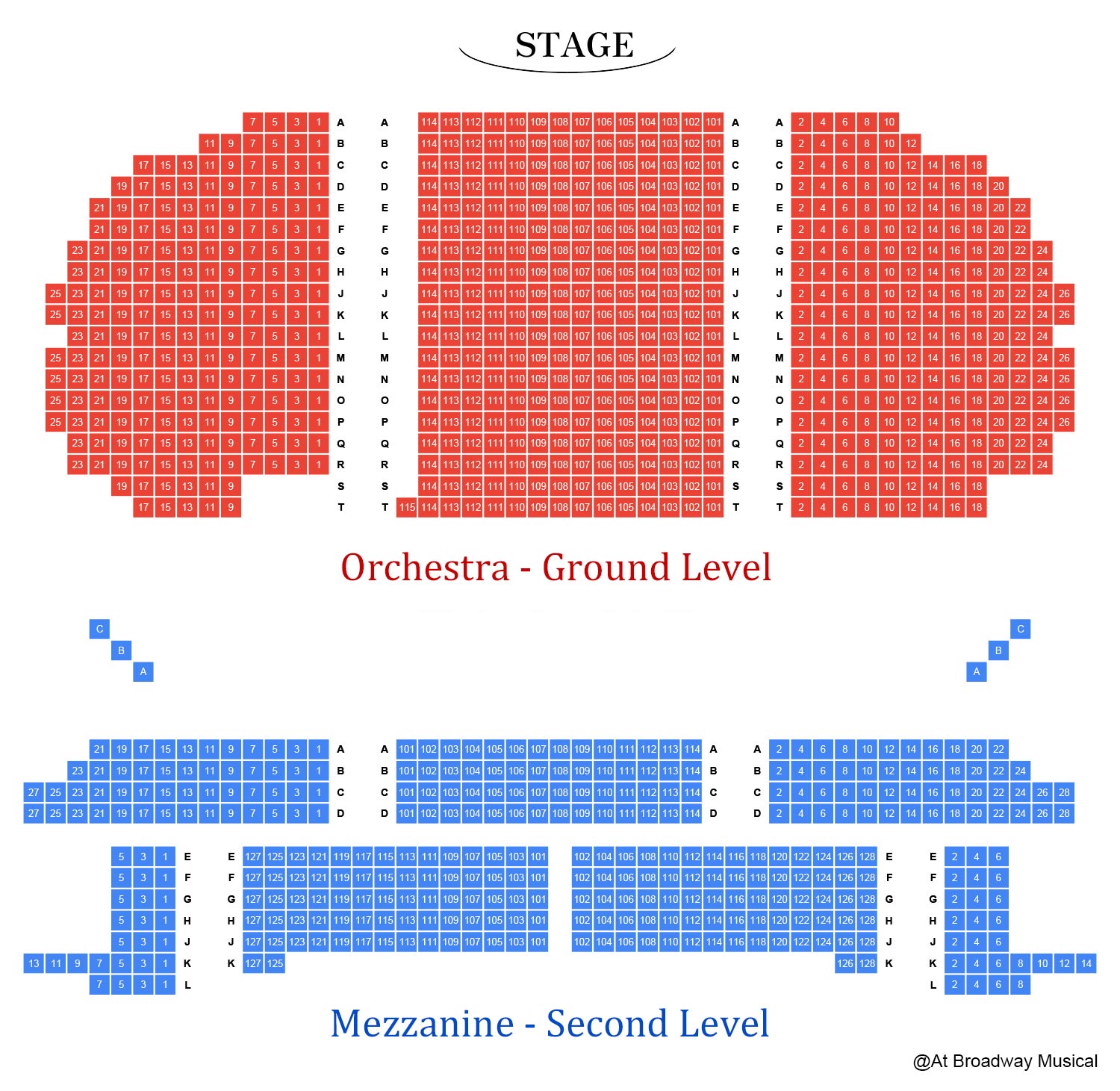
Seating Chart of Eugene O’Neill Theatre
The Eugene O’Neill Theatre has a seating capacity of 1,108 seats, divided into two main sections: Orchestra (1st level) and Mezzanine (2nd level).
*Click to view larger image
View from the seat of Eugene O’Neill Theatre
You can view real seat photos from inside the the Eugene O’Neill Theatre to see the stage from sections. These images help you choose the seating option that best suits your Broadway experience.
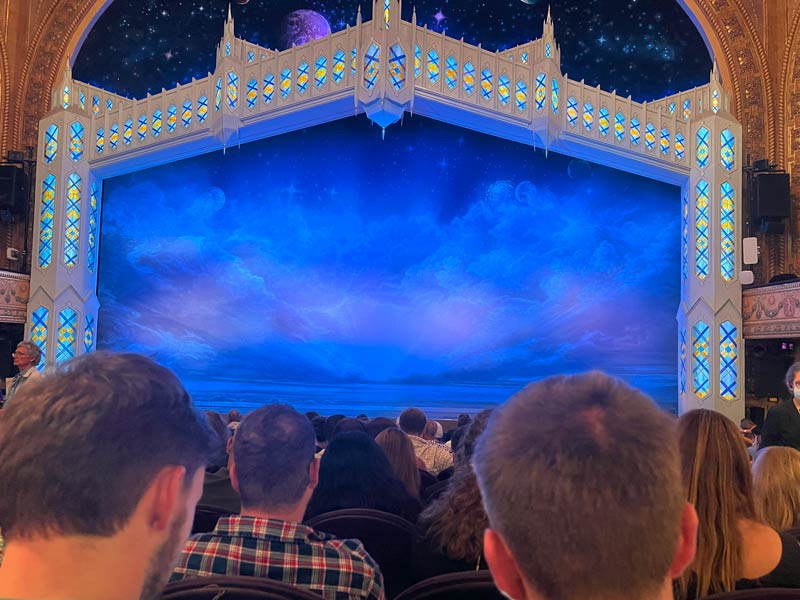
Orchestra Center Row N
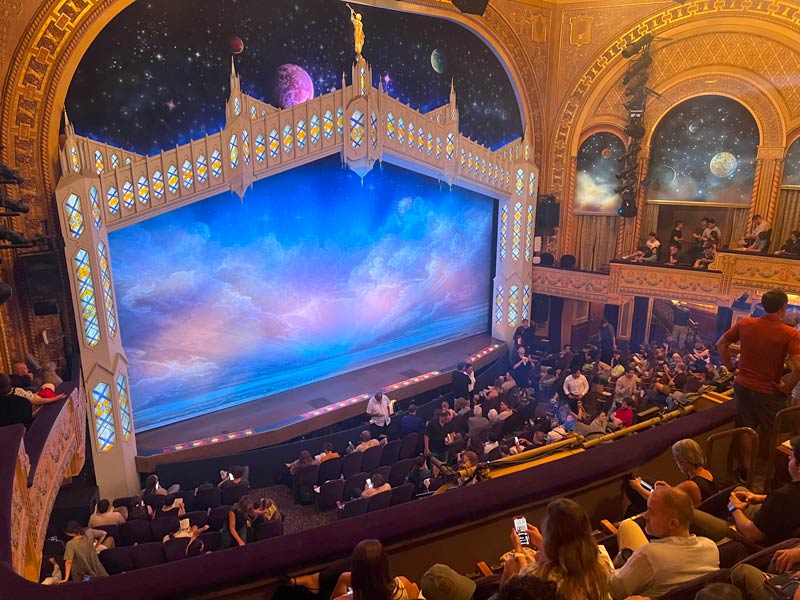
Mezzanine Side Row E
Directions to Eugene O’Neill Theatre
Access to Eugene O’Neill Theatre are most commonly by taking the New York City Subway (MTA).
The area around the theatre becomes very crowded close to showtime, so whether you are arriving by subway or taxi, please allow extra time to reach the venue.
Nearest Subway Station:

 Lines,
50 Ststation (About a 3-minute walk)
Lines,
50 Ststation (About a 3-minute walk)
 Lines,
50 Ststation (About a 3-minute walk)
Lines,
50 Ststation (About a 3-minute walk)


 Lines,
49 Ststation (About a 5-minute walk)
Lines,
49 Ststation (About a 5-minute walk)
Map, location of Eugene O’Neill Theatre
Here is the map of the Eugene O’Neill Theatre.
Best hotels near the Eugene O’Neill Theatre
Discover the best hotels near the Eugene O’Neill Theatre. Stay within walking distance of Broadway and enjoy easy access to shows, restaurants, and attractions.
The list of recommended hotels near the theater:
History of the Eugene O’Neill Theatre
From the original Forrest Theatre to today
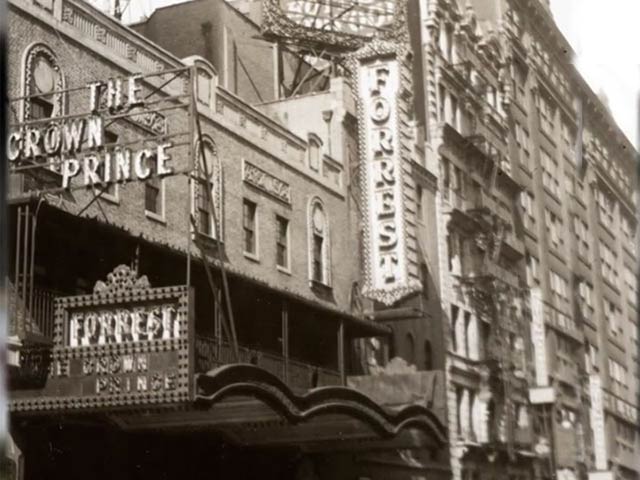
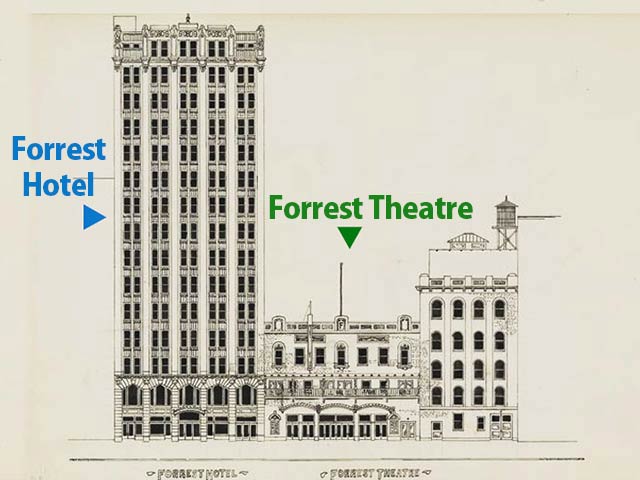
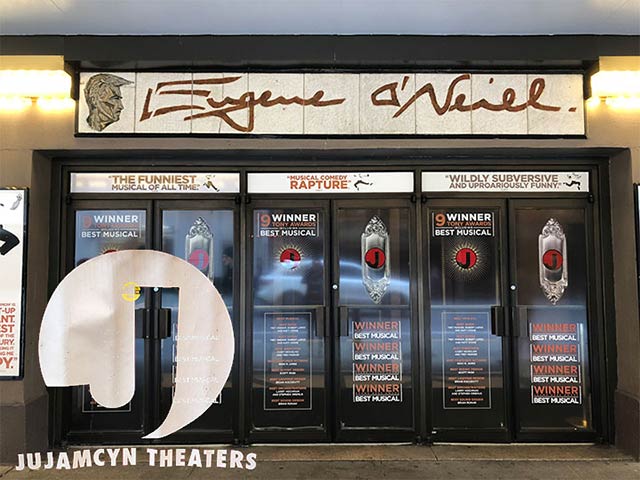
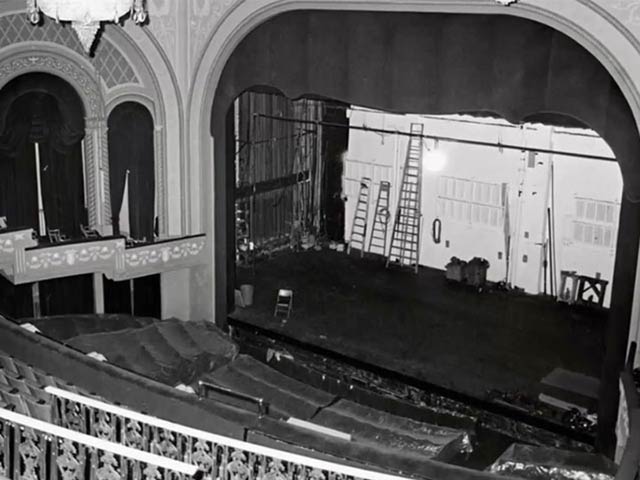
The Eugene O’Neill Theatre opened in 1925 as the Forrest Theatre, a playhouse integrated with the Forrest Hotel. It was designed by architect Herbert J. Krapp and originally developed by the Shubert Organization. The venue is now operated by ATG Entertainment following its combination with Jujamcyn’s Broadway operations, and it remains one of the district’s most storied houses.
In its early years, the theater and hotel worked hand in hand to draw audiences, offering lively attractions alongside stage productions. The building’s convenient layout and hospitality-focused amenities helped establish it as a popular destination in Midtown’s Theatre District.
When the Forrest Theatre was built, Broadway was already home to a vast number of venues. To stand out, the developers leaned into guest-friendly services and easy access from the adjoining hotel, a smart strategy that helped the theater thrive in a competitive era.
Herbert J. Krapp, the architect behind many notable Broadway houses, created a practical layout with excellent sightlines, a hallmark that continues to benefit audiences today.
Who was Edwin Forrest?
The original name honored Edwin Forrest, a 19th-century American actor famed for his Shakespearean roles. Born in Philadelphia, Forrest made his New York breakthrough in “Othello” at age twenty and went on to a celebrated career on stages in New York and Philadelphia.
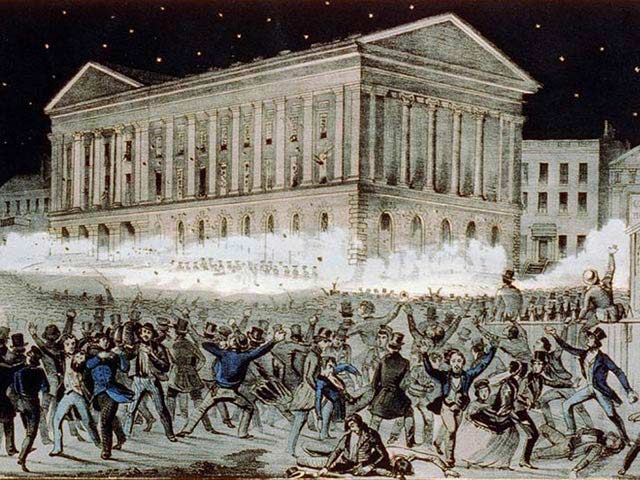
Forrest is also linked to the 1849 Astor Place Riot, a deadly clash fueled by a rivalry with British actor William Macready and broader social tensions of the time. The violence escalated outside the Astor Place Opera House, resulting in multiple deaths and many injuries, a grim chapter in New York theater history.
The Astor Place Riot was stoked by fierce fandom, class divisions, and anti-British sentiment among New Yorkers of the era. A performance dispute spiraled into street battles that required militia intervention, leaving the city to reckon with the volatile mix of culture and politics surrounding its theaters.
What was the Potato Famine?
The Irish Potato Famine (1845 – 1852) was a catastrophic period of crop failure and hunger that drove large-scale Irish immigration to the United States. The influx reshaped New York’s social fabric, and the era’s tensions formed part of the backdrop to the Astor Place Riot.
From Coronet Theatre to the Eugene O’Neill Theatre
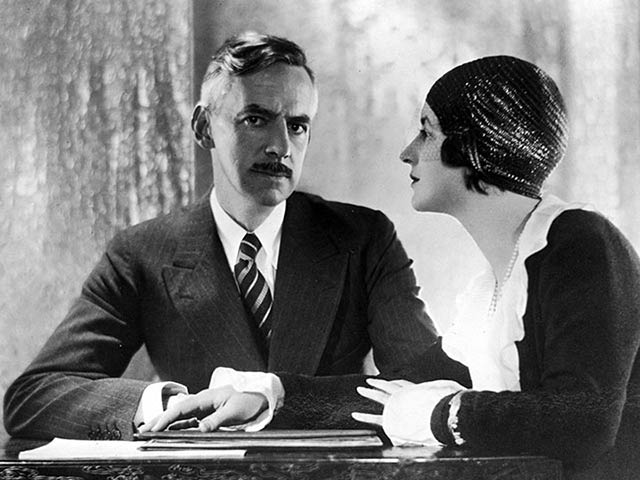
In 1945 the house was renamed the Coronet Theatre after a remodeling by the firm Walker & Gillette. While the following show, “Beggars Are Coming to Town,” ran briefly, the theater soon rebounded with hits like “Dream Girl.” In 1959 it received its current name, the Eugene O’Neill Theatre, honoring the Nobel Prize, winning playwright who transformed American drama.
O’Neill’s works helped move serious, modern drama into the mainstream, and naming a Broadway house after a playwright was a landmark decision that underscored his lasting impact.
How the Eugene O’Neill Theatre got its name
Honoring a giant of American theater
The Coronet became the Eugene O’Neill Theatre in 1959. O’Neill, a Nobel laureate and multiple Pulitzer winner, reshaped modern American drama. Bestowing a playwright’s name on a Broadway theater was a bold first for the district and signaled the venue’s commitment to serious, innovative work.
In later decades the theater hosted a string of notable productions, and since the 1980s the venue has been part of the portfolio now operated by ATG Entertainment in partnership with Jujamcyn’s theaters, helping sustain a vibrant lineup in the Theatre District.
The impact of Eugene O’Neill
O’Neill’s works brought psychological depth and realism to the American stage, earning the Nobel Prize in Literature and multiple Pulitzer Prizes. His legacy opened the door for off-Broadway experiments to move onto major stages, paving the way for the kind of boundary-pushing productions the theater continues to host.
Architecture of the Eugene O’Neill Theatre
Herbert J. Krapp’s steel-frame design
Architect Herbert J. Krapp designed the building with a modern steel-frame structure for its time, creating efficient backstage areas and strong sightlines from the house. Decorative plasterwork enriches the interior, and the stage was fitted to accommodate a wide range of scenic effects and curtain operations that suit both plays and large-scale musicals.
The result is an intimate Broadway theater that feels close to the action, a quality audiences still appreciate today.
Tony-honored productions on this stage
A home for award-winning hits
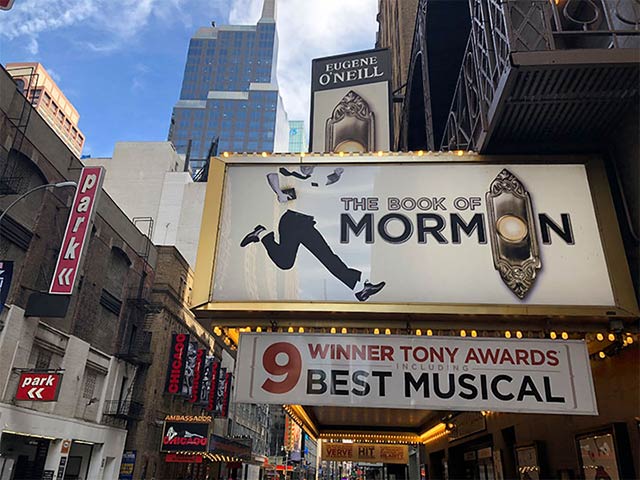
The Eugene O’Neill Theatre has hosted numerous Tony-winning shows. “M. Butterfly” opened here in 1988 and won the Tony Award for Best Play among its honors. “Spring Awakening” ran from December 2006 to January 2009 and earned eight Tony Awards, including Best Musical. “The Book of Mormon” began performances on March 24, 2011, and swept the 2011 Tonys with nine wins including Best Musical. Today it remains one of Broadway’s most in-demand tickets.
Known for sharp satire, big laughs, and show-stopping numbers, “The Book of Mormon” delivers a bold, crowd-pleasing night out that keeps audiences coming back.
 Broadway Musical Discount Tickets – On Sale Now!
Find the best Broadway ticket deals right here –
faster, cheaper, and backed by local expertise. Get ready to experience the magic of Broadway!

- Get discount tickets easily with instant booking
- The most detailed musical guides and reviews
- Dedicated support throughout your Broadway experience