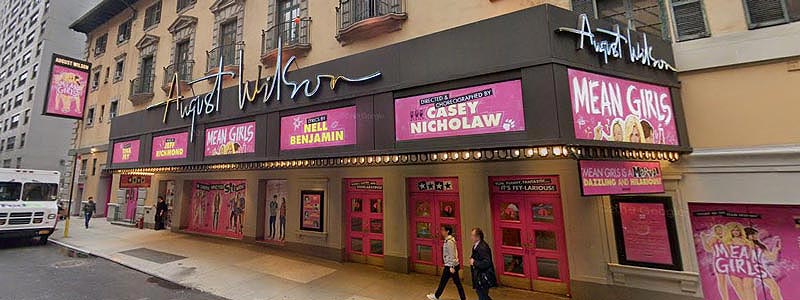
Address, opening, capacity of August Wilson Theatre
Basic Information about the August Wilson Theatre in NYC
|
Address: |
245 W 52nd St, New York, NY 10019(
Map )
Located on 52 Street, between Broadway and 8th Avenue
|
|
Opened: |
1925 |
|
Capacity: |
1,222 seats |
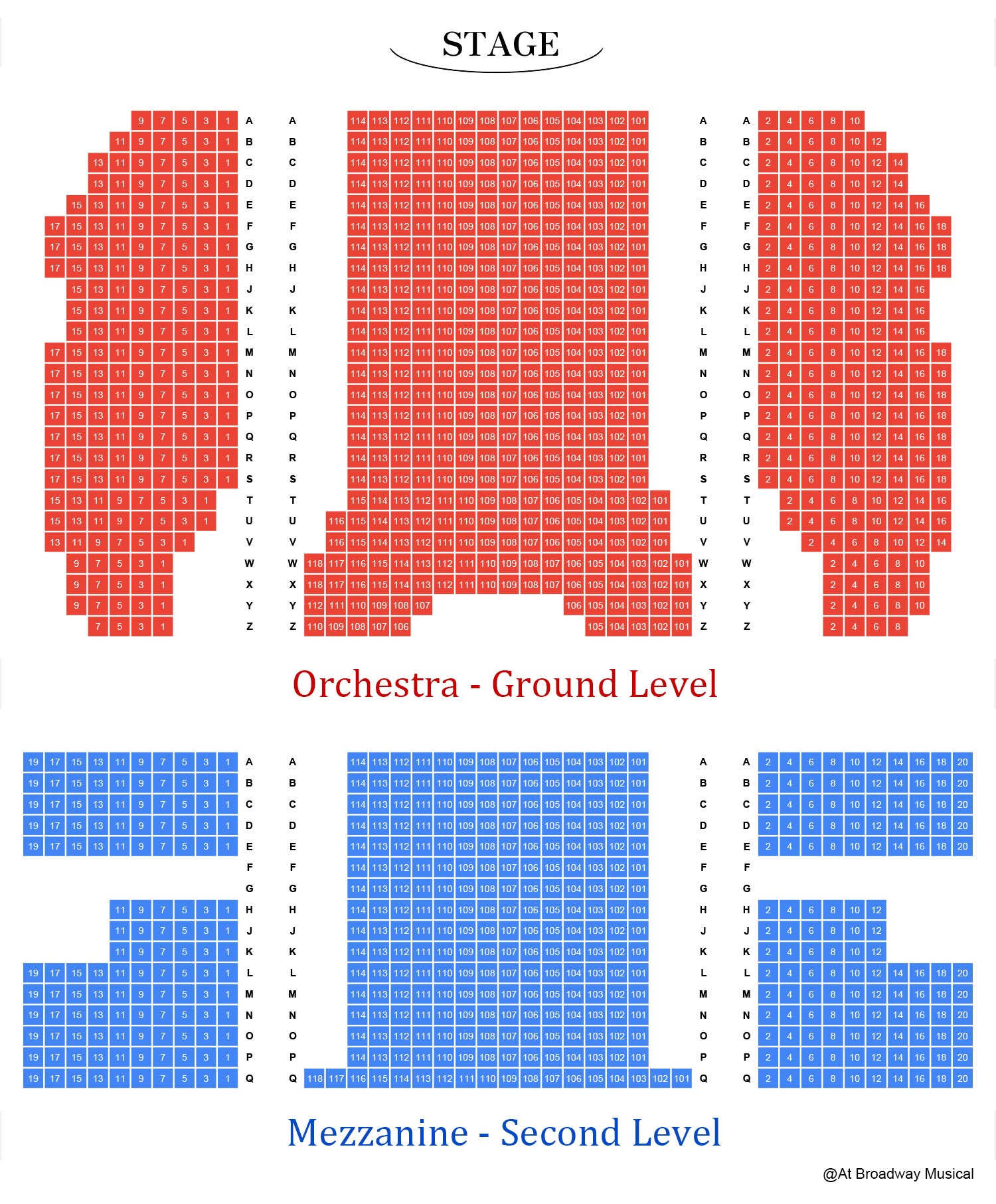
Seating Chart of August Wilson Theatre
The August Wilson Theatre has a seating capacity of 1,222 seats, divided into two main sections: Orchestra (1st level) and Mezzanine (2nd level).
*Click to view larger image
View from the seat of August Wilson Theatre
You can view real seat photos from inside the the August Wilson Theatre to see the stage from sections. These images help you choose the seating option that best suits your Broadway experience.
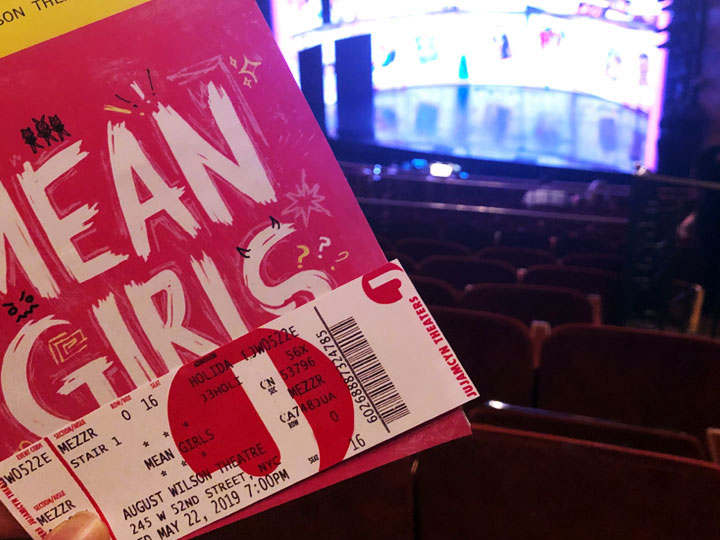
Mezzanine Right Row O
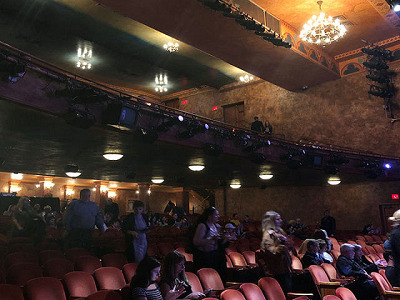
Orchestra
Directions to August Wilson Theatre
Access to August Wilson Theatre are most commonly by taking the New York City Subway (MTA).
The area around the theatre becomes very crowded close to showtime, so whether you are arriving by subway or taxi, please allow extra time to reach the venue.
Nearest Subway Station:

 Lines,
50 Ststation (About a 5-minute walk)
Lines,
50 Ststation (About a 5-minute walk)
 Lines,
50 Ststation (About a 5-minute walk)
Lines,
50 Ststation (About a 5-minute walk)

 Lines,
7 Avestation (About a 5-minute walk)
Lines,
7 Avestation (About a 5-minute walk)
Map, location of August Wilson Theatre
Here is the map of the August Wilson Theatre.
Best hotels near the August Wilson Theatre
Discover the best hotels near the August Wilson Theatre. Stay within walking distance of Broadway and enjoy easy access to shows, restaurants, and attractions.
The list of recommended hotels near the theater:
History of the August Wilson Theatre
Originally Known as the Guild Theatre
The August Wilson Theatre opened in 1925 as the Guild Theatre, designed by architect C. Howard Crane, who worked on more than 250 buildings across North America, and Kenneth Franzheim, known for commercial buildings and airports.
The original name came from the Theatre Guild, a U.S. theatrical association founded in 1919 by Philip Moeller and others. The group opposed commercial entertainment-driven theatre and instead produced subscription-only performances of works they considered artistically significant, ultimately contributing to the development of American theatre in the 1920s.
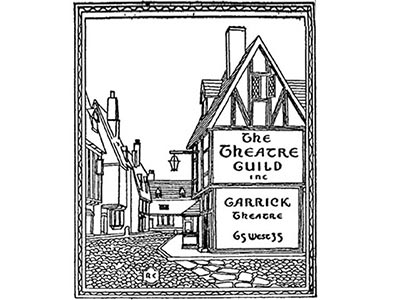
Before building their own venue, the Theatre Guild staged productions on Broadway at the Garrick Theatre. With a growing membership of more than 15,000, they decided to construct a comfortable and luxurious theatre for their company and audiences.
Financial Struggles During the Great Depression
By the 1930s, the Great Depression had a major impact on Broadway. Audience numbers dropped, and many theatres were turned into movie houses or burlesque venues that showed cheap films or adult entertainment.
The Guild Theatre had early success with a revival of
Caesar and Cleopatra, but it also struggled and followed the same path.
By the late 1930s, the Theatre Guild ran into financial trouble and began renting the theatre to other companies. In 1943, it was leased to WOR-Mutual Radio as a broadcast studio. In 1950, the American National Theater and Academy (ANTA) bought the building and renamed it the ANTA Theatre.
In 1981, Jujamcyn Theaters, the company that owns the St. James Theatre and the Al Hirschfeld Theatre, purchased the building and renamed it the Virginia Theatre in honor of board member Virginia McKnight Binger.
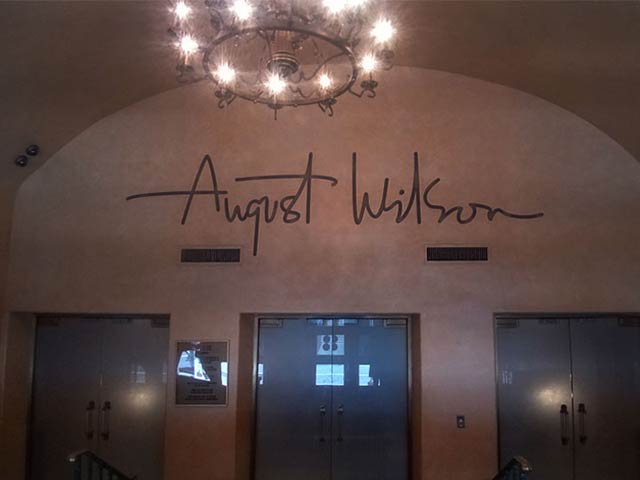
Renamed the August Wilson Theatre
In the summer of 2005, Jujamcyn Theaters announced that the Virginia Theatre would be renamed in honor of playwright August Wilson, the Pulitzer Prize-winning author of
King Hedley II. On October 16, 2005 – just two weeks after Wilson’s passing – the venue reopened as the August Wilson Theatre. Its inaugural production under the new name was
Jersey Boys, which went on to run for 4,088 performances, becoming one of Broadway’s longest-running hits.
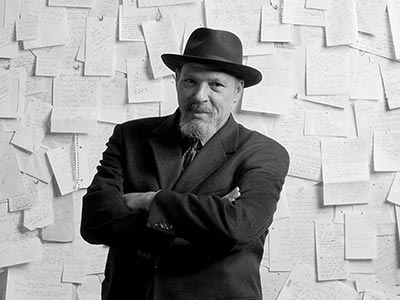
Who is August Wilson?
One of America’s Greatest Playwrights
August Wilson, born on April 27, 1945, in Pittsburgh, Pennsylvania, was an African American playwright whose works earned him both Pulitzer Prizes and Tony Awards.
His birth name was Frederick August Kittel Jr. He grew up in Pittsburgh’s Hill District, a neighborhood with a large African American community, as the fourth of six children.
Raised primarily by his mother, who later remarried, Wilson drew on his family experiences when writing his plays. His stepfather became the model for the character in his 1983 play
Fences.
Fences was later adapted into a film in 2016, directed by and starring Denzel Washington, who had previously performed in the stage version. The movie received four Academy Award nominations, with Viola Davis winning Best Supporting Actress.
Although his mother hoped he would become a lawyer, Wilson was determined to write. After leaving home, he briefly enlisted in the U.S. Army but left after one year. During his youth he worked a variety of jobs, including dishwasher, gardener, and cook.
When his father died in 1965, he changed his name from Frederick August Kittel Jr. to August Wilson, adopting his middle name “August” and his mother Daisy Wilson’s maiden name. That same year he bought a typewriter, and by his early twenties he co-founded the Black Horizon Theater with poet Rob Penny.
Acclaimed Career and Legacy
Wilson turned to playwriting in the 1960s. His first play, Jitney, premiered in 1979. In 1984 he made his Broadway debut with Ma Rainey’s Black Bottom, followed by Fences, which won the Pulitzer Prize, Tony Award, and New York Drama Critics’ Circle Award in 1987.
Though not from a privileged background or a traditional academic path, Wilson went on to receive more than 30 major awards, including two Pulitzer Prizes, multiple Tony Awards, and an honorary Doctor of Humanities degree from the University of Pittsburgh.
Diagnosed with liver cancer in June 2005, he passed away later that year on October 2 at the age of 60. The August Wilson Theatre is notable as the first Broadway theatre named after an African American.
 Broadway Musical Discount Tickets – On Sale Now!
Find the best Broadway ticket deals right here –
faster, cheaper, and backed by local expertise. Get ready to experience the magic of Broadway!

- Get discount tickets easily with instant booking
- The most detailed musical guides and reviews
- Dedicated support throughout your Broadway experience