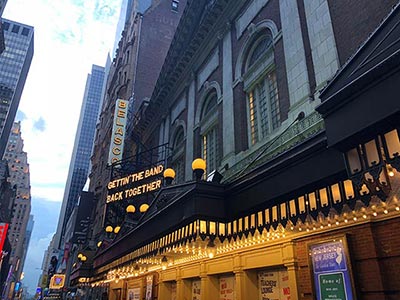
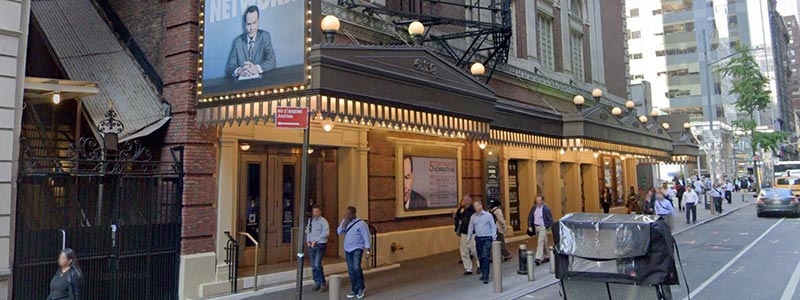
Address, opening, capacity of Belasco Theatre
Basic Information about the Belasco Theatre in NYC
|
Address: |
111 W 44th St, New York, NY 10036(
Map )
Located on 44 Street, between 6th Avenue and 7th Avenue
|
|
Opened: |
1907 |
|
Capacity: |
1,040 seats |
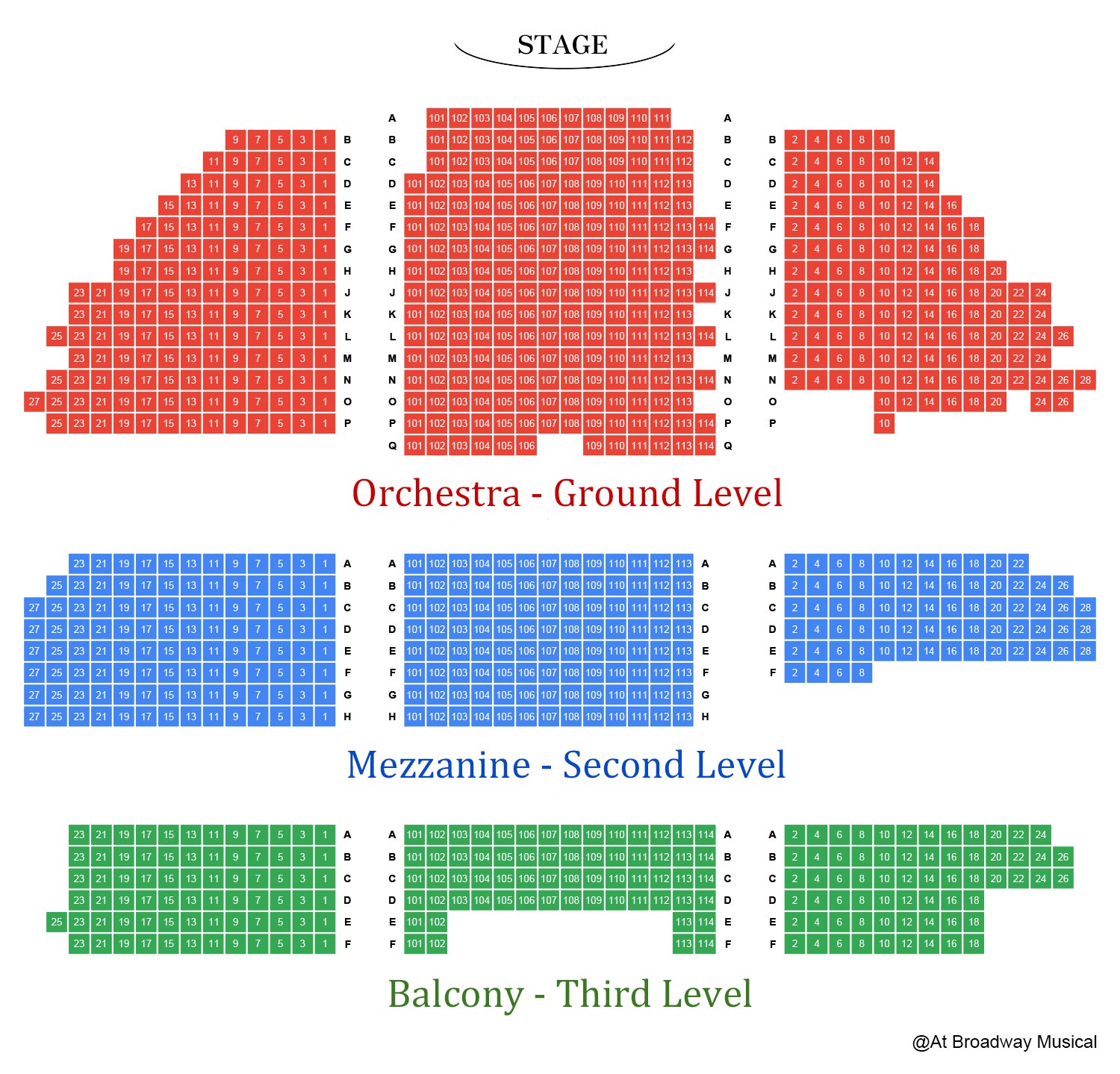
Seating Chart of Belasco Theatre
The Belasco Theatre has a seating capacity of 1,040 seats, divided into three main sections: Orchestra, Front Mezzanine, and Rear Mezzanine.
*Click to view larger image
Directions to Belasco Theatre
Access to Belasco Theatre are most commonly by taking theNew York City Subway (MTA).
The area around the theatre becomes very crowded close to showtime, so whether you are arriving by subway or taxi, please allow extra time to reach the venue.
The 42st – Times Square / Port Authority station is a large station complex, so plan to arrive early to avoid rushing.



 Bryant Park station (About a 5-minute walk)
Map, location of Belasco Theatre
Here is the map of the Belasco Theatre.
Best hotels near the Belasco Theatre
Discover the best hotels near the Belasco Theatre. Stay within walking distance of Broadway and enjoy easy access to shows, restaurants, and attractions.
The list of recommended hotels near the theater:
History of the Belasco Theatre
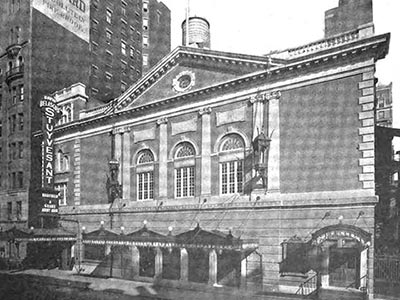
Originally named the Stuyvesant Theatre
The Belasco Theatre was originally opened in 1907 by playwright, director, and producer David Belasco under the name Stuyvesant Theatre.
The architect chosen for the project was George Keister, who also designed the Hotel Gerard, the Astor Theatre, the Apollo Theatre, the Bronx Opera House, and the Selwyn Theatre (now the Todd Haimes Theatre).
In 1909, Belasco added a two-story apartment above the theatre for his private use, filled with his extensive art collection. Even today, you can still see the exterior of his apartment from the street. Since Belasco put his own name on the building, the theatre has proudly kept the Belasco name for more than a century, making it one of New York’s most enduring Broadway theatres.
After its official opening with the play “A Grand Army Man” featuring Antoinette Perry, Belasco scored a major hit in 1911 with his own work “The Return of Peter Grimm,” a fantasy drama that ran for 231 performances and was considered groundbreaking for its time.
In 1930, just a year before his death, Belasco’s final production “Tonight or Never” was a success both on stage and off. Its stars, Melvyn Douglas and Helen Gahagan, famously fell in love during the show and later married, remaining together for life.
In 1935, the theatre hosted the play “Dead End,” which ran for 684 performances and became its longest-running production at that time.
The Shubert Organization purchased the Belasco Theatre in 1949. After leasing it to NBC for three years, the theatre returned to Broadway use in 1953. In 1971, it became home to the controversial musical “Oh! Calcutta!” which ran for 1,314 performances. Between its original and revival productions, the show reached 5,959 performances, securing a spot among Broadway’s longest-running hits.
President Obama’s visit to the Belasco Theatre
In 2009, during the economic recession, newly elected President Barack Obama made headlines when he visited the Belasco Theatre to attend a performance of the blues musical “Joe Turner’s Come and Gone.” The visit drew media attention, as it was said to fulfill a promise he had made to his wife, Michelle Obama, sparking both praise and criticism.
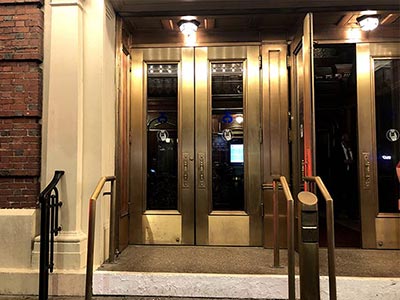
It was later noted that this occasion marked the first time an African American president had entered the Belasco Theatre through its front doors, adding a unique historical moment to the theatre’s long legacy.
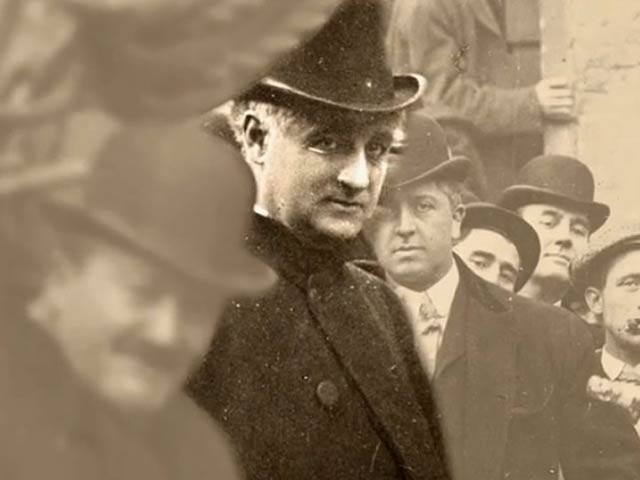
About David Belasco
Playwright, stage director, and producer
David Belasco is remembered as the man who brought Puccini’s opera “Madama Butterfly” to the stage for the first time. Known for his fierce passion and uncompromising standards, he devoted his life to theater and earned a reputation as a brilliant yet demanding force in the industry.
Born in San Francisco to Portuguese-Jewish parents who had immigrated from London during the Gold Rush, Belasco displayed a love of theater from an early age. He wrote his first play at just 12 years old and by 18 was working in San Francisco theaters, taking on everything from backstage duties to acting and adapting foreign works. These experiences gave him a complete education in both the art and business of theater.
By 1882, Belasco moved to New York and began working at the Madison Square Theatre, quickly establishing himself as both a playwright and director.
Throughout the 1920s, his works inspired numerous films, and after his death in New York in 1931 at the age of 77, more than 40 movies credited him as writer or producer. On Broadway, Belasco was directly involved in over 100 productions, including stage adaptations of “Madama Butterfly” and “The Girl of the Golden West,” which helped solidify his legacy as one of the most influential figures in American theater.
His commitment to realism in stagecraft was so remarkable that novelist F. Scott Fitzgerald referenced him in “The Great Gatsby,” describing Gatsby’s attention to detail as “absolutely real – like Belasco.”
Belasco’s focus on staging over story
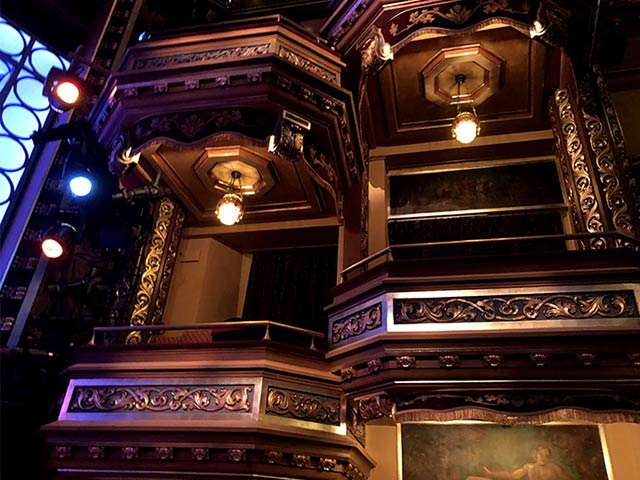
Belasco was less concerned with the story itself and more obsessed with how it was presented. He personally reviewed every detail of his theater interiors and insisted on a level of realism and spectacle rarely seen at the time. He was also a pioneer in stage technology, credited with introducing spotlights to Broadway and being the first to realistically portray a sunset on stage.
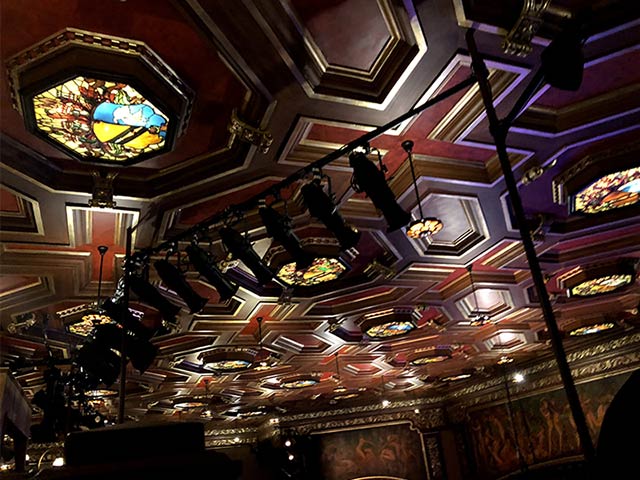
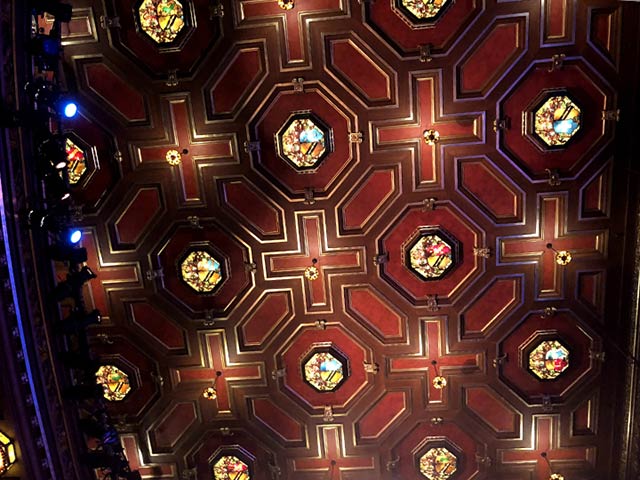
Belasco invested more than $750,000 in state-of-the-art stage equipment, including dimmer systems that allowed precise control of lighting and elevator-style stage platforms synchronized with scene changes. The interior featured Tiffany-designed lighting, numerous stained-glass panels, and murals by American artist Everett Shinn.
The result was so distinctive that theater professionals claimed no other venue in the United States could match the extent of Tiffany’s work on display.
See the Tiffany ceiling panel here
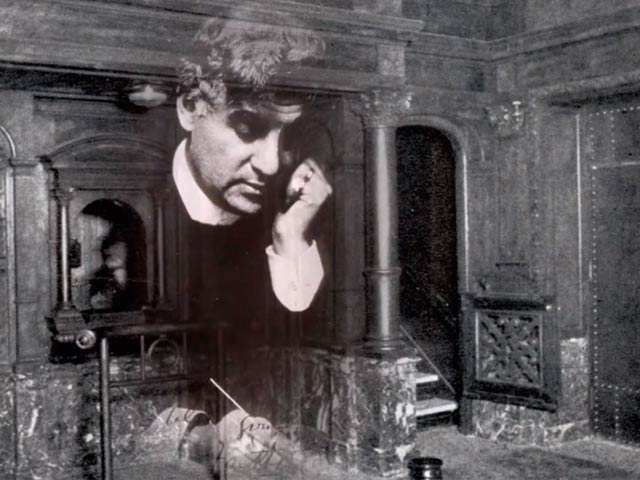
The ghost of David Belasco
Stories of Belasco’s ghost have long circulated among performers and staff at the theatre. Actors reported hearing creaking elevators that had been out of use for years, and some even claimed to see his figure during performances. Legend has it that after the production of “Oh! Calcutta!” the sightings stopped; perhaps because the show’s bold staging finally shocked even Belasco into moving on.
Occasional reports of ghostly appearances have continued into the 2000s, and a popular superstition now holds that if Belasco’s ghost is seen on a production’s opening night, the show will enjoy great success.
 Broadway Musical Discount Tickets – On Sale Now!
Find the best Broadway ticket deals right here –
faster, cheaper, and backed by local expertise. Get ready to experience the magic of Broadway!

- Get discount tickets easily with instant booking
- The most detailed musical guides and reviews
- Dedicated support throughout your Broadway experience











 Lines,
42 St – Times Square / Port Authority Stationstation (About a 5-minute walk)
Lines,
42 St – Times Square / Port Authority Stationstation (About a 5-minute walk)