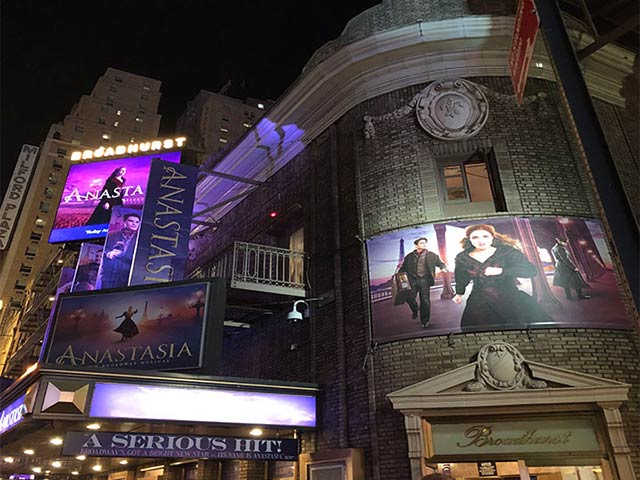
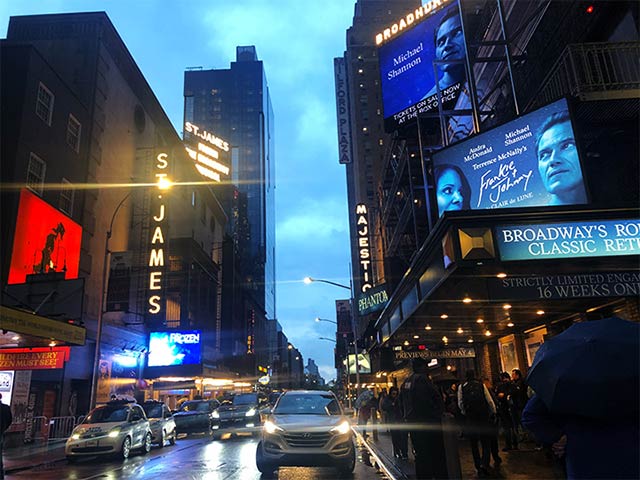
Address, opening, capacity of Broadhurst Theatre
Basic Information about the Broadhurst Theatre in NYC
|
Address: |
235 W 44th St, New York, NY 10036(
Map )
Located on 44 Street, between Broadway and 8th Avenue
|
|
Opened: |
1917 |
|
Capacity: |
1,218 seats |
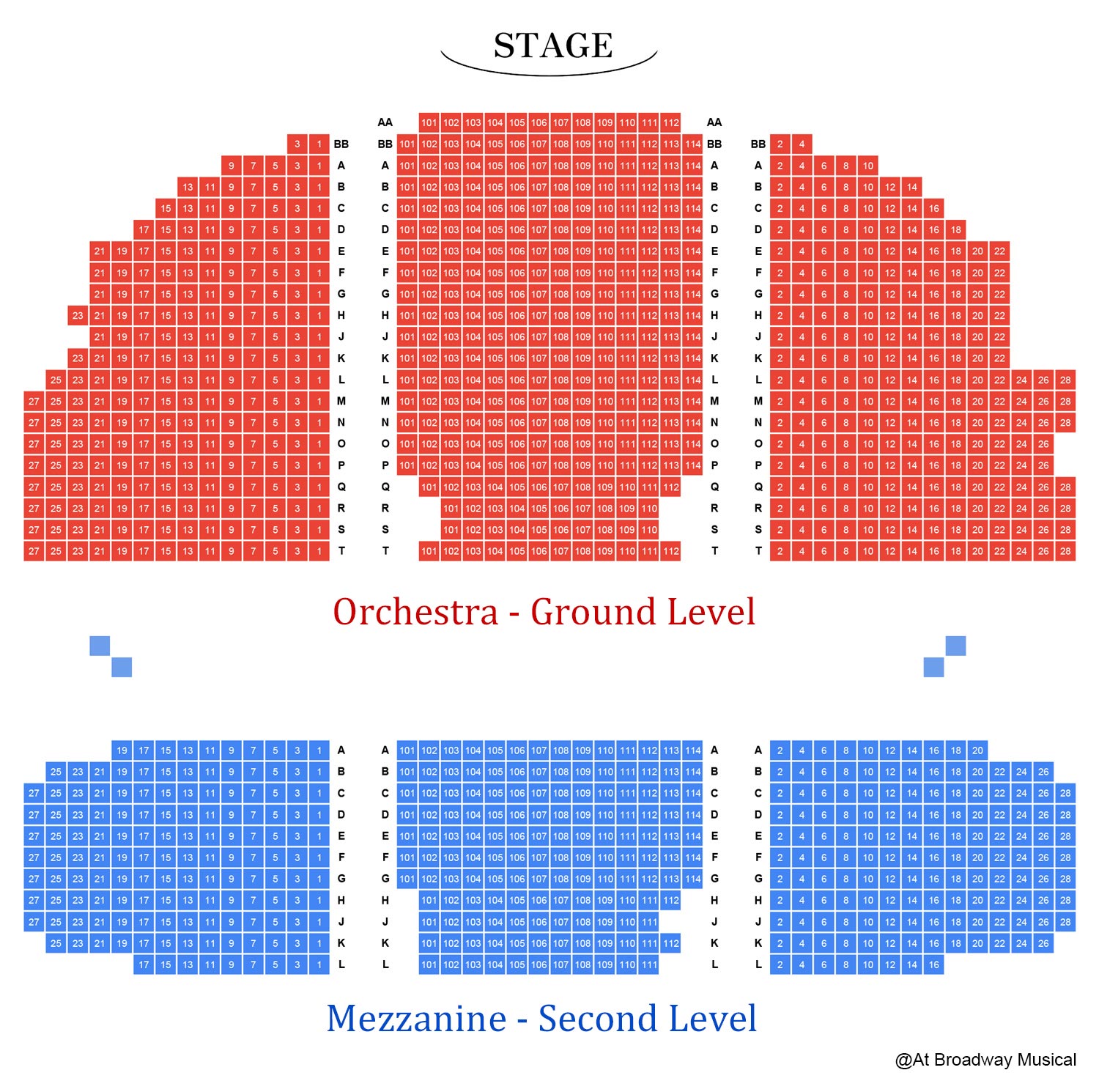
Seating Chart of Broadhurst Theatre
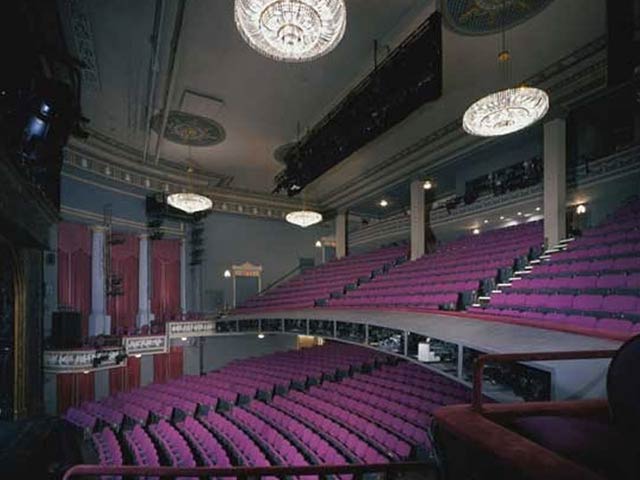
The Broadhurst Theatre has a seating capacity of 1,218 seats, divided into two main sections: Orchestra (1st level) and Mezzanine (2nd level).
*Click to view larger image
Directions to Broadhurst Theatre
Access to Broadhurst Theatre are most commonly by taking the New York City Subway (MTA).
The area around the theatre becomes very crowded close to showtime, so whether you are arriving by subway or taxi, please allow extra time to reach the venue.
Map, location of Broadhurst Theatre
Here is the map of the Broadhurst Theatre.
Best hotels near the Broadhurst Theatre
Discover the best hotels near the Broadhurst Theatre. Stay within walking distance of Broadway and enjoy easy access to shows, restaurants, and attractions.
The list of recommended hotels near the theater:
History of the Broadhurst Theatre
The Broadhurst Theatre during the Great Depression
The Broadhurst Theatre opened on September 27, 1917, built in partnership between playwright George Howells Broadhurst and the Shubert brothers, who later established the Shubert Organization. The theater was named after George Broadhurst himself.
Its first production, “Tarzan of the Apes,” made headlines by featuring
live lions and monkeys on stage, a spectacle that left a lasting impression. During the Great Depression of the 1930s, when many Broadway houses were converted into movie theaters or burlesque venues, the Broadhurst Theatre stood firm and remained dedicated to live theater.
The Shubert Organization: Broadway’s largest theater operator
Today, the Broadhurst Theatre is owned by the Shubert Organization, the largest theater company on Broadway, and has been designated a
New York City Landmark. The Shubert brothers, who immigrated from the Russian Empire, grew up in poverty and began working before the age of ten. Their determination and early exposure to theater management led them to build one of Broadway’s most powerful empires. From the late 1910s onward, they transformed the 44th and 45th Street area into the center of their theater district, a legacy that continues today.
Just two weeks after opening the Broadhurst, the Shuberts also opened the Gerald Schoenfeld Theatre behind it, further expanding their presence during Broadway’s building boom. More details on their remarkable achievements can be found in the pages linked below.
Home to Tony Award-winning productions
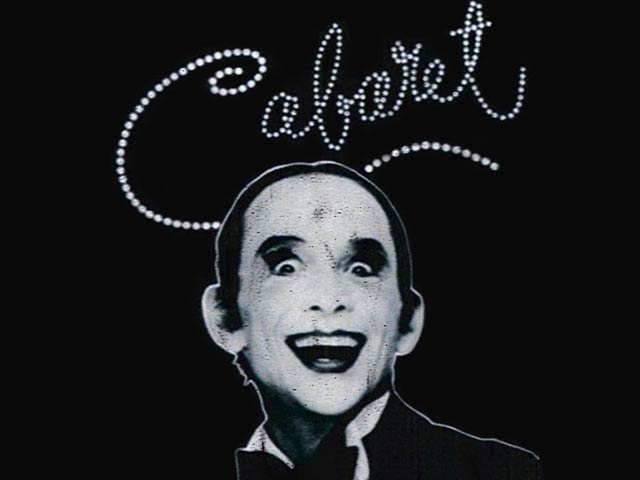
Over the years, the Broadhurst Theatre has staged many iconic productions. In 1966, “Cabaret” had its world premiere here. Despite doubts that an edgy musical set in a nightclub could succeed, it became a sensation and went on to win the Tony Award for Best Musical in 1967.
Other Tony-winning productions followed, including Peter Shaffer’s “Amadeus,” which won Best Play at the 35th Tony Awards in 1981, and “Kiss of the Spider Woman,” which won Best Musical at the 47th Tony Awards in 1993.
The Broadhurst has consistently been a home to award-winning plays and musicals.
The theater also has a strong history of revivals. In 2006, a new production of “Les Miserables” opened here, following its eight Tony Awards from earlier years. “Mamma Mia!” – a global hit that received multiple Tony nominations – returned to the Broadhurst in 2013, cementing the venue’s reputation as a stage for both classics and modern favorites.
Architectural style of the Broadhurst Theatre
A straightforward design built for commerce
The Shuberts commissioned architect Herbert J. Krapp, who became one of Broadway’s leading theater designers, to create the Broadhurst Theatre. Like the nearby Shubert and Booth Theatres designed by his mentor Henry Herts, the Broadhurst features a
restrained brick-and-terra-cotta facade.
The Shuberts, ever focused on profitability, built the theater with the intention of
renting it out to commercially successful productions. Cost-saving measures included using brick and ceramic materials for the exterior and keeping the interiors relatively modest. Unlike other theaters decorated with marble and Tiffany glass, the Broadhurst emphasized simplicity over opulence – yet many consider this restraint an advantage, allowing audiences to focus on the performances rather than the decor.
The first Broadway theater designed by Herbert J. Krapp
The Broadhurst Theatre holds a special place in Broadway history as
Herbert J. Krapp’s first solo project of Broadway theater design. Over his career, Krapp would go on to design 12 Broadway houses for the Shuberts, but the Broadhurst marked the beginning of his solo legacy.
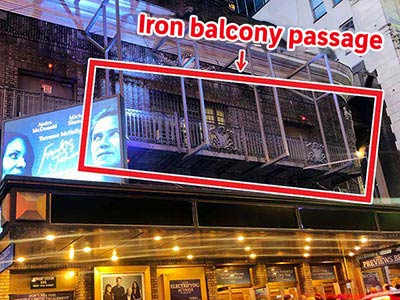
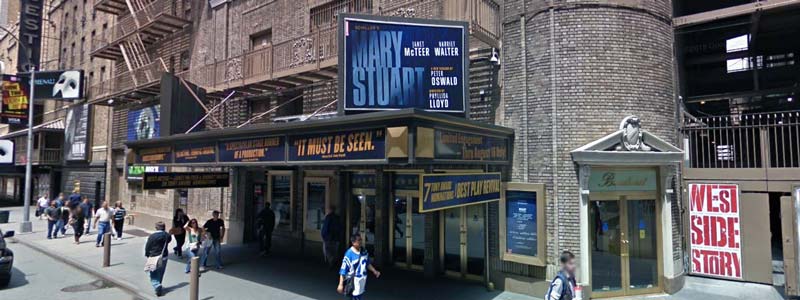
One quirky detail is the ornamental iron balcony visible from the street. Despite its appearance, no one has ever stood on it. Krapp added it purely as an architectural flourish, a small touch that shows both his creativity and his playful imagination.
Though the interiors were kept simple to match the Shuberts’ commercial priorities, the Broadhurst remains a lasting example of Krapp’s early talent and practical design approach.
 Broadway Musical Discount Tickets – On Sale Now!
Find the best Broadway ticket deals right here –
faster, cheaper, and backed by local expertise. Get ready to experience the magic of Broadway!

- Get discount tickets easily with instant booking
- The most detailed musical guides and reviews
- Dedicated support throughout your Broadway experience



 Lines,
49 Ststation (About a 8-minute walk)
Lines,
49 Ststation (About a 8-minute walk)