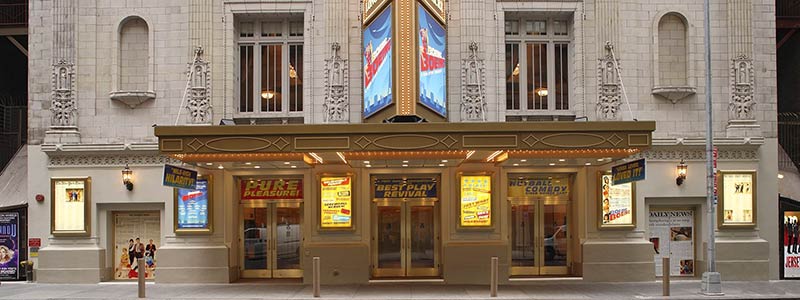
Address, opening, capacity of Longacre Theatre
Basic Information about the Longacre Theatre in NYC
|
Address: |
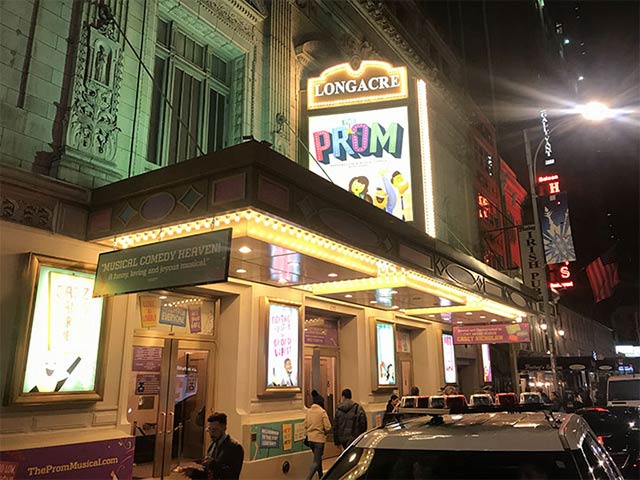
220 W 48th St, New York, NY 10036(
Map )
Located on 48 Street, between Broadway and 8th Avenue
|
|
Opened: |
1913 |
|
Capacity: |
1,045 seats |
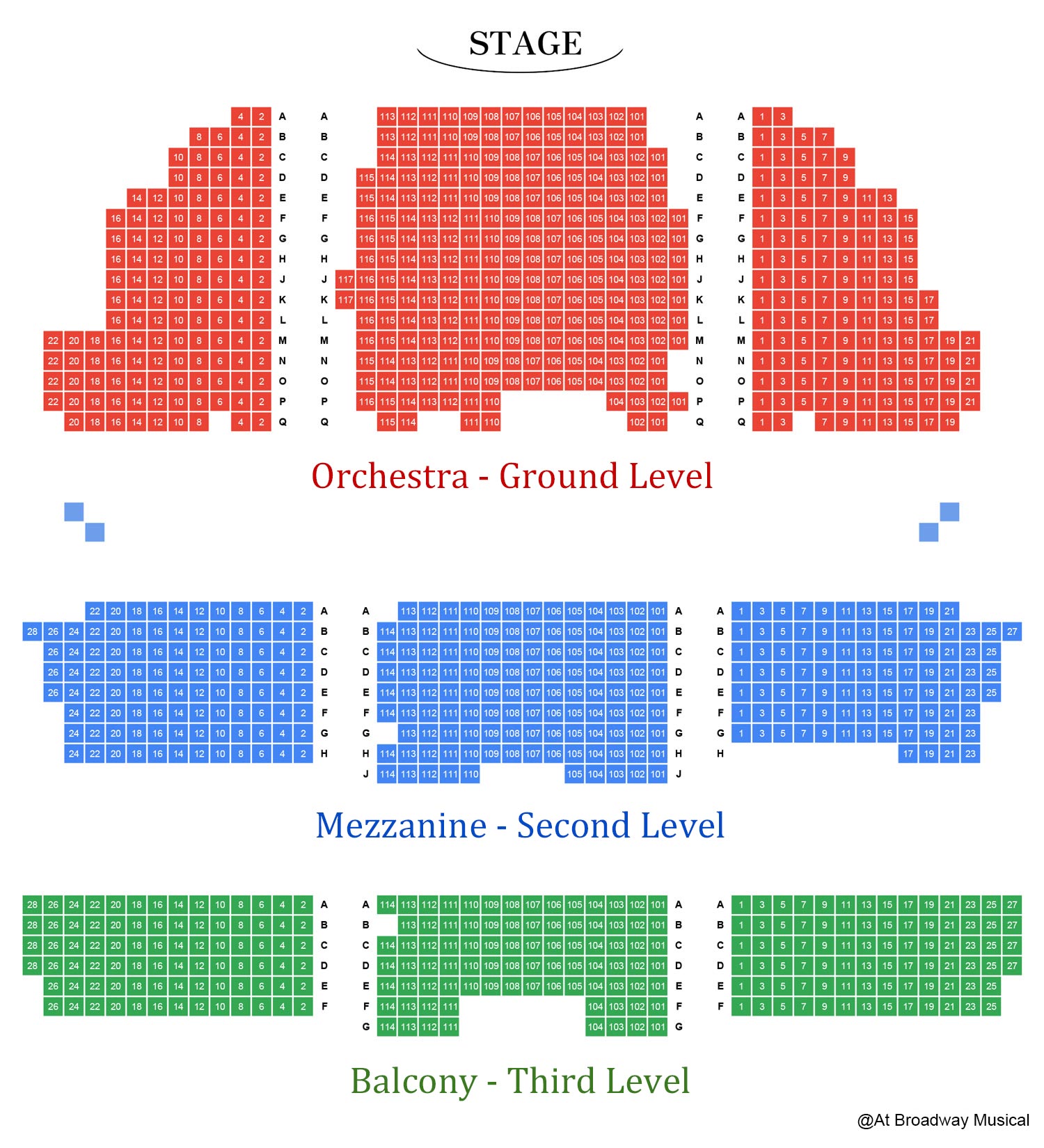
Seating Chart of Longacre Theatre
The Longacre Theatre has a seating capacity of 1,045 seats, divided into three main sections: Orchestra (1st level), Mezzanine (2nd level), and Balcony (3rd level).
*Click to view larger image
Directions to Longacre Theatre
Access to Longacre Theatre are most commonly by taking the New York City Subway (MTA).
The area around the theatre becomes very crowded close to showtime, so whether you are arriving by subway or taxi, please allow extra time to reach the venue.
Nearest Subway Station:

 Lines,
50 Ststation (About a 5-minute walk)
Lines,
50 Ststation (About a 5-minute walk)
 Lines,
50 Ststation (About a 3-minute walk)
Lines,
50 Ststation (About a 3-minute walk)


 Lines,
49 Ststation (About a 3-minute walk)
Lines,
49 Ststation (About a 3-minute walk)
Map, location of Longacre Theatre
Here is the map of the Longacre Theatre.
Best hotels near the Longacre Theatre
Discover the best hotels near the Longacre Theatre. Stay within walking distance of Broadway and enjoy easy access to shows, restaurants, and attractions.
The list of recommended hotels near the theater:
History of the Longacre Theatre
The last theatre designed by Henry Herts
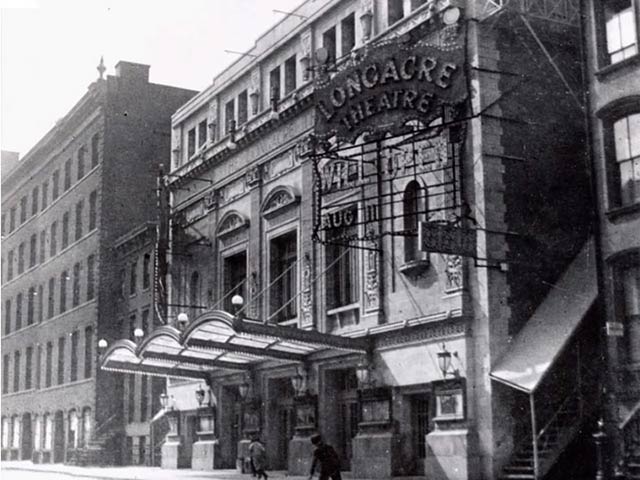
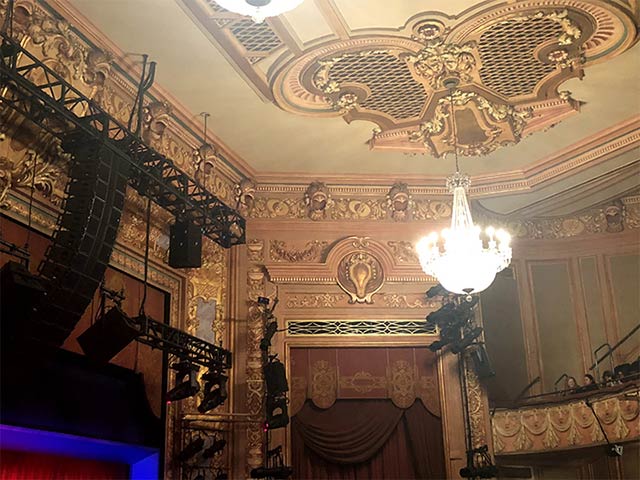
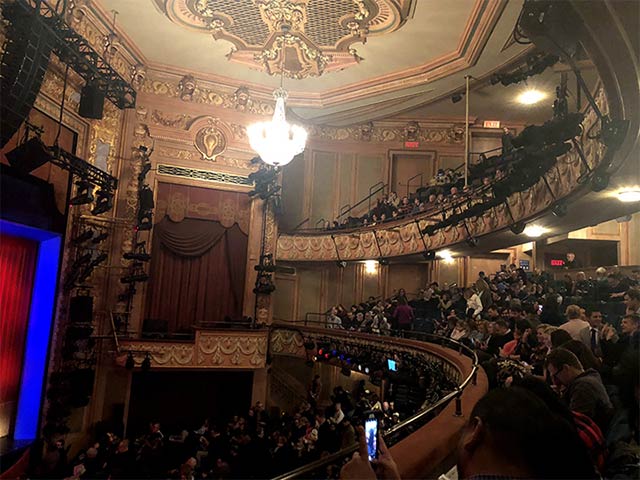
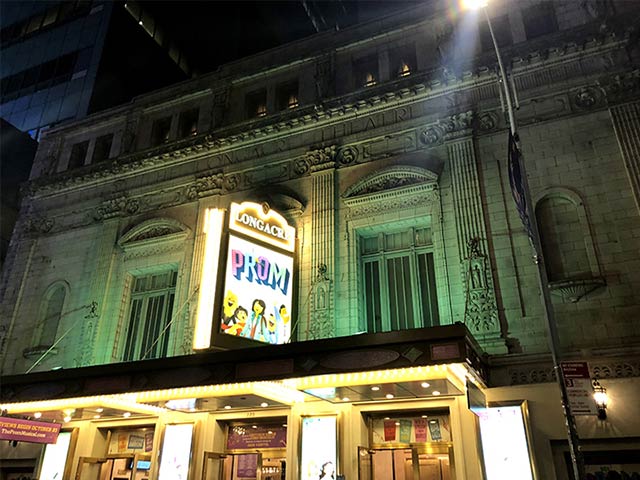
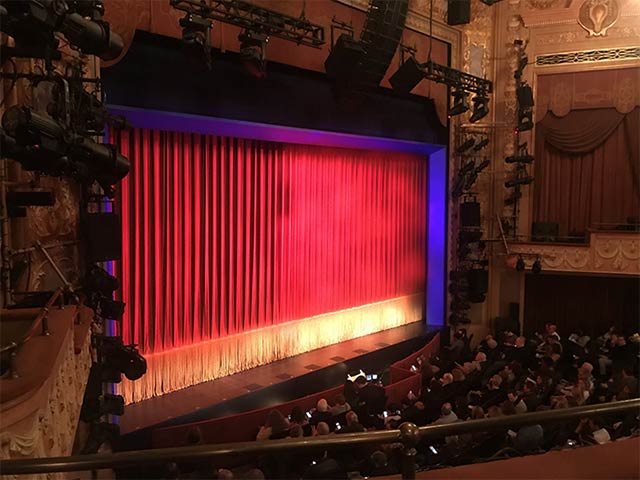
The Longacre Theatre opened in 1913, founded by opera company impresario Harry H. Frazee. Its architect was Henry Beaumont Herts, known for his work in the early twentieth century. Because Herts studied architecture in Paris, he favored European styles and incorporated elements inspired by eighteenth century French neoclassicism in the Longacre’s design.
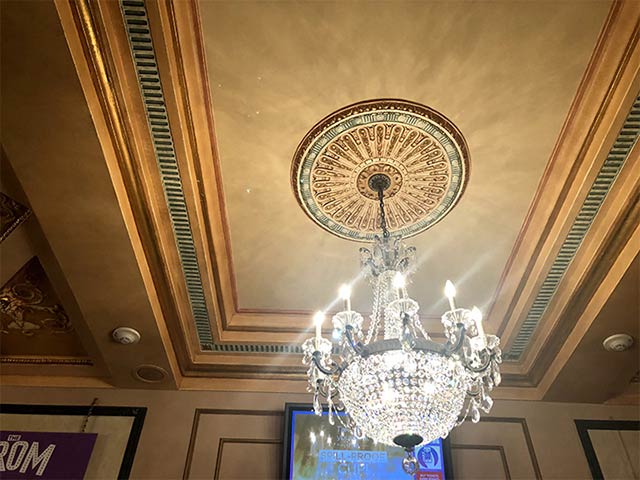
The interior features the Beaux Arts style, popular in the late nineteenth and early twentieth centuries, with a temple like ambiance. Herts also designed other Broadway houses such as the New Amsterdam and Lyceum theatres, but the Longacre was the last theatre he built on Broadway.
Below are images showing architectural elements from Herts’s Longacre Theatre.
Sold to Shubert, then converted to a radio studio
Just seven years after opening, in 1919 Frazee sold the Longacre Theatre to the Shubert brothers, who operated many Broadway houses. Though under Shubert management, by 1925 shows like The Butter and Egg Man did not create a sustained hit, and the Great Depression weakened Broadway as a whole.
In 1943 the comedy musical Three’s a Family opened at the Longacre. Its absurd premise and wartime era humor struck a chord, leading to 497 performances. Afterward, from spring 1944 through fall 1953, the theatre was leased to radio station WOR and used as a radio and television recording studio.
Hit shows resumed with Al Pacino and more
In 1953 the Longacre reopened as a venue for plays and musicals. In 1977 the play The Basic Training of Pavlo Hummel starred Al Pacino, earning him the thirty first annual Tony Award for Best Performance by a Leading Actor in a Play and drawing renewed attention.
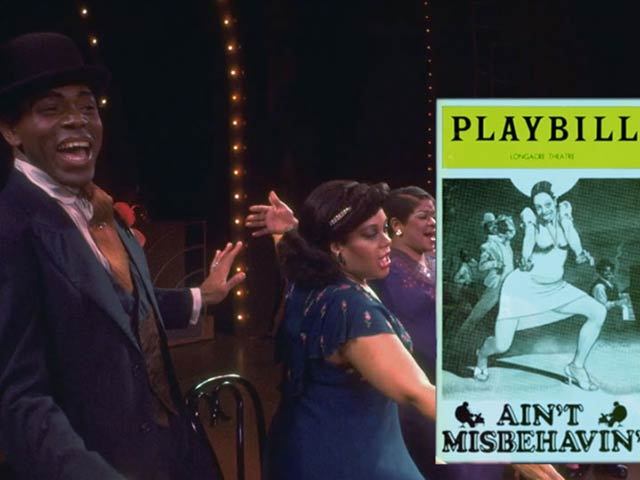
The next year, in 1978, the musical Ain’t Misbehavin’ became a hit. Celebrating the life and music of jazz great Fats Waller, it featured a predominantly Black cast and highlighted the push for greater diversity on Broadway in the nineteen seventies. The show won the Tony Award for Best Musical along with other honors and nominations.
In 2005 a revival of Who’s Afraid of Virginia Woolf played here. In 2007 the theatre underwent a multi million dollar restoration due to aging infrastructure. Between 2016 and 2018 the musical A Bronx Tale, with Robert De Niro as producer and co director, ran to strong box office and attention.
The theatre’s name comes from the old Longacre Square
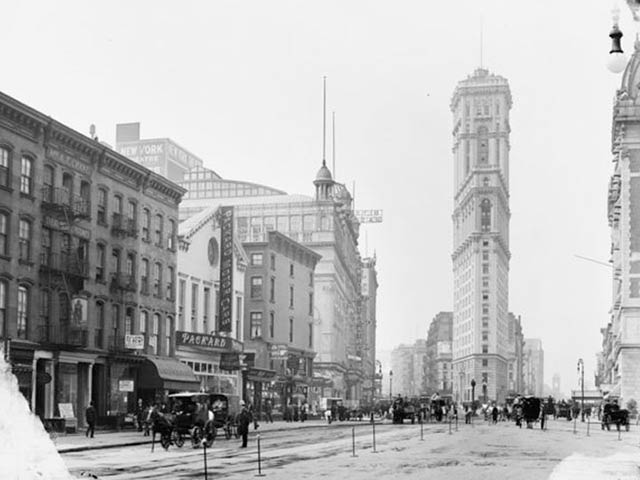
The Longacre Theatre takes its name from the former Longacre Square, the plaza near the theatre. In 1904 the New York Times moved its headquarters there and the area was renamed Times Square. Although construction of the theatre began in 1912 after the renaming, its owners chose the historic Longacre name.
About the founder of Longacre
Harry Frazee, also a former Red Sox owner
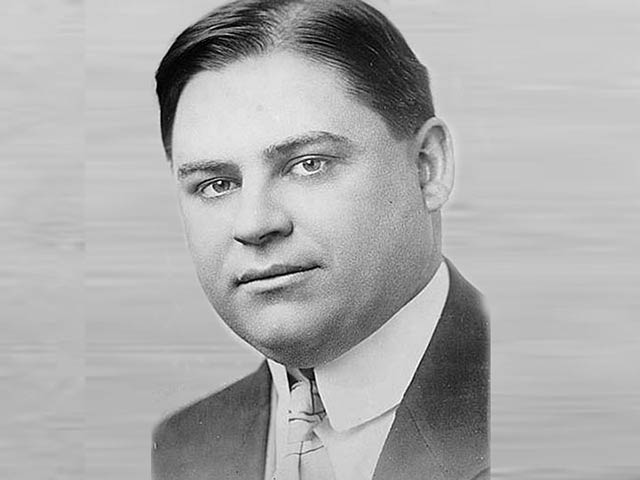
Harry Herbert Frazee, founder of the Longacre Theatre, was a stage producer turned businessman who expanded from the Midwest to the East Coast. Early in his career he worked as an usher, then built experience as a director and producer before rising to become a theatre owner in New York.
After building the Longacre, in 1916 Frazee purchased Major League Baseball’s Boston Red Sox for about five hundred thousand dollars. In 1918 the team won the World Series, but heavy debts from theatre operations and production costs pushed the franchise into financial trouble.
Frazee and the Curse of the Bambino
Babe Ruth’s real name was George Herman Ruth Jr. As a young player he earned the nickname Babe, and later Bambino in Italian. Because Frazee traded Ruth to the Yankees, he is often blamed in a lighthearted way for the so called Curse of the Bambino, the eighty six year championship drought that ended in 2004. Fans have even shared stories about placing a Red Sox cap on Mount Everest to break the curse, though most people treat the tale as playful lore rather than serious history.
Today the rivalry between the Red Sox and Yankees still sparks teasing. At a 1990 game Yankees fans chanted 1918 to mock Boston’s long title drought, and signs referencing 1918, the Curse of the Bambino, or images of Babe Ruth still appear at some Yankees home games.
 Broadway Musical Discount Tickets – On Sale Now!
Find the best Broadway ticket deals right here –
faster, cheaper, and backed by local expertise. Get ready to experience the magic of Broadway!

- Get discount tickets easily with instant booking
- The most detailed musical guides and reviews
- Dedicated support throughout your Broadway experience