Address, opening, capacity of Orpheum Theatre
Basic Information about the Orpheum Theatre in NYC
|
Address: |
126 2nd Ave, New York, NY 10003(
Map )
Located on 2nd Avenue, between 7th Street and 8th Street
|
|
Opened: |
1904 |
|
Capacity: |
347 seats |
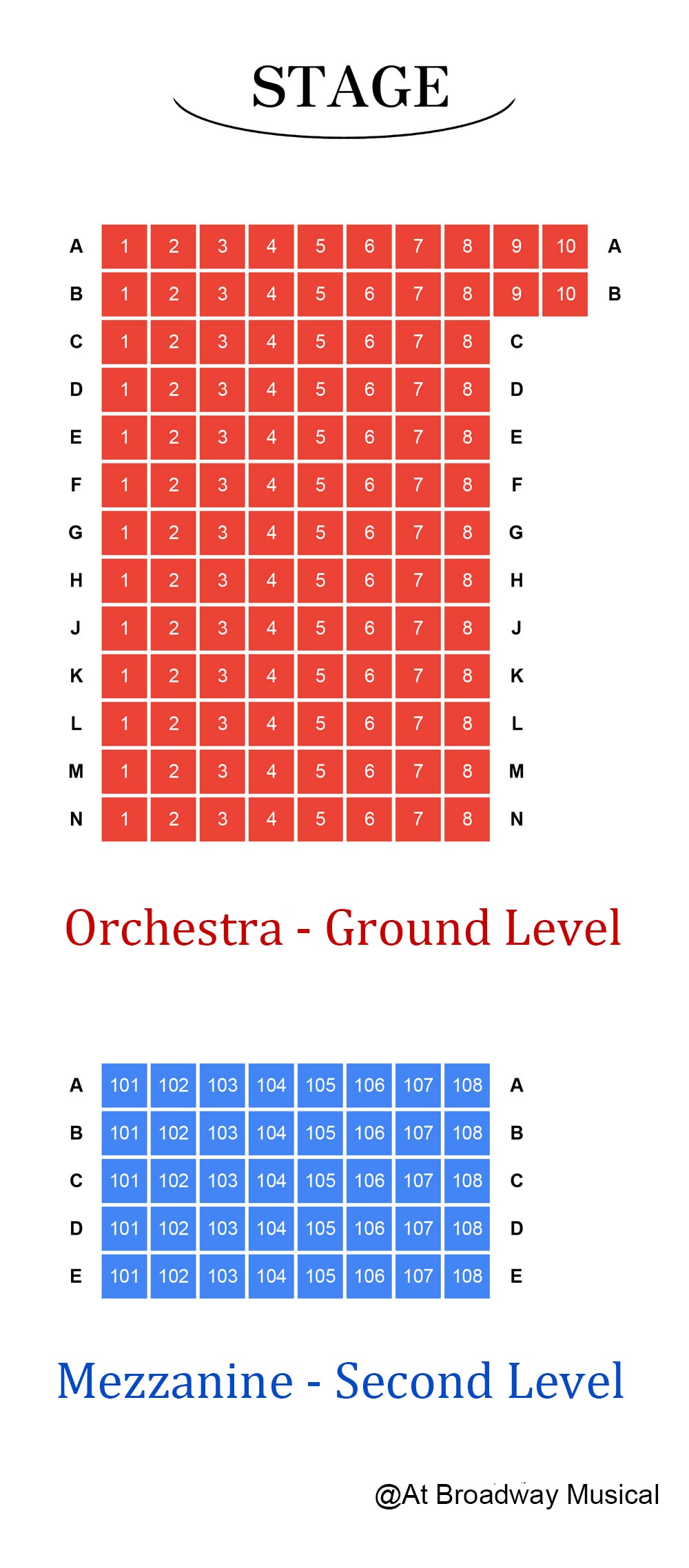
Seating Chart of Orpheum Theatre
The Orpheum Theatre has a seating capacity of 347 seats, divided into two main sections: Orchestra (1st level) and Balcony (2nd level).
*Click to view larger image
Directions to Orpheum Theatre
Access to Orpheum Theatre are most commonly by taking the New York City Subway (MTA).
The area around the theatre becomes very crowded close to showtime, so whether you are arriving by subway or taxi, please allow extra time to reach the venue.
Nearest Subway Station:
 Lines,
Astor Plstation (About a 8-minute walk)
Lines,
Astor Plstation (About a 8-minute walk)

 Lines,
8st – NYUstation (About a 10-minute walk)
Lines,
8st – NYUstation (About a 10-minute walk)
Map, location of Orpheum Theatre
Here is the map of the Orpheum Theatre.
Best hotels near the Orpheum Theatre
Discover the best hotels near the Orpheum Theatre. Stay within walking distance of Broadway and enjoy easy access to shows, restaurants, and attractions.
The list of recommended hotels near the theater:
History of the Orpheum Theatre
From entertainment hall to theater
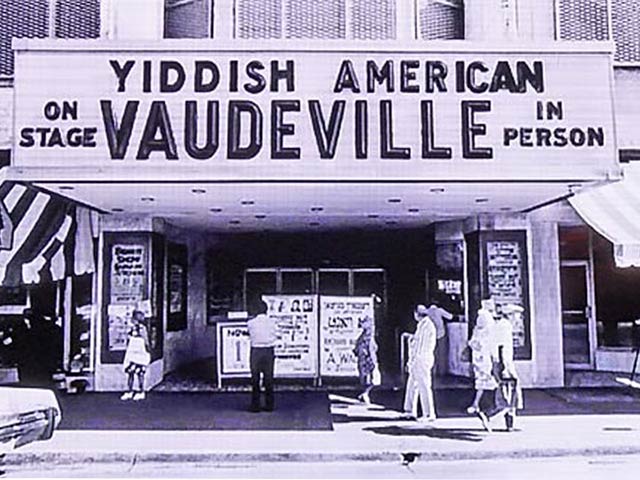
The Orpheum Theatre opened in 1904 as part of the
Yiddish Theatre District in New York’s East Village, an area that had been home to many concert halls since the late 19th century.
The Yiddish Theatre District centered on Second Avenue, with 22 theaters and two additional performance venues staging dramas, comedies, operas, musicals, and vaudeville in the Yiddish language. The neighborhood earned the nickname “Jewish Rialto” and was celebrated as one of the city’s earliest centers of popular entertainment.
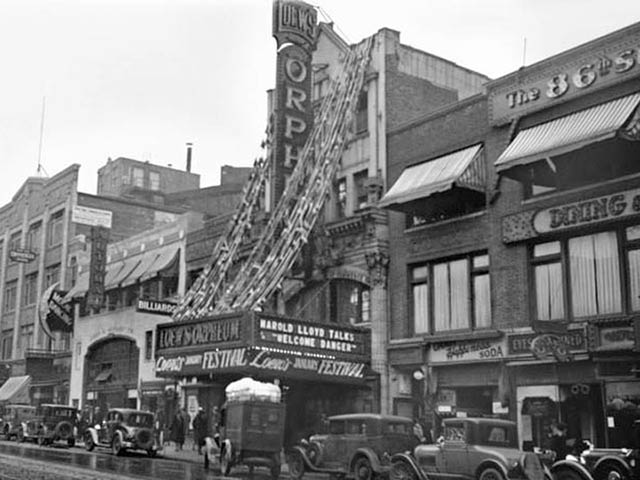
The Orpheum was a busy venue in its early years, staging as many as 20 to 30 performances a night. But after World War II, as Broadway entered its golden age, the popularity of Yiddish theater declined. By the 1920s, the Orpheum was converted into a movie house. Its original 299 seats were expanded to 560 over several renovations.
In 1958, the Orpheum officially transitioned into an Off-Broadway theater. A year later, it premiered its first Off-Broadway musical,
Little Mary Sunshine, which marked the start of its return as a popular performance venue.
The Yiddish cultural scene in 19th-century Manhattan
Between 1890 and 1940, Yiddish theater companies built more than 200 theaters across the United States, many of them concentrated in Manhattan’s East Village. This area became known as the Yiddish Theatre District.
Yiddish theater developed among Ashkenazi Jews in Eastern Europe who had migrated there after centuries of persecution. Yiddish, a Germanic language with Hebrew and Slavic influences, became the common tongue of these communities.
By the early 20th century, Yiddish theaters flourished in cities around the world, including Berlin, London, Paris, Buenos Aires, and New York. In New York alone, 22 theaters and two playhouses formed the vibrant Yiddish Theatre District along Second Avenue.
How Yiddish theater arrived in the East Village
In the mid-19th century, the East Village was home to many poor Irish and German immigrants. By the early 20th century, it had one of the largest German communities outside Germany.
A tragedy in 1904, the General Slocum steamboat disaster, killed more than 1,000 German Americans and led to the decline of the neighborhood’s German population. Soon after, Jewish, Polish, and Ukrainian immigrants moved into the area. Jewish theaters were built here, and the district became closely associated with Yiddish culture.
In 1925, The New York Times described the Yiddish Theatre District not only as a hub for Yiddish-speaking immigrants but also as an important part of New York’s entertainment scene, calling it “a Broadway of its own.” Today, traces of that heritage remain across the East Village, alongside Ukrainian churches and restaurants that continue the neighborhood’s multicultural history.
A popular Off-Broadway house in the 1980s
In the 1980s, the Orpheum was renovated to hold 347 seats, making it one of the larger Off-Broadway theaters.
In 1982, the theater staged
Little Shop of Horrors, which had started as an Off-Off-Broadway show before moving to the Orpheum. Its success here propelled the production into mainstream recognition. The show ran for five years, totaling 2,209 performances, and became one of the longest-running Off-Broadway shows of its time.
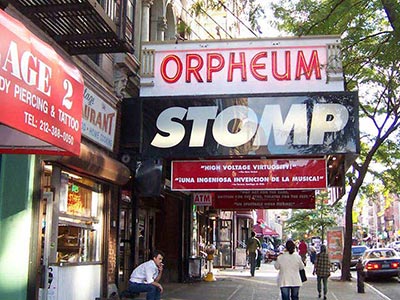
STOMP – Signature production of the Orpheum Theatre
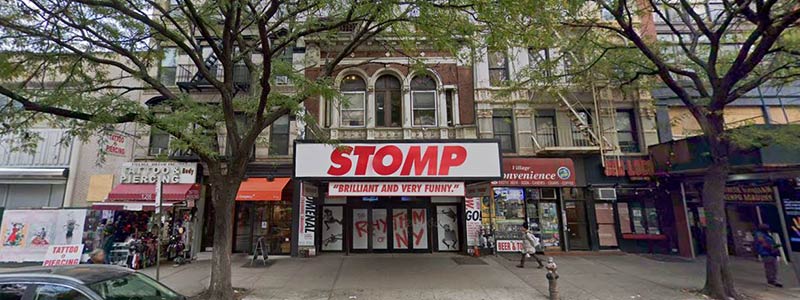
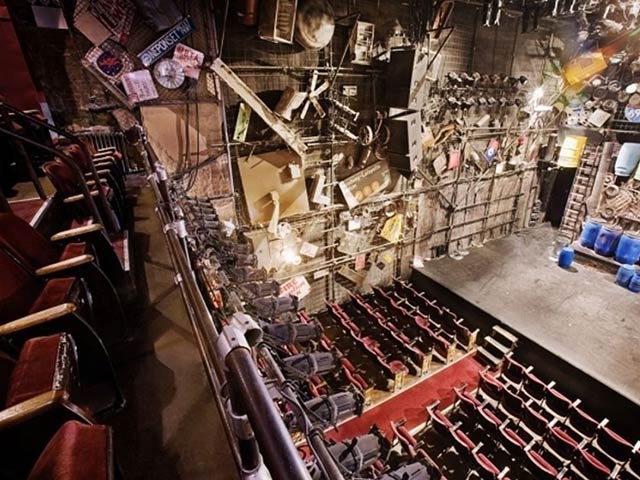
STOMP premiered at the Orpheum Theatre in 1994 and went on to become one of the longest-running Off-Broadway shows. This high-energy production turned everyday objects into instruments, creating a unique blend of rhythm, movement, and acrobatics. Because the show relied on the natural, unamplified sounds of its performers, most theaters were not acoustically suited for it. The Orpheum, originally built as a movie house, proved to be the perfect size and design for the show.
Its acoustics carried the raw sounds of the performance to every seat, making the space ideal for a production centered on rhythm rather than amplification. The interior was adapted to match the industrial, percussive character of STOMP, giving audiences an immersive experience that became synonymous with the Orpheum Theatre for nearly 30 years.
 Broadway Musical Discount Tickets – On Sale Now!
Find the best Broadway ticket deals right here –
faster, cheaper, and backed by local expertise. Get ready to experience the magic of Broadway!

- Get discount tickets easily with instant booking
- The most detailed musical guides and reviews
- Dedicated support throughout your Broadway experience