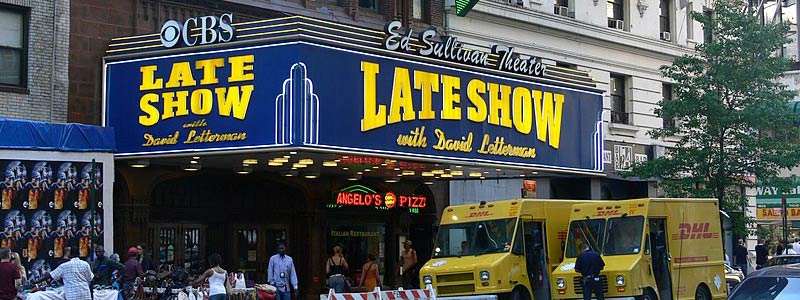
Address, opening, capacity of Ed Sullivan Theater
Basic Information about the Ed Sullivan Theater in NYC
|
Address: |
1697 Broadway, New York, NY 10019(
Map )
Located on Broadway, between 53 Street and 54 Street
|
|
Opened: |
1927 |
|
Capacity: |
457 seats |
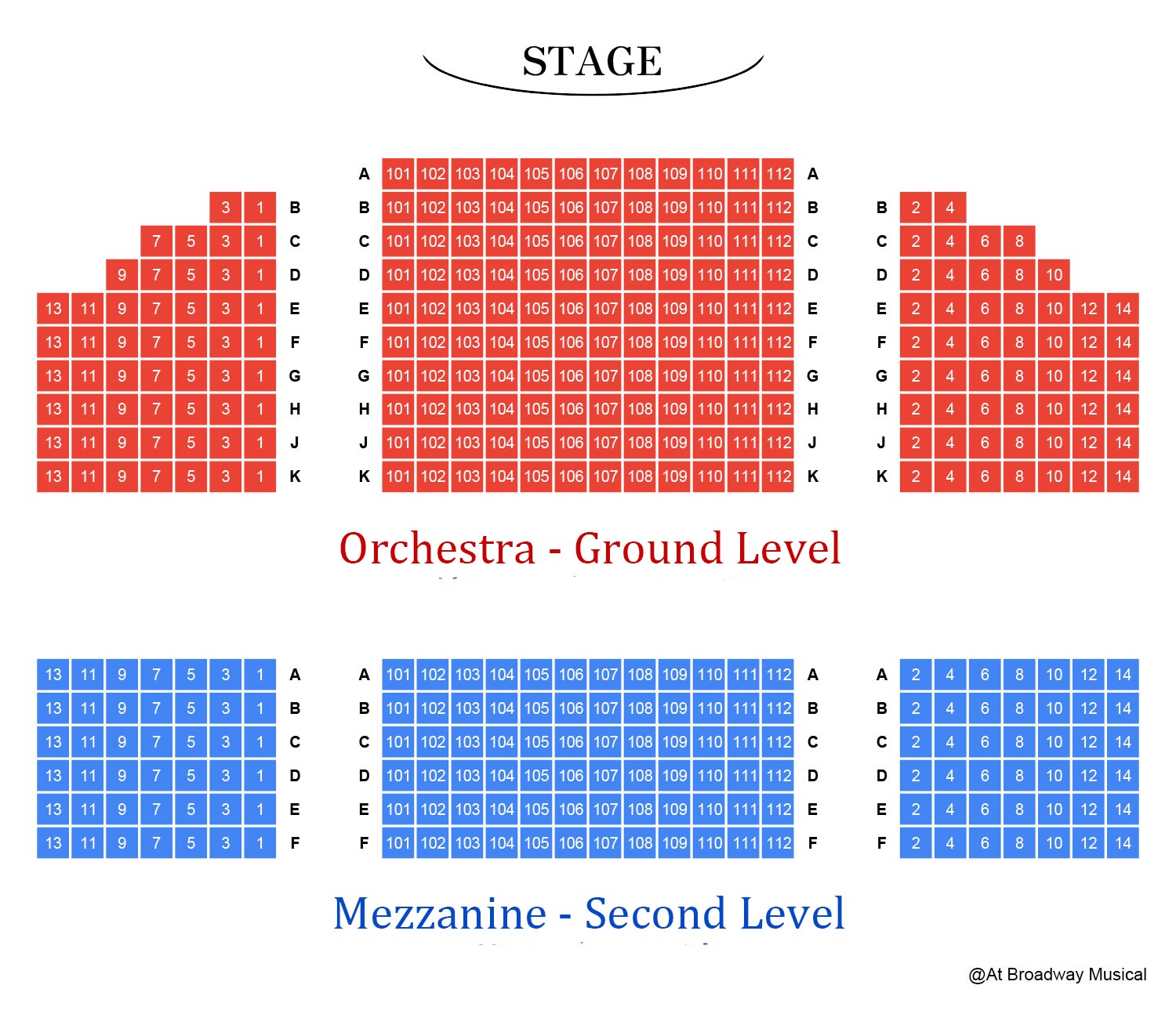
Seating Chart of Ed Sullivan Theater
The Ed Sullivan Theater has a seating capacity of 457 seats, divided into two main sections: Orchestra (1st level) and Mezzanine (2nd level).
*Click to view larger image
Directions to Ed Sullivan Theater
Access to Ed Sullivan Theater are most commonly by taking the New York City Subway (MTA).
The area around the theatre becomes very crowded close to showtime, so whether you are arriving by subway or taxi, please allow extra time to reach the venue.
Map, location of Ed Sullivan Theater
Here is the map of the Ed Sullivan Theater.
Best hotels near the Ed Sullivan Theater
Discover the best hotels near the Ed Sullivan Theater. Stay within walking distance of Broadway and enjoy easy access to shows, restaurants, and attractions.
The list of recommended hotels near the theater:
History of the Ed Sullivan Theater
Founder Arthur Hammerstein and his family
The Ed Sullivan Theater began life in 1927 as Hammerstein’s Theater, developed by playwright and producer Arthur Hammerstein. He was part of the distinguished Hammerstein family, whose contributions helped shape New York’s theater culture.
Arthur’s father, Oscar Hammerstein I, brought European opera to New York and was a leading figure who oversaw everything from construction to management at major opera houses, including the Metropolitan Opera. Arthur’s brother Willie Hammerstein managed venues such as the Victoria Theatre, and Arthur’s nephew Oscar Hammerstein II wrote lyrics for The King and I and The Sound of Music, becoming one of the most influential creators in Broadway history.
Although the Ed Sullivan Theater is not generally known as a musical venue, there was one early exception. Shortly after it opened in 1927, the theater presented the musical Golden Dawn, notable for featuring a young performer who would later become the Oscar-nominated film star Cary Grant.
Sold during the Great Depression and reborn as CBS’s “Studio 50”
Even a theater created by this renowned family could not escape the economic turmoil of 1929. In the wake of the Great Depression, the venue was sold to entertainment impresario Billy Rose, reopened as the Manhattan Theatre, and for a time operated successfully as a nightclub.
In 1936, the American network CBS acquired the property rights and began using the building for radio and variety programming. By 1950, CBS had extensively refitted the interior for television and officially designated the venue as
CBS Studio 50, where hit programs such as What’s My Line?, To Tell the Truth, Password, and The $10,000 Pyramid were taped.
How the theater got its name from the classic “Ed Sullivan Show”
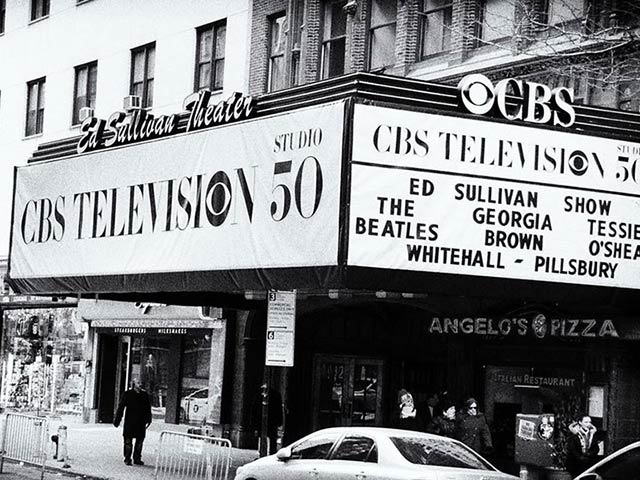
As Studio 50 turned out one popular program after another, The Ed Sullivan Show became a national sensation. In 1967, to mark Sullivan’s twentieth anniversary on the air, the venue was officially renamed the Ed Sullivan Theater. At a time when television dominated popular culture, Sullivan himself became a household name.
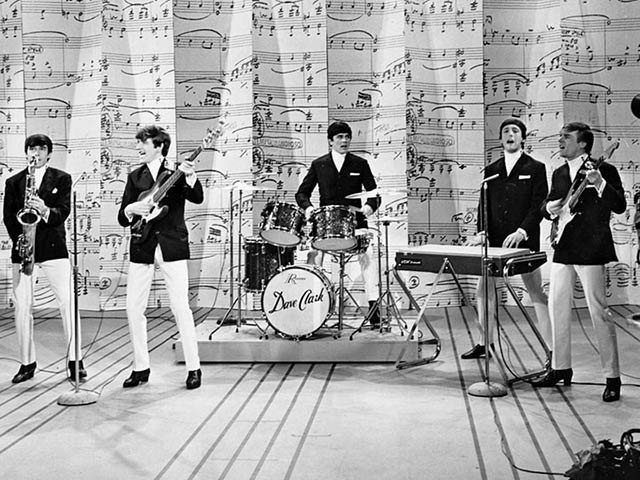
The show is remembered for presenting top global stars and unforgettable debuts. Elvis Presley, James Brown, Cole Porter, and the Jackson 5 all appeared, and the theater is famous as the stage where the Beatles and the Rolling Stones first performed for U.S. television audiences.
The program was also known for spotlighting diverse talent. In a notable booking for the era, the pop duo The Peanuts, celebrated for Mothra’s Song, appeared on the show.
Architectural style of the Ed Sullivan Theater
Designed by Broadway master architect Herbert J. Krapp
The Ed Sullivan Theater was designed and built by Herbert J. Krapp, one of Broadway’s foremost theater architects. In the early twentieth century he created many of the venues that define today’s Theater District.
The theater employs
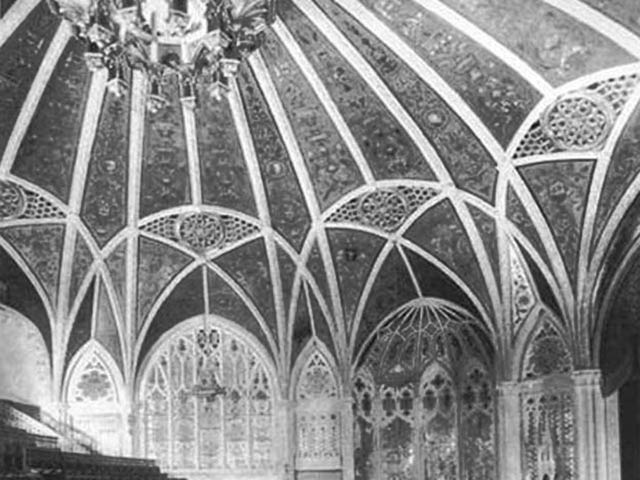
Gothic Revival design, a style often associated with ecclesiastical architecture featuring expansive windows, lofty ceilings, and prominent stained glass.
Its stained glass panels depict scenes from operas championed by Oscar Hammerstein I. The building’s interior is a designated New York City Landmark, and the property was listed on the National Register of Historic Places in 1997. The stained glass was removed during television-era renovations and has since been restored. An organ originally stood in the orchestra section when the theater opened.
About Gothic Revival architecture
Gothic Revival architecture, seen at Saint Luke’s and many other sites, revived the medieval Gothic tradition. Rising in Britain in the late eighteenth and nineteenth centuries, it later spread across Europe and the United States.
Gothic design does not rely on a single fixed set of forms, but is commonly associated with dramatic verticality, slender supports, stone vaulting, and structural combinations that create a distinct sense of space.
Also known as Victorian Gothic or Neo-Gothic, the movement contrasted sharply with classical revivals such as the
Greek Revival. Among celebrated examples is Notre-Dame de Reims, widely regarded as a masterpiece of the Gothic style.
A TV-ready interior for a modern late-night show
Though Krapp’s original detailing remains, the interior has evolved repeatedly to suit broadcast needs. When television transitioned to color in the mid-1960s, the venue underwent major upgrades from camera platforms to backstage systems.
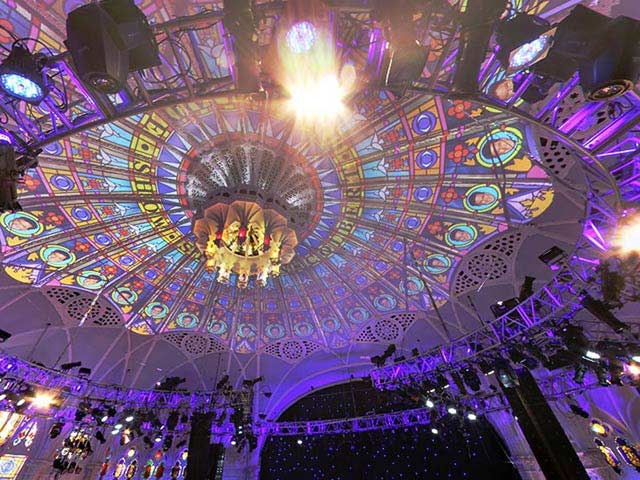
Today, the auditorium features a white, projection-friendly dome that supports vibrant show visuals. During tapings of The Late Show with Stephen Colbert, stained glass style imagery fills the ceiling to dramatic effect.
A working home for a hit late-night program
About The Late Show now taping here
The Late Show is a long-running CBS late-night talk program hosted by Stephen Colbert since September 8, 2015. Audience seats are free by advance request through the official ticketing site, and tapings typically take place in the late afternoon or early evening.
Colbert, known for incisive political and cultural humor, is a comedian, actor, and writer whose work has earned multiple Emmy Awards and recognition among influential figures in entertainment.
 Broadway Musical Discount Tickets – On Sale Now!
Find the best Broadway ticket deals right here –
faster, cheaper, and backed by local expertise. Get ready to experience the magic of Broadway!

- Get discount tickets easily with instant booking
- The most detailed musical guides and reviews
- Dedicated support throughout your Broadway experience



 Lines,
7 Avestation (About a 5-minute walk)
Lines,
7 Avestation (About a 5-minute walk)