Address, opening, capacity of New Amsterdam Theatre
Basic Information about the New Amsterdam Theatre in NYC
|
Address: |
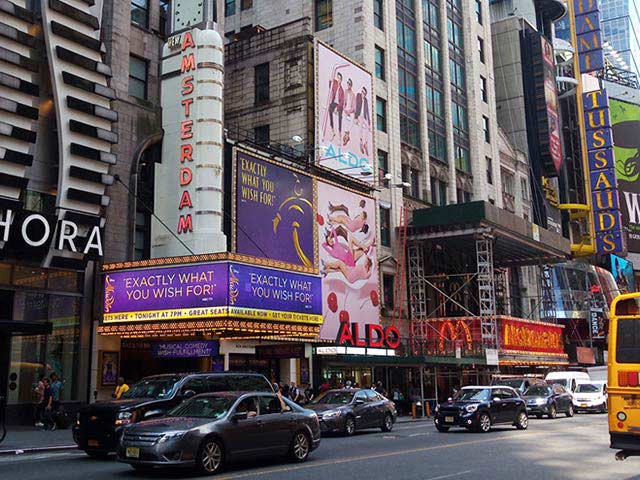
214 W 42nd St, New York, NY 10036(
Map )
Located on 42nd Street, between 7th Avenue and 8th Avenue
|
|
Opened: |
October 23, 1903 |
|
Capacity: |
1,702 seats |
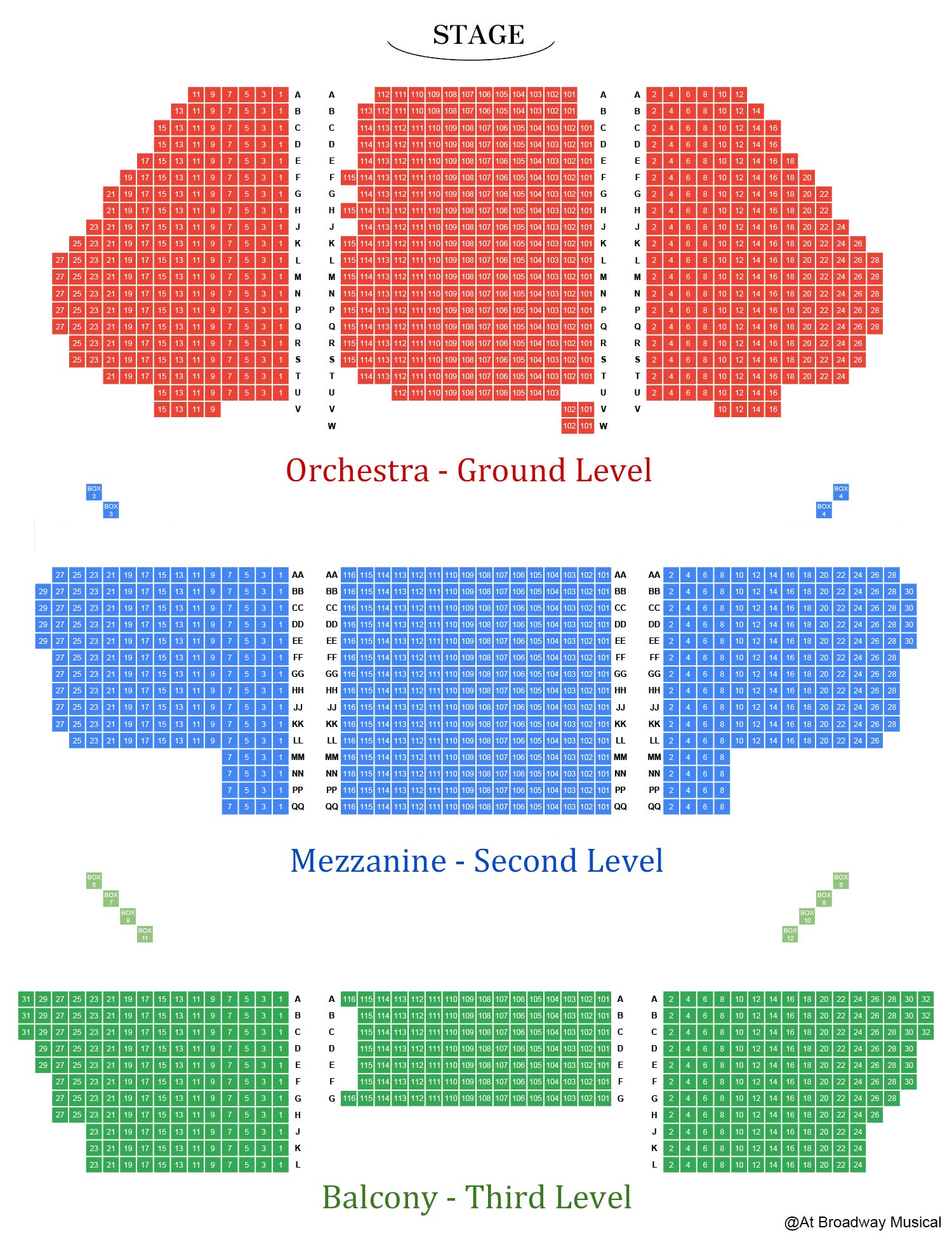
Seating Chart of New Amsterdam Theatre
The New Amsterdam Theatre has a seating capacity of 1,801 seats, divided into three main sections: Orchestra, Mezzanine, and Balcony.
*Click to view larger image
View from the seat of New Amsterdam Theatre
You can view real seat photos from inside the the New Amsterdam Theatre to see the stage from sections. These images help you choose the seating option that best suits your Broadway experience.
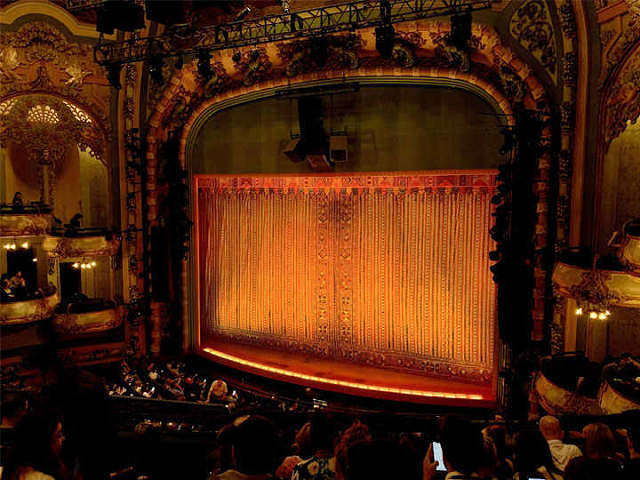
Mezzanine Right Row FF
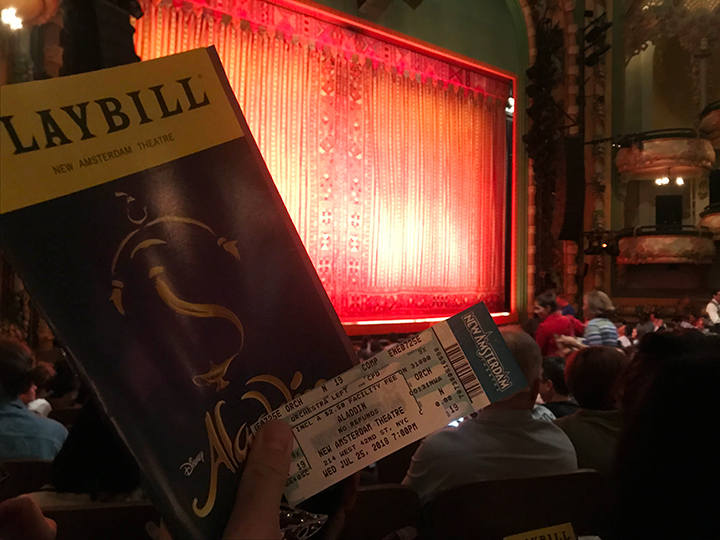
Orchestra Left Row N
Directions to New Amsterdam Theatre
Access to New Amsterdam Theatre are most commonly by taking theNew York City Subway (MTA).
The area around the theatre becomes very crowded close to showtime, so whether you are arriving by subway or taxi, please allow extra time to reach the venue.
The 42st – Times Square / Port Authority station is a large station complex, so plan to arrive early to avoid rushing.
Map, location of New Amsterdam Theatre
Here is the map of the New Amsterdam Theatre.
Best hotels near the New Amsterdam Theatre
Discover the best hotels near the New Amsterdam Theatre. Stay within walking distance of Broadway and enjoy easy access to shows, restaurants, and attractions.
The list of recommended hotels near the theater:
History of the New Amsterdam Theatre
One of Manhattan’s oldest theatres
The New Amsterdam Theatre opened in 1903, founded by prominent theatre producers A.L. Erlanger and Marcus Klaw.
It was designed by renowned architects Henry Beaumont Herts and Hugh Tallant, completed in 1901 and officially opened in 1903. Alongside the Hudson Theatre and the Lyceum Theatre, it stands as one of the oldest surviving theatres in Manhattan and is now recognized as a landmark of New York City.
True to Herts’ training in Paris and mastery of the
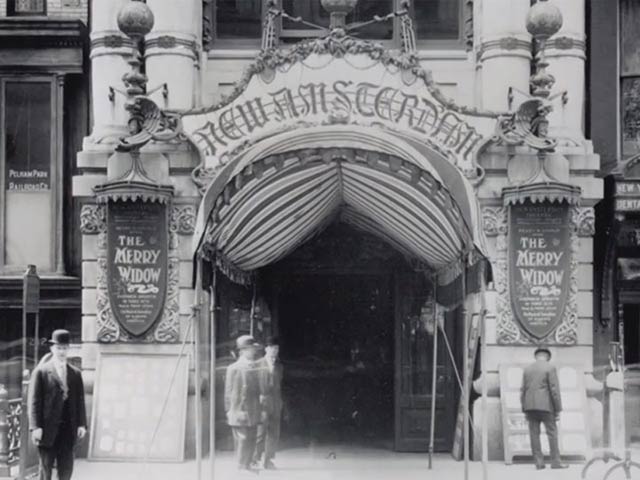
Beaux-Arts style, the theatre’s facade features elegant European classical elements, particularly around its arched windows and decorative stonework. From 1913 to 1927, it was owned by celebrated producer Florenz Ziegfeld Jr. However, the Great Depression and the rise of the film industry led to its first closure in 1936.
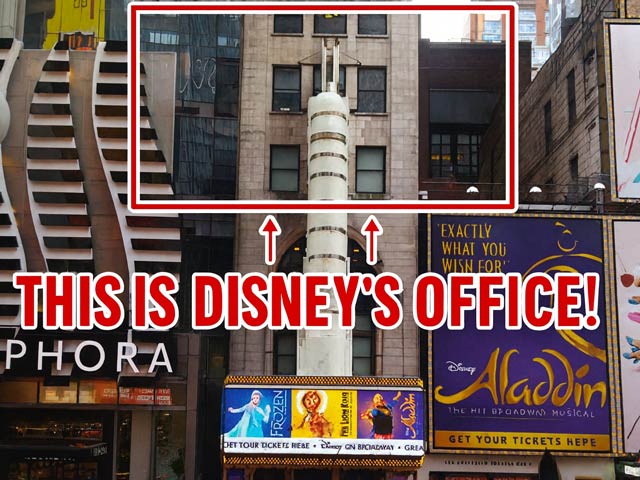
During Ziegfeld’s ownership, the second floor famously operated as a secret men’s nightclub. Today, this same space serves as Disney’s New York offices, with desks placed where the nightclub stage once stood.
As befits the work of Mr. Hertz, who studied the
Beaux-Arts stylethoroughly during his studies in Paris, the exterior of the theater (especially the windows and arches) incorporates the classical European architectural style. From 1913 to 1927, the theater was owned by stage director Florenz Ziegfeld, Jr., but with the rapid growth of the film industry and the onset of the Great Depression, it closed for the first time in 1936.
It is a well-known anecdote that while Ziegfeld owned the theater, he secretly operated a nightclub for men on the second floor every night. However, the second floor of the building is now used as a Disney office, with the stage from the former nightclub preserved and desks arranged around it, creating a uniquely designed office space.
From stage struggles to cinema conversion and closure
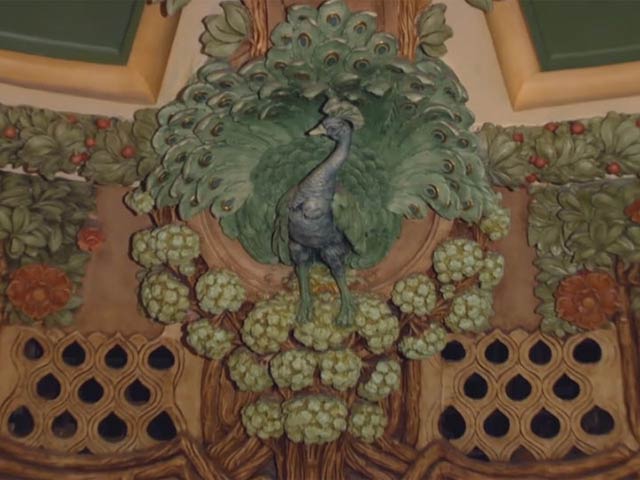
The theater’s first production was Shakespeare’s “A Midsummer Night’s Dream,” but the performance was closed after only three weeks. Even after that, the theater was unable to attract hit productions, and rumors spread that the 13 peacock feathers used in the theater’s interior decoration looked like the eyes of demons and were unlucky and cursed.
In 1937, the New Amsterdam Theater attempted to reopen as a movie theater, but the velvet interior, illuminated by the projected images, stood out and was deemed inappropriate for black-and-white films. As a result, the entire theater was painted black, and the box seats, which obstructed the view, were ordered to be cut off with a chainsaw, forcing a major redesign of the theater.
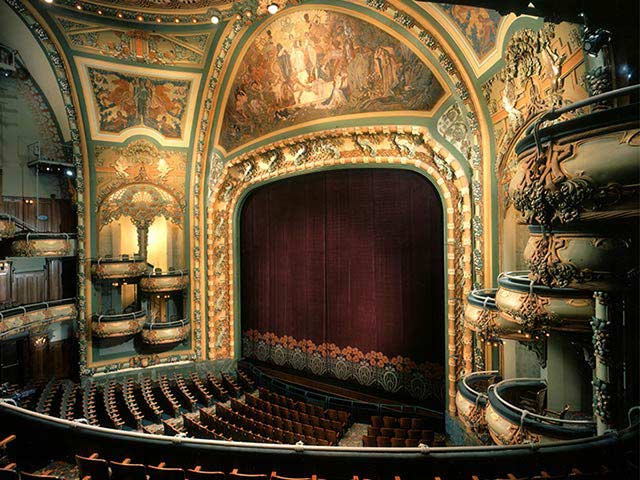
The theater, with its Beaux-Arts exterior and Art Nouveau interior, was officially registered as a
National Historic Landmarkin 1980 after further renovations in 1979, but it closed permanently in 1985. It was later sold to the theater management company Nederlander Organization, but remained completely abandoned for a full decade.
What is Art Nouveau?
Art Nouveau refers to an international art movement that flourished in Europe from the late 19th century to the early 20th century. Meaning “new art,” it is characterized by decorative elements that break away from traditional styles, combining organic motifs such as flowers and plants with free-flowing curves, as well as the use of new materials at the time, such as iron and glass.
It is known that there are
no other buildings in North America that feature this style besides the New Amsterdam Theater, and one of the theater’s distinctive features is the rounded shape of its seats and patterns.
Disney’s revival and its impact
More than 10 years later, then-New York Governor Rudolph Giuliani approached Disney, which was planning to move a stage play from Texas to Broadway, with a proposal to improve security in the dilapidated Times Square area.
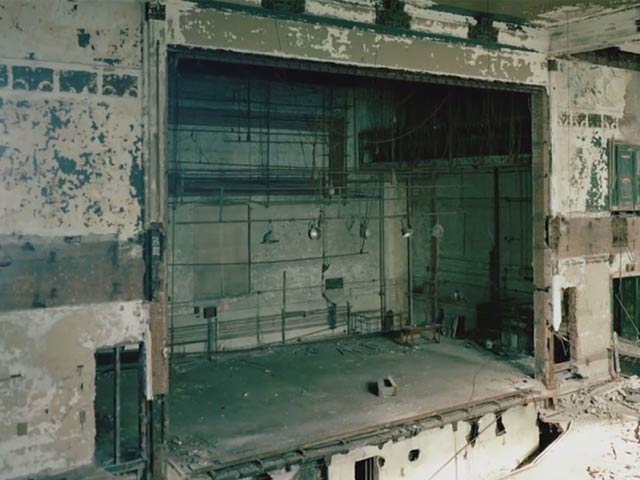
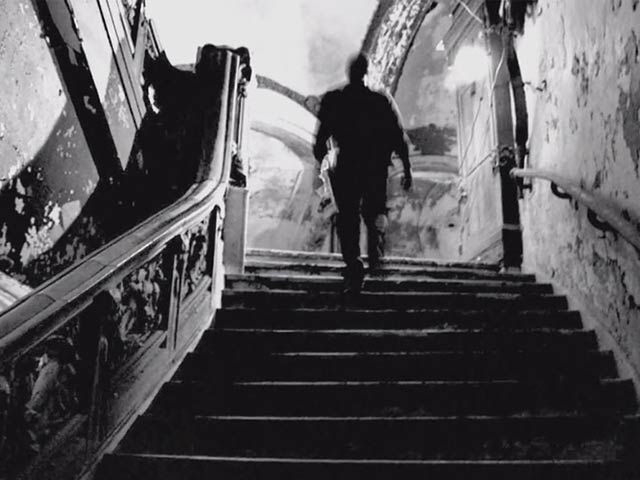
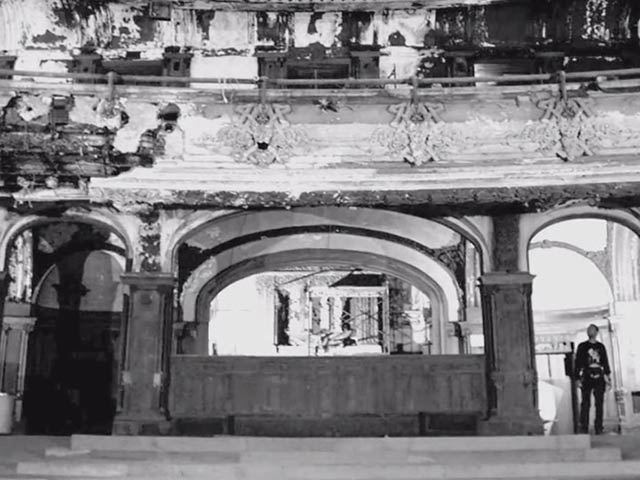
Michael Eisner, then CEO of Disney, immediately visited Manhattan to inspect the theater, spending four hours touring the premises. However, the New Amsterdam Theater, which had been completely abandoned for over a decade, had large mushrooms growing everywhere due to accumulated moisture, a large tree growing on the stage, and frozen waterfalls from leaks above the box seats. The following images are photos of the dilapidated New Amsterdam Theater from the 1980s.
Mayor Giuliani and Disney’s restoration plan
Mayor Giuliani declared that “the era of Fifth Avenue is over, and now is the time for Midtown to flourish, centered on 42nd Street,” and took action to rebuild the Theater District centered on Disney entertainment and improve public safety.
As a result, Disney agreed to the Broadway revival and successfully borrowed funds at 3% interest from New York City and New York State. In May 1995, they signed a contract and began renovating the New Amsterdam Theater, investing
18 months and 8 billion yen in enormous funds. The theater reopened on April 2, 1997, with Disney’s “The Lion King,” marking its full revival. These efforts are still recognized today as part of Mayor Giuliani’s contributions to improving public safety in New York City.
Unique Features of the New Amsterdam Theatre
Disney’s Corporate Office Located Above the Theatre
Before the long closure, there was a “secret members-only theater” above the ceiling of the New Amsterdam Theater. It is said that wealthy people gathered here night after night to participate in suspicious secret meetings. Today, the secret theater is used as a Disney office, and the stage used for the secret meetings at that time remains in the middle of the floor lined with desks.
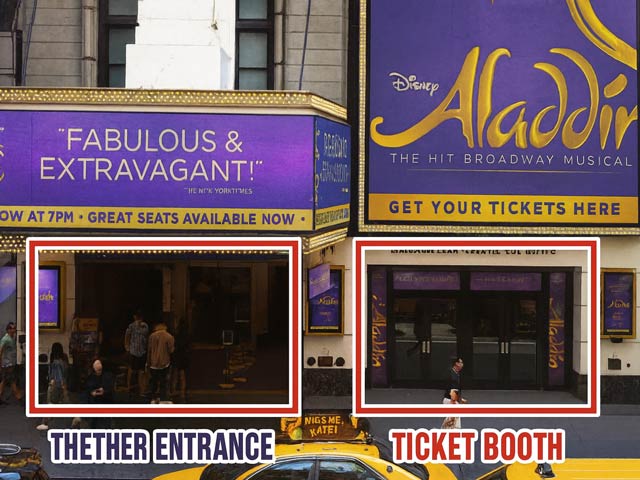
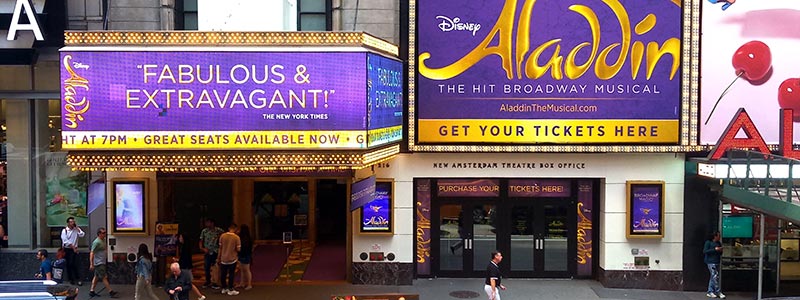
There are two entrances along 42nd Street
Normally, Broadway theaters have a single entrance, which can become very crowded before performances. However, this theater has separate “ticket windows” for purchasing tickets and exchanging ticket vouchers, and a separate “theater entrance” for entering the theater, so there is no mixing of lines between ticket purchasers and those who already have tickets, preventing congestion. If you have purchased discounted tickets through Atto Broadway, please first line up at the “ticket window.” Here, you will exchange your voucher ticket for a regular ticket and enter the theater through the theater entrance.
 Broadway Musical Discount Tickets – On Sale Now!
Find the best Broadway ticket deals right here –
faster, cheaper, and backed by local expertise. Get ready to experience the magic of Broadway!

- Get discount tickets easily with instant booking
- The most detailed musical guides and reviews
- Dedicated support throughout your Broadway experience











 Lines,
42 St – Times Square / Port Authority Stationstation (About a 5-minute walk)
Lines,
42 St – Times Square / Port Authority Stationstation (About a 5-minute walk)