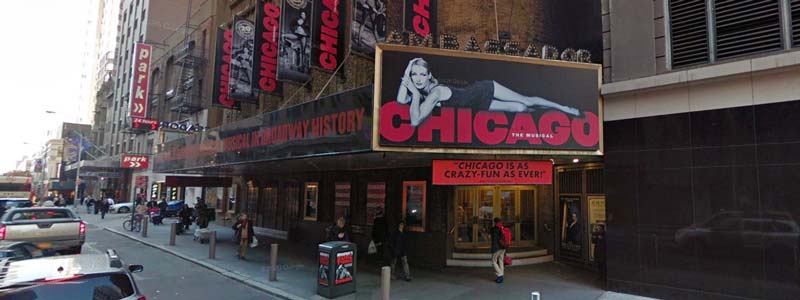
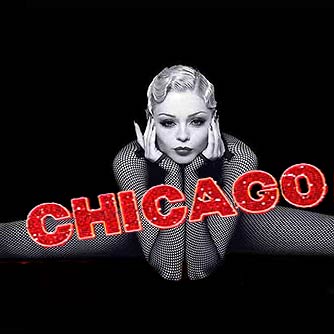
Address, opening, capacity of Ambassador Theatre
Basic Information about the Ambassador Theatre in NYC
|
Address: |
219 W 49th St, New York, NY 10019(
Map )
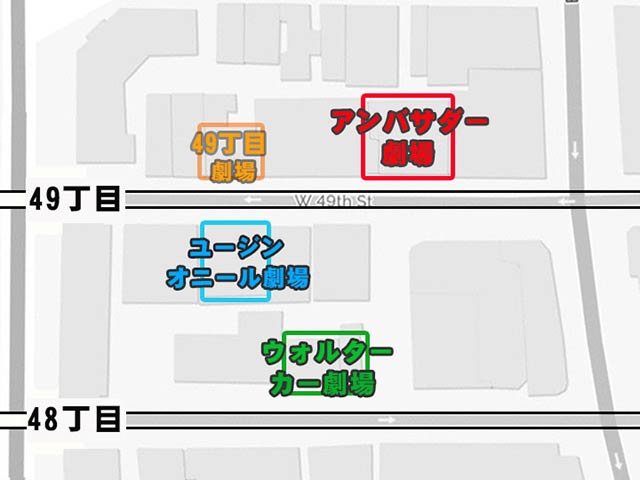
Located on 49 Street, between Broadway and 8th Avenue
|
|
Opened: |
February 11, 1921 |
|
Capacity: |
1,120 seats |
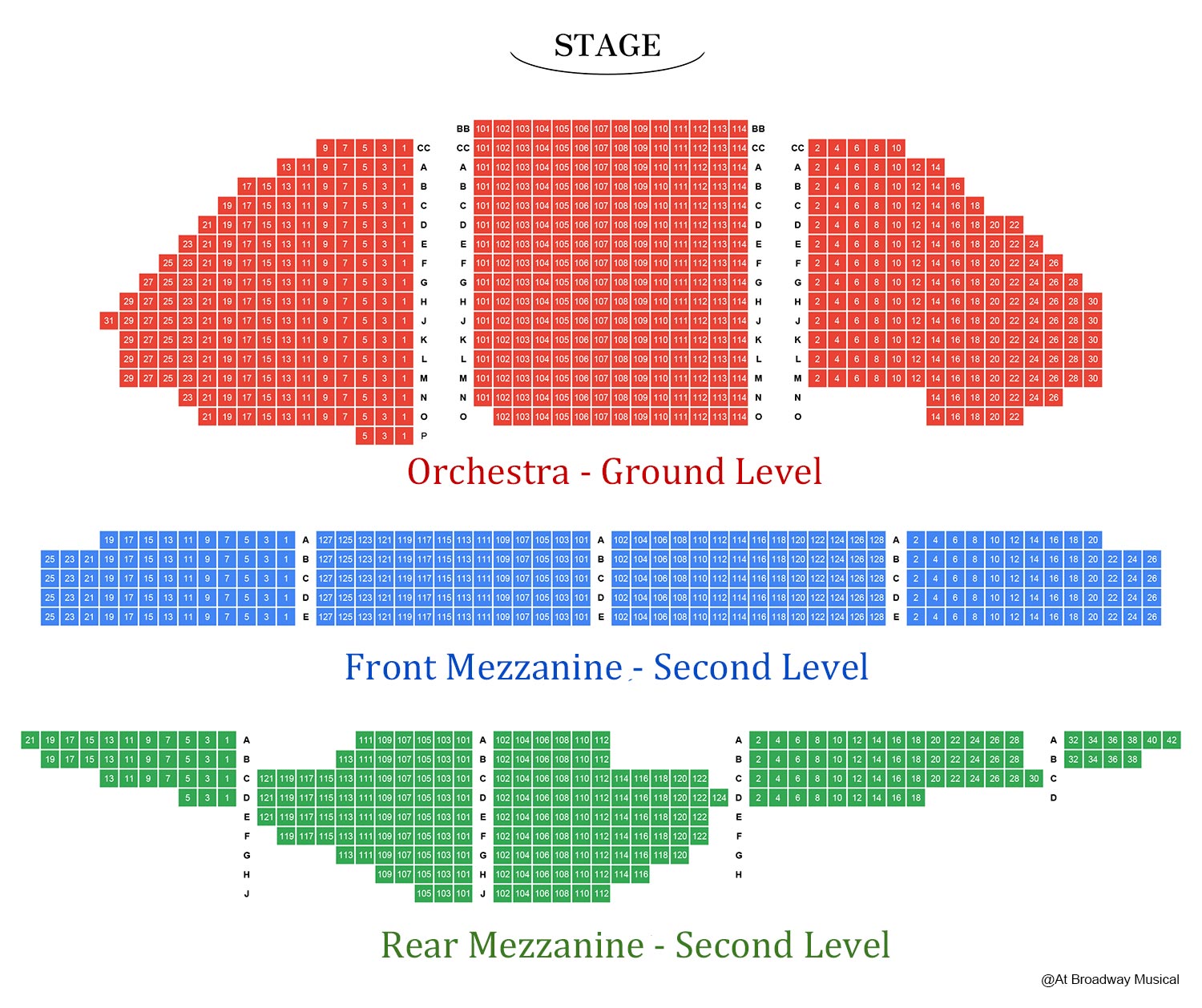
Seating Chart of Ambassador Theatre
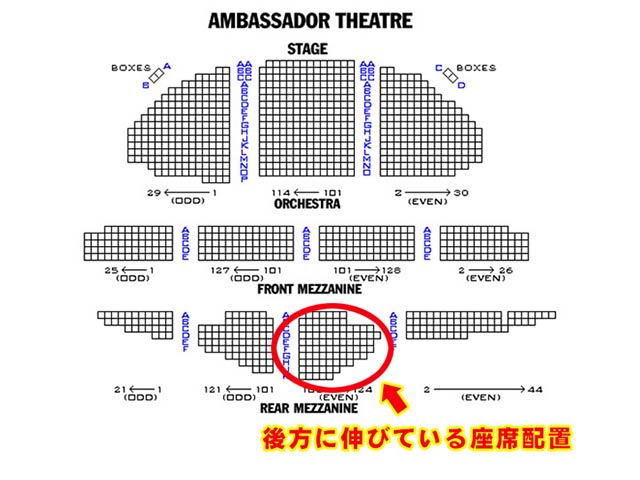
The Ambassador Theatre has a seating capacity of 1,120 seats, divided into three main sections: Orchestra, Front Mezzanine, and Rear Mezzanine.
*Click to view larger image
View from the seat of Ambassador Theatre
You can view real seat photos from inside the the Ambassador Theatre to see the stage from sections. These images help you choose the seating option that best suits your Broadway experience.
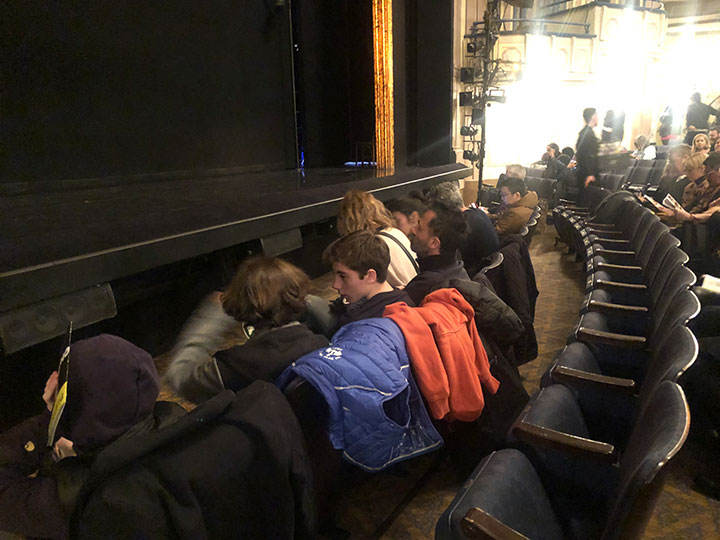
Orchestra Center Row CC
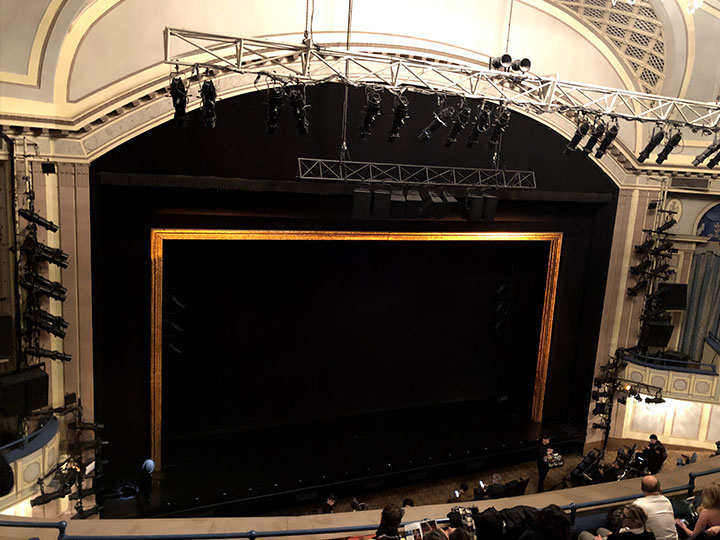
Front Mezzanine Row E
Directions to Ambassador Theatre
Access to Ambassador Theatre are most commonly by taking the New York City Subway (MTA).
The area around the theatre becomes very crowded close to showtime, so whether you are arriving by subway or taxi, please allow extra time to reach the venue.
Nearest Subway Station:

 Lines,
50 Ststation (About a 5-minute walk)
Lines,
50 Ststation (About a 5-minute walk)
 Lines,
50 Ststation (About a 3-minute walk)
Lines,
50 Ststation (About a 3-minute walk)


 Lines,
49 Ststation (About a 5-minute walk)
Lines,
49 Ststation (About a 5-minute walk)
Map, location of Ambassador Theatre
Here is the map of the Ambassador Theatre.
Best hotels near the Ambassador Theatre
Discover the best hotels near the Ambassador Theatre. Stay within walking distance of Broadway and enjoy easy access to shows, restaurants, and attractions.
The list of recommended hotels near the theater:
History of the Ambassador Theatre
The First of Four Theatres Built by the Shubert Brothers and Krapp
The Ambassador Theatre was designed by architect Herbert J. Krapp and built by the Shubert Brothers. It was the first of four theatres they constructed at the time in the Broadway area of 48th and 49th Streets – the others being the Eugene O’Neill Theatre, the Walter Kerr Theatre, and the now-closed 49th Street Theatre.
Today, the Ambassador, Eugene O’Neill, and Walter Kerr Theatres remain in operation at their original locations, while the 49th Street Theatre closed in 1940.
The Shubert Brothers are inseparable from the history of Broadway theatre. Since founding their enterprise in 1920, they have owned over 100 theatres and played a pivotal role in bringing musical productions from New York to audiences across the United States. They also founded the Shubert Organization, the oldest theatre management company in America and the largest Broadway theatre owner, actively involved in the operation of numerous Broadway venues.
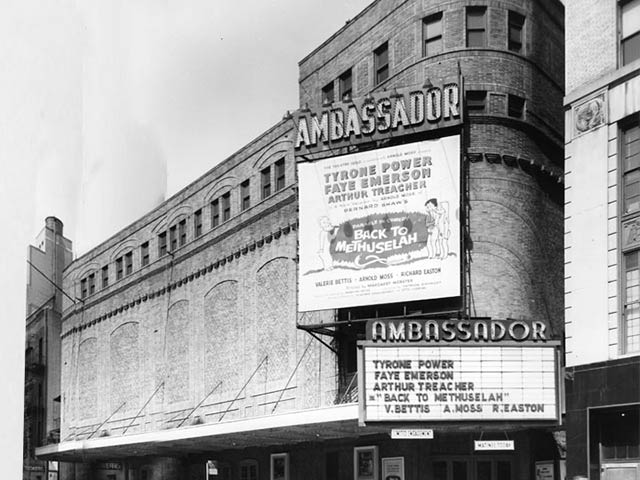
As an NBC Television Studio and Movie Theatre
The Ambassador Theatre opened on February 11, 1921, with the musical
The Rose Girl. However, following the onset of the Great Depression in 1929, the Shubert Brothers sold the theatre in 1935. For the next two decades, it was used primarily as a movie theatre and later as a television studio by NBC, one of America’s three major broadcast networks, as well as the DuMont Television Network.
Other Shubert-owned theatres including the Barrymore Theatre, the Longacre Theatre, and the James Earl Jones Theatre, were also used as television or radio studios during certain periods.
In 1956, the Shubert Brothers regained ownership of the Ambassador Theatre and once again began using it as a venue for musicals. From April 25, 1996, to January 10, 1999, the theatre hosted the hit production
Bring in ‘da Noise, Bring in ‘da Funk, which ran for 1,135 performances, making it a long-running musical success. The production won three Tony Awards in 1996, including Best Direction of a Musical, and received nominations in five categories.
Architectural style of the Ambassador Theatre
Unique Seating Layout with Extended Rear Mezzanine
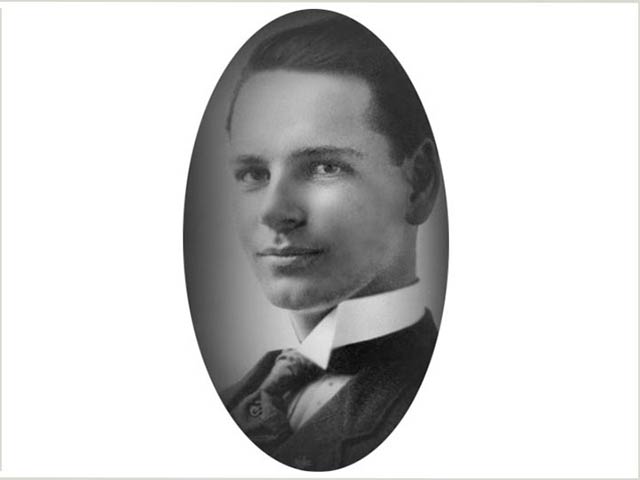
Herbert J. Krapp, who designed many surrounding theatres, faced a unique challenge with the Ambassador Theatre, as it was built on sloping land. The site’s incline resulted in a narrower stage area, and the theatre’s hexagonal shape made designing the interior even more complex.
Typically, a theatre’s stage is placed directly in front of the audience. However, on the Ambassador’s sloped lot, positioning the stage at the front would have created obstructed-view seats and wasted valuable space. Drawing on his expertise in maximizing a building’s potential, Krapp designed the stage slightly off-center, ensuring clear sightlines from every seat.
Adam Style and Proscenium Arch
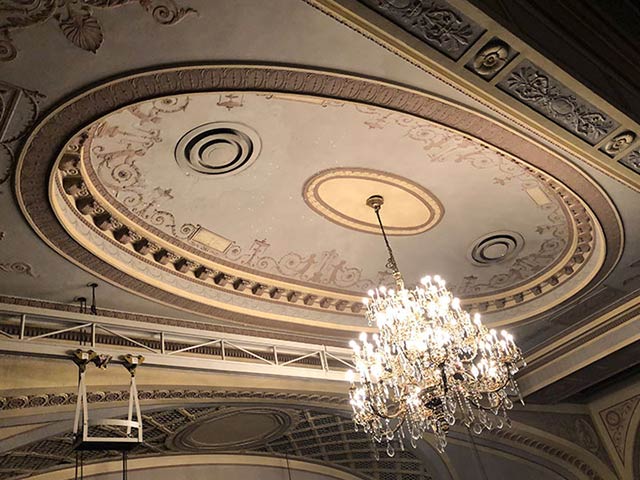
While the exterior of the Ambassador Theatre features a simple brick design, the interior showcases Herbert J. Krapp’s signature Adam style, used throughout the theatre’s walls, ceilings, box seats, entrances, and aisles. The Adam style is a traditional British design characterized by intricate decorative detailing combined with stucco; a plaster material resembling marble, to create elegant and refined interiors.
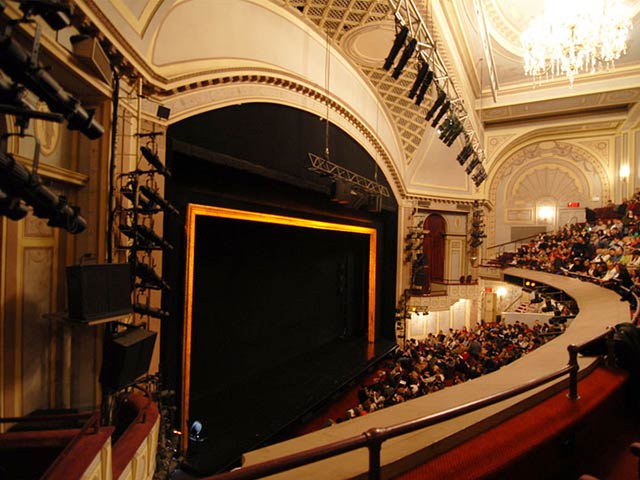
The stage design also incorporates the proscenium arch style, featuring a “grid” of gilded ironwork. A proscenium arch frames the stage from a single viewpoint, clearly separating the stage from the audience. Herbert J. Krapp frequently used this combination of proscenium arch and Adam style in his other theatres as well, including the Majestic Theatre and the Samuel J. Friedman Theatre.
Herbert J. Krapp – Designer of Broadway Theatres
Herbert J. Krapp began his career as an apprentice at the prestigious architectural firm of Herts & Tallant, where he contributed to the designs of the Lyceum Theatre, the Shubert Theatre, the Booth Theatre, the New Amsterdam Theatre, and the Longacre Theatre.
In 1915, Krapp left the firm to establish his own practice. Between 1912 and 1916, he began working directly with the Shubert Brothers, eventually becoming their most important architect and a constant presence in their theatre projects. Krapp also designed theatres for other notable clients, including the Chanin Brothers, builders of the Majestic Theatre.
“Chicago” – A long-running Broadway musical since 2003
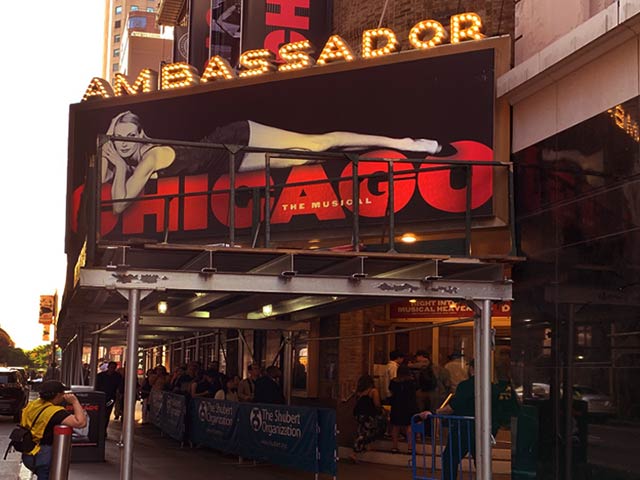
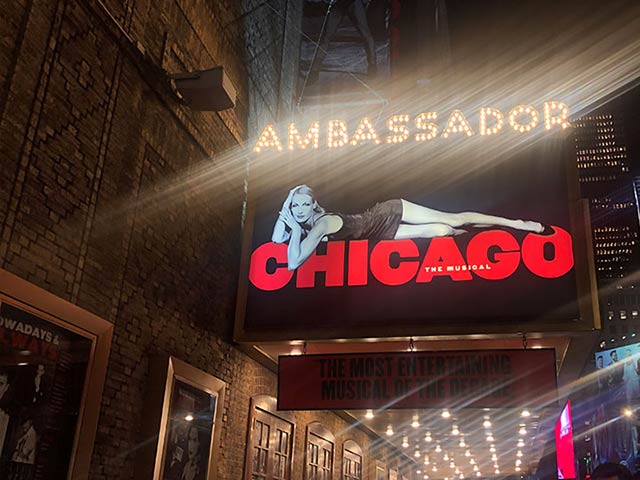
When people think of the Ambassador Theatre, the first show that often comes to mind is the musical Chicago. Since January 29, 2003, Chicago has been running continuously at the Ambassador Theatre, making it the second longest-running musical in Broadway history.
A masterpiece premiered in 1975 – Tony award winner and film adaptation
The history of
Chicago dates back to 1927, when the silent film
Chicago was released. This biting satire of American society resonated strongly with audiences frustrated by the political corruption of the time.
Over the years, numerous related films and adaptations followed. In 1975, the original Broadway production of
Chicago premiered and was nominated for the Tony Award for Best musical. Running until 1977, it achieved 936 performances in just two years.
The show later opened in London’s West End in 1979, and in 1996 returned triumphantly to Broadway, earning eight Tony Award nominations and winning six. The 2002 film adaptation went on to win the Academy Award for Best Picture in 2003, among many other accolades.
The show’s highlights are its unforgettable songs, dazzling jazz, and especially the glamorous, dynamic choreography by the legendary Bob Fosse – a style uniquely captured in this musical.
Chicago remains the longest-running American musical in Broadway history.
 Broadway Musical Discount Tickets – On Sale Now!
Find the best Broadway ticket deals right here –
faster, cheaper, and backed by local expertise. Get ready to experience the magic of Broadway!

- Get discount tickets easily with instant booking
- The most detailed musical guides and reviews
- Dedicated support throughout your Broadway experience